
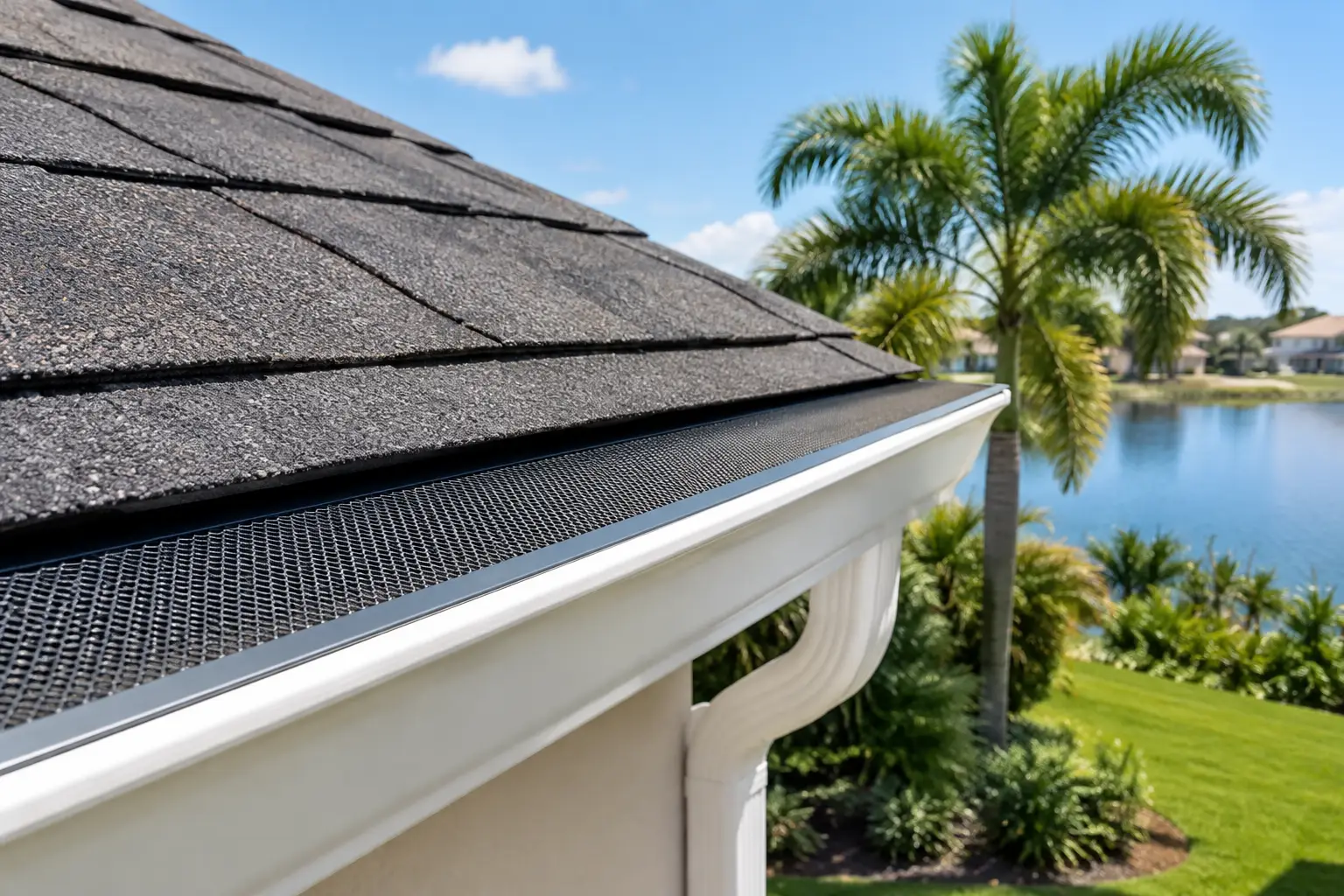
A Central Florida downpour can expose a gutter problem in minutes. When leaves, oak tassels, pine needles, and roof grit block the channel, water has nowhere to go but over the edge. Leaf guards are designed to reduce that buildup, helping gutters move rainwater through the system instead of allowing it to spill near siding, landscaping, and the foundation.
For Orlando homeowners, the value is not simply avoiding a messy gutter. It is reducing the chance of overflow during the heavy rains that put every part of a drainage system to work. The right guard can cut down on cleaning needs and keep water moving, but it must fit the roof, gutter, and debris conditions around the home.
What Leaf Guards Actually Do
Leaf guards cover or screen the top of the gutter while leaving openings for rainwater to enter. Larger debris stays on top, where wind or normal drying can help move it away. Water continues into the gutter and downspouts, where it can be directed safely away from the home.
That is the goal, but no guard makes a gutter completely maintenance-free. Fine roof grit, pollen, seed pods, and small organic material can still collect over time. Debris can also gather on top of a guard, especially beneath large trees or in roof valleys where water carries concentrated debris into one area.
A good leaf guard installation reduces the volume of material inside the gutter. It also makes routine maintenance more manageable because the system is less likely to fill with wet, compacted debris that causes clogs and adds unnecessary weight to the gutter.
Why Orlando Homes Can Benefit From Leaf Guards
Orlando homes deal with a combination of frequent rain, strong afternoon storms, humidity, and year-round tree debris. Gutters do not get a long seasonal break. Even homes without mature trees directly overhead can collect windblown leaves, shingle grit, small twigs, and debris from neighboring properties.
When a gutter clogs before a heavy storm, water can pour over the front edge or back toward the fascia. Repeated overflow may stain exterior walls, wash out mulch, damage soffit and fascia boards, and create standing water near the foundation. On rental properties, it can also create a maintenance issue that grows worse between inspections.
Leaf guards are especially useful for homes with rooflines near oak trees, palms, pine trees, or dense landscaping. They can also make sense for homeowners who have difficult roof access, steep roof sections, or gutters located above a pool enclosure, patio, or other area where frequent ladder work is inconvenient.
Not Every Gutter Needs the Same Guard
The best leaf guard depends on the type of debris your home receives and how your roof sheds water. A guard that performs well under broad oak leaves may not be the right choice for fine pine needles or heavy roof grit. The condition and size of the existing gutter matter as well.
Screen-Style Guards
Screen guards use a perforated surface to keep larger leaves and twigs out of the gutter. They are a practical option for many homes and can reduce common debris buildup. However, small particles may pass through the openings, and debris can rest on top if the screen is too flat or not installed at the proper angle.
Fine Mesh Guards
Fine mesh guards use much smaller openings and are better suited for homes that receive fine debris. They can be effective around pine needles, seed pods, and roof grit, provided they are securely fitted and designed to handle local rainfall. Because the openings are smaller, the top surface may need occasional brushing or rinsing to prevent buildup.
Surface-Tension Guards
Surface-tension systems are shaped to guide water into a narrow opening while encouraging leaves to fall away. These systems can work well in certain conditions, but proper pitch and installation are critical. If the gutter is undersized, poorly sloped, or already overflowing because of a downspout issue, a guard alone will not correct the problem.
The right recommendation starts with looking at the full drainage system, not selecting a product from a shelf. The roof edge, gutter size, gutter pitch, hangers, downspouts, and surrounding trees all affect performance.
When Leaf Guards Are a Smart Investment
Leaf guards are generally worth considering when gutter cleaning is a recurring problem rather than an occasional chore. If your gutters fill quickly after cleaning, overflow in predictable areas, or are difficult to access safely, guards can reduce the ongoing burden.
They are also a practical addition when installing new seamless K-gutters. A custom-fit gutter system is already being measured for the home, making it a good time to address debris control, downspout placement, and water flow together. This can prevent the frustration of installing new gutters only to deal with the same clogging pattern a few months later.
For property managers, guards can help reduce emergency service calls during storm season. They do not eliminate the need for inspections, but they may reduce how often gutters need full debris removal. That can be particularly helpful on properties with multiple rooflines or limited access between tenants.
When Repairs Should Come First
A leaf guard should not be used to cover up a gutter system that needs repair. If sections are sagging, separating, leaking at seams, pulling away from the fascia, or holding standing water, those issues need attention first.
Water needs a clear path from the roof to the gutter, through the downspout, and away from the structure. A guard cannot fix improper gutter slope, a crushed downspout, or a discharge point that sends water back toward the foundation. It also cannot solve a roof drainage problem caused by a valley dumping a large volume of water into a short gutter run.
Before adding guards, check that the gutter is securely fastened, pitched correctly, and sized for the roof area it serves. Downspouts should be open and adjusted to move water away from the home. A professional inspection can identify whether the source of overflow is debris, poor drainage design, or a combination of both.
Professional Fitting Makes a Difference
Leaf guards need to fit tightly and work with the roofline without creating new problems. A loose guard can lift in high winds, collect debris at the edge, or allow water to bypass the gutter. Improper fasteners can also damage the gutter or interfere with roofing components.
Professional installation also helps avoid a common mistake: assuming every section of the home requires the same solution. A roof valley beneath a large tree may need a different approach than a short, open gutter run on the other side of the house. The installer should consider how water moves during a hard rain, not just how the guard looks on a dry day.
Precision K-Gutters approaches leaf guard work as part of the entire gutter system. That means checking the existing channels and downspouts, recommending a practical guard option, and making sure the installation supports reliable water flow rather than simply covering the gutter.
What Maintenance Still Looks Like
Even with guards installed, plan on checking the gutter system periodically. In Orlando, a quick visual inspection before and during the rainy season is a sensible habit. Look for debris collecting on top of the guards, water spilling over the edge, stains on the fascia, or downspouts draining slowly.
After a major storm, walk around the property and watch for water pooling near the foundation or washing out landscape beds. If one area repeatedly overflows, the issue may be a blocked downspout, a concentrated roof valley, or a gutter run that needs adjustment.
Most guarded systems need less cleaning than open gutters, but the amount varies by property. Homes under heavy tree cover may still need occasional surface cleaning. Homes with little nearby foliage may need very little attention beyond inspections. The honest answer is that leaf guards reduce maintenance – they do not end it.
Choosing Based on Your Property, Not a Promise
Be cautious of any claim that a leaf guard will never clog or never require service. Rainfall intensity, roof pitch, tree coverage, and the type of debris around the home all matter. A quality product and clean installation can make a meaningful difference, but realistic expectations lead to better results.
The best choice is one that matches your home’s drainage needs and gives you a simpler maintenance routine without restricting water flow. When the next heavy rain arrives, your gutter system should do one job well: collect the water, carry it through the downspouts, and keep it moving away from the home.