
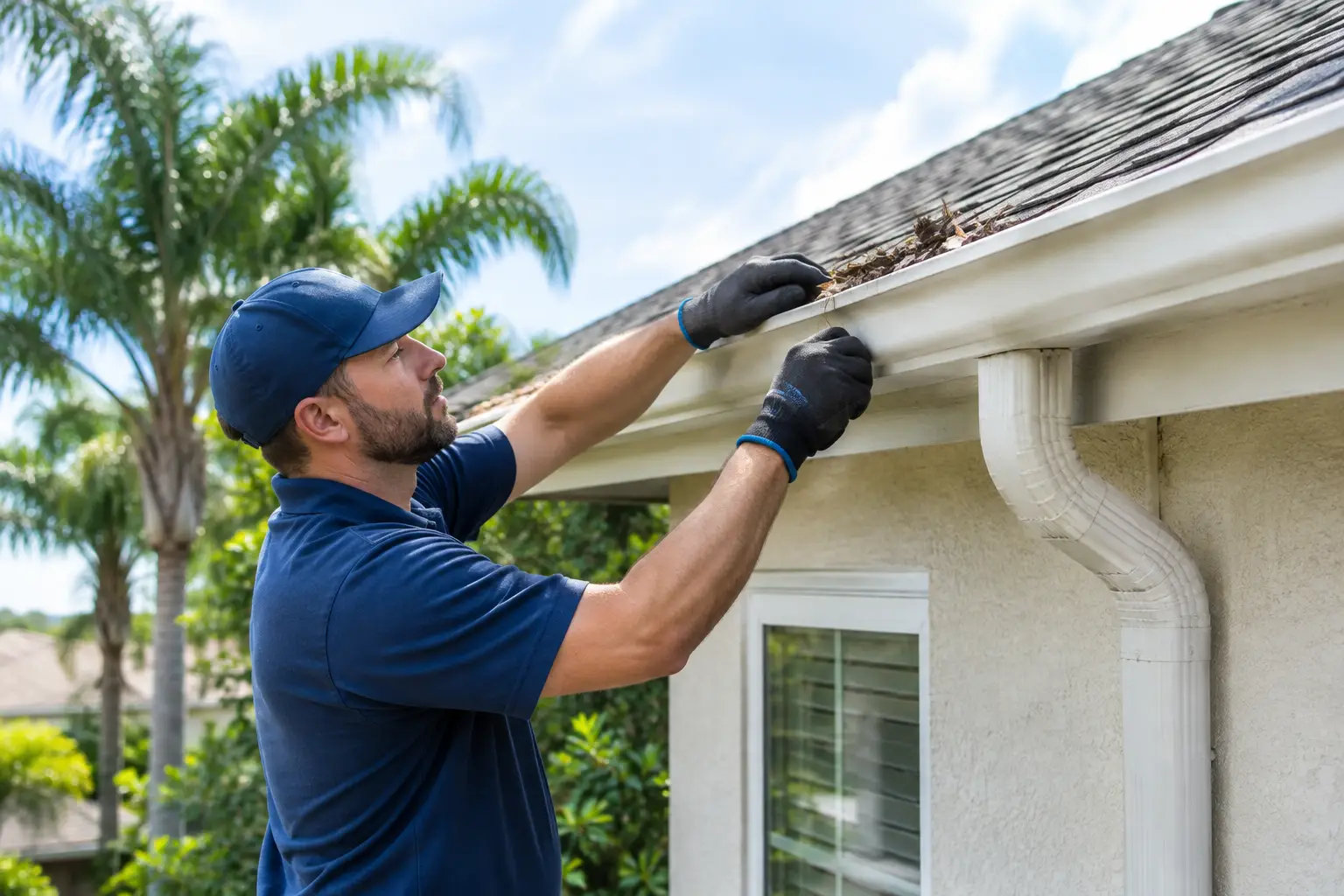
A gutter problem at a rental rarely stays a gutter problem. In Orlando, one heavy afternoon storm can turn a clogged section into overflowing water, stained siding, rotted fascia, and wet soil around the foundation. Rental gutter maintenance gives owners and property managers a clear way to reduce those risks before a tenant calls with an urgent leak.
For single-family rentals and small portfolios, the goal is not to inspect gutters every time it rains. It is to have a simple routine that catches buildup, loose sections, drainage issues, and damage while repairs are still manageable. A well-maintained system protects the property, helps tenants avoid water intrusion concerns, and prevents small exterior issues from becoming larger maintenance expenses.
Who Is Responsible for Gutter Care?
In most rental situations, major gutter maintenance should remain the owner or property manager’s responsibility. Cleaning gutters, checking roofline attachments, repairing leaks, and adjusting downspouts require ladders, proper tools, and experience working safely around the exterior of a home. Asking tenants to handle those tasks can create safety concerns and inconsistent results.
Tenants still play an important role. Their responsibility is usually observation and reporting. A tenant may be the first person to notice water spilling over the gutter edge, a downspout draining too close to the home, water entering a porch area, or a gutter section pulling away from the roofline. Clear instructions help them report the issue quickly rather than waiting for a routine inspection.
Your lease language should match local requirements and the condition of the property. If a rental has mature trees, frequent debris buildup, or a known drainage concern, it is better to plan professional service than rely on a vague expectation that a tenant will keep the system clear.
Set a Rental Gutter Maintenance Schedule That Fits Orlando
Central Florida’s weather makes a fixed annual cleaning schedule too limited for many properties. Summer storms can expose drainage problems quickly, while leaves, palm fronds, seed pods, and roof debris can collect throughout the year. The right schedule depends on the trees around the home, the roof design, and whether the property has gutter guards.
For many Orlando rentals, a professional inspection and cleaning twice a year is a practical starting point. One visit before the heaviest rainy period helps confirm that water has a clear path from the roof edge through the gutters and downspouts. A second visit in late fall or winter addresses accumulated debris and checks for damage that may have developed during storm season.
Properties with heavy tree cover may need service three or four times a year. A home with little nearby foliage and effective leaf guards may need less frequent cleaning, but it should still be inspected. Guards reduce debris inside the gutter, but they do not eliminate the need to check flow, fasteners, roof valleys, and downspout outlets.
What a Proper Gutter Inspection Should Catch
A basic visual check from the ground is useful, but it will not show every issue. Professional rental gutter maintenance should look beyond visible leaves and identify whether the system is directing water away from the structure as intended.
During an inspection, look for signs of overflow, standing water in the gutter, loose hangers, sagging runs, separated joints, rust, cracks, and holes. Water marks on fascia boards or siding can indicate that the gutter is overflowing or leaking behind the channel. Peeling paint and soft wood near the roof edge deserve prompt attention because they may point to ongoing moisture exposure.
Downspouts need equal attention. A clean gutter will still overflow if a downspout is blocked or undersized for the roof area. The bottom of the downspout should discharge away from the foundation and not create a muddy, eroded area beside the home. In some cases, a downspout extension or adjustment is a direct, cost-effective fix for recurring water collection.
It also helps to check for water flow during or shortly after a normal rain. This can reveal problems that are not obvious when the system is dry, including water running behind the gutter, poor slope, or an outlet that cannot keep up with runoff.
Give Tenants Simple Reporting Instructions
Tenants do not need a gutter checklist with technical terms. They need to know which signs require a maintenance request and that early reporting is encouraged. This helps owners act before water reaches ceilings, walls, door thresholds, or landscaped areas.
Ask tenants to report water spilling over gutters, dripping from a seam, pooling near the foundation, or running onto walkways. They should also report visible sagging, a detached downspout, water entering an enclosed patio, and any staining that appears after a storm. Photos taken from the ground are often helpful, but tenants should never be asked to climb a ladder or access the roof.
A short reminder before peak storm season can reduce delayed reporting. It also sets the right expectation: exterior drainage is part of protecting the home, not a problem to ignore until a major storm exposes it.
Address Repairs Before They Spread
Not every gutter issue requires replacement. Small holes, leaking end caps, loose hangers, and disconnected downspouts can often be repaired when they are addressed early. Waiting can allow the same water to repeatedly contact fascia boards, soffits, siding, and landscaping.
Sagging is one issue that should not be dismissed as cosmetic. Gutters need the correct pitch so water flows toward the downspout. When a section sags, water can sit in the channel, adding weight and placing more stress on the fasteners. That standing water can also become a mosquito concern in Florida’s warm, wet conditions.
If a rental property has frequent leaks at multiple connection points, it may be time to evaluate the condition of the entire system. Custom-measured K-gutters have fewer joints along the run than sectional gutter systems, which can reduce common leak locations. Whether repair or replacement makes sense depends on the age of the gutters, the extent of damage, and how consistently the system drains during heavy rain.
Consider Leaf Guards, but Keep Maintenance in the Plan
Leaf guards can be a useful investment for rentals with recurring debris problems. They can reduce the amount of leaves and roof debris entering the gutter channel, which may lower the frequency of cleaning and help maintain better water flow between service visits.
The trade-off is that guards are not a maintenance-free solution. Fine debris can still collect on top of the guard, and roof valleys can send heavy runoff into concentrated areas. A guard system should be selected to fit the existing gutter profile and installed correctly so it does not interfere with water entering the gutter.
For a property manager overseeing several homes, guards may make the most sense at the locations with the highest cleaning needs. For a low-debris property, scheduled cleaning may be the more practical choice. The decision should be based on the property, not a one-size-fits-all promise.
Keep Records for Each Rental Property
A simple maintenance record makes rental oversight easier. Note the date of each cleaning or inspection, any repairs completed, photos of problem areas, and recommendations for future work. This creates a useful history when a tenant reports a recurring concern or when you are deciding whether repairs are becoming more costly than replacement.
Records also help property managers plan work between tenants when access is simpler. If an inspection shows a weak downspout connection or deteriorating fascia, scheduling the repair before the next major rain event protects both the property and the tenant experience.
Precision K-Gutters helps Orlando-area owners and property managers with cleaning, repairs, downspout adjustments, leaf guard solutions, and custom-fit gutter work. Clear recommendations and timely maintenance can keep a routine property task from turning into an avoidable water damage claim.
The best time to address a gutter concern is when it is still a clean, straightforward service call. Put each rental on a realistic inspection schedule, make reporting easy for tenants, and treat overflow as an early warning instead of a seasonal nuisance.