
One heavy Florida storm is usually all it takes to make a homeowner ask, do gutter guards work, or are they just another add-on that sounds better than it performs? That is a fair question, especially in Orlando, where gutters have to deal with fast downpours, roof grit, pine needles, oak leaves, and the kind of debris that can turn a small clog into overflow in a hurry.
The short answer is yes, gutter guards can work. But they do not work the same way on every home, and they do not eliminate gutter maintenance completely. The real value depends on the type of guard, the amount of tree cover around the house, the roofline, and how well the system is installed.
For many homes, gutter guards reduce cleaning frequency, help water move more consistently, and cut down on major clogs. For other homes, especially those with certain debris types or drainage issues, they may only solve part of the problem. That is why it helps to look past the sales pitch and focus on what these systems actually do.
Do Gutter Guards Work the Way Homeowners Expect?
This is where expectations matter. Many homeowners hear “gutter guards” and assume that means gutters will stay clean forever. That is not how it works.
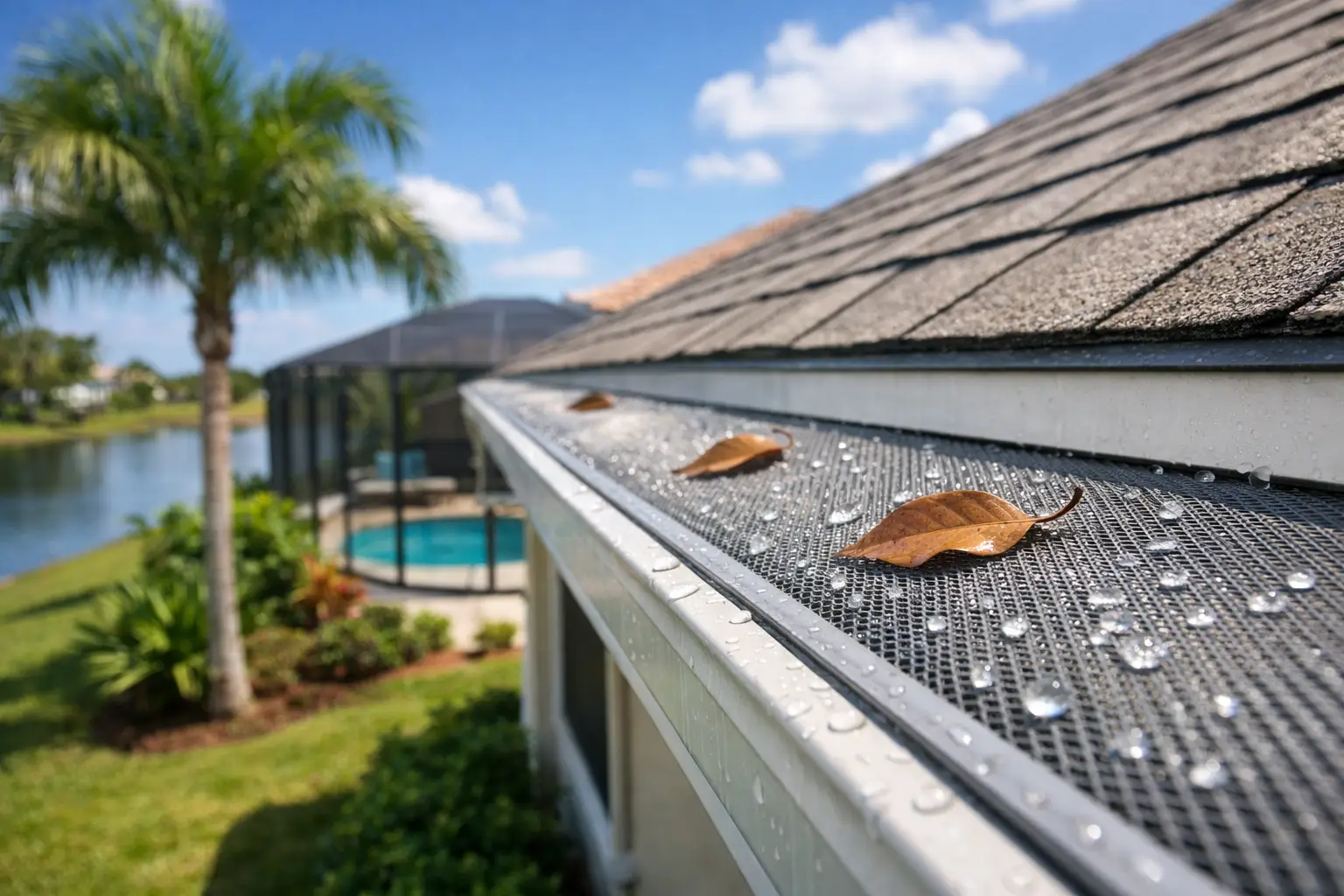
A gutter guard is designed to keep larger debris out while still allowing water into the gutter system. That can mean leaves are blocked on top, pine needles are reduced, or twigs do not settle inside the trough as easily. In practice, that usually leads to fewer interior clogs and less frequent cleaning.
What it does not mean is zero upkeep. Debris can still collect on top of the guard. Fine particles from shingles can still build up over time. In some cases, seeds and roof sediment can create a layer that needs to be cleared off. If a guard is poorly matched to the home or installed incorrectly, water can also overshoot the gutter during a hard rain.
So yes, gutter guards work, but only if the expectation is realistic. They are a maintenance reducer, not a maintenance eraser.
What Gutter Guards Do Well
The biggest benefit is simple. They help keep the inside of the gutter from filling with debris that blocks water flow. When gutters stay more open, water has a clearer path to the downspouts, which lowers the chance of overflow around the roof edge, fascia, soffit, and foundation.
That matters in Central Florida. During a summer storm, a clogged gutter does not have much time to fail. Water backs up fast, spills over the side, and can collect near the home before the storm even passes.
Guards can also help reduce the amount of standing debris that holds moisture in the system. Wet leaf buildup adds weight, encourages rust in older metal sections, and can contribute to sagging or loose spikes if the gutter is already under stress. Less debris inside the gutter usually means less strain on the system.
For homes under moderate tree cover, that can make routine upkeep much easier. Instead of full cleanouts several times a year, maintenance may become lighter and less frequent.
Where Gutter Guards Fall Short
The main issue is that not all debris behaves the same way. Large leaves are one thing. Pine needles, seed pods, small oak leaves, and roof granules are another.
Some guard styles handle broad leaves well but struggle with finer debris. Others can shed debris effectively but may need the right roof pitch and water flow conditions to perform properly. If the openings are too large, too much debris gets in. If they are too tight or sit at the wrong angle, runoff may not enter the gutter cleanly during intense rain.
Florida weather adds another layer. In a light rain, many guard systems perform well. In a hard, wind-driven storm, water volume can challenge lower-quality products or poor installation methods. If water runs too fast off the roof edge, it may skip past the opening instead of dropping into the gutter.
There is also the issue of what happens underneath. A gutter system that is already pitched incorrectly, pulling away from the fascia, or draining through clogged downspouts will not be fixed just because a guard is added. Guards help protect a sound system. They are not a substitute for repair.
The Type of Home Makes a Big Difference
A one-story home with simple rooflines and light tree coverage is very different from a two-story property with valleys, multiple corners, and overhanging limbs. That is why the answer to do gutter guards work is never just about the product itself.
On a home with clean roof runoff and occasional leaf drop, guards often make strong practical sense. On a home surrounded by heavy tree litter, they can still help, but the owner should expect periodic surface cleaning and inspections.
Roof shape matters too. Valleys can send concentrated water into one section of gutter. That high-volume flow can expose weak points in both the gutter system and the guard design. If a section is undersized or the downspout placement is poor, guards alone will not solve overflow.
This is also why custom-fit systems tend to perform better than pieced-together sections. When the gutter is properly measured, pitched, and supported, the guard has a better foundation to do its job.
Are Gutter Guards Worth It in Orlando?
For many Orlando-area homeowners, yes, they can be worth it, especially when the goal is to cut back on recurring cleanouts and keep water moving during storm season. That value is even clearer on homes where clogged gutters have already caused overflow, staining, wood rot, or drainage issues near the foundation.
That said, worth depends on the problem you are trying to solve. If your gutters only collect a little debris and are easy to clean, a guard system may be more of a convenience than a necessity. If you are constantly dealing with blockages, water spilling over entryways, or hard-to-reach sections, the return is easier to see.
Property managers often see the benefit differently than single-home owners. If a guard system reduces service calls, tenant complaints, and repeated cleaning visits across multiple properties, it can be a practical long-term improvement even if it does not eliminate maintenance entirely.
When Gutter Guards Make the Most Sense
They make the most sense when the existing gutters are in good condition or when they are installed as part of a new system. Adding guards to damaged, loose, or misaligned gutters is usually the wrong order. The foundation of the system needs to be right first.
They are also a smart option when cleaning access is difficult. Second-story rooflines, screened enclosures, landscaping obstacles, and steep slopes all make gutter maintenance harder and riskier. In those cases, reducing the frequency of interior cleanouts can be a real advantage.
Homes with nearby trees are another obvious fit, but only with the understanding that some upkeep will still be needed. A quality guard can reduce clogging. It cannot stop every form of buildup from landing on or around the system.
What to Ask Before Installing Them
Start with the basics. What kind of debris is filling your gutters now? Are you dealing with leaves, needles, grit, or all three? How intense is the roof runoff in a typical storm? Are the current gutters sized and pitched correctly? Are the downspouts carrying water far enough away from the home?
These questions matter because the right recommendation should be based on actual conditions, not a one-size-fits-all pitch. A good contractor should look at the whole drainage setup, not just the top edge of the gutter.
That is especially true in Florida, where the volume of rain can expose weak design choices quickly. Precision K-Gutters works with homeowners who need that kind of practical evaluation, because the best result is not just cleaner gutters. It is dependable water control around the home.
If you are trying to decide whether guards are the right move, think less about the promise of “never clean again” and more about whether the system will reduce clogs, improve drainage, and make maintenance easier on your specific property. That is where gutter guards provide real value, and where a clear, honest assessment matters most.