
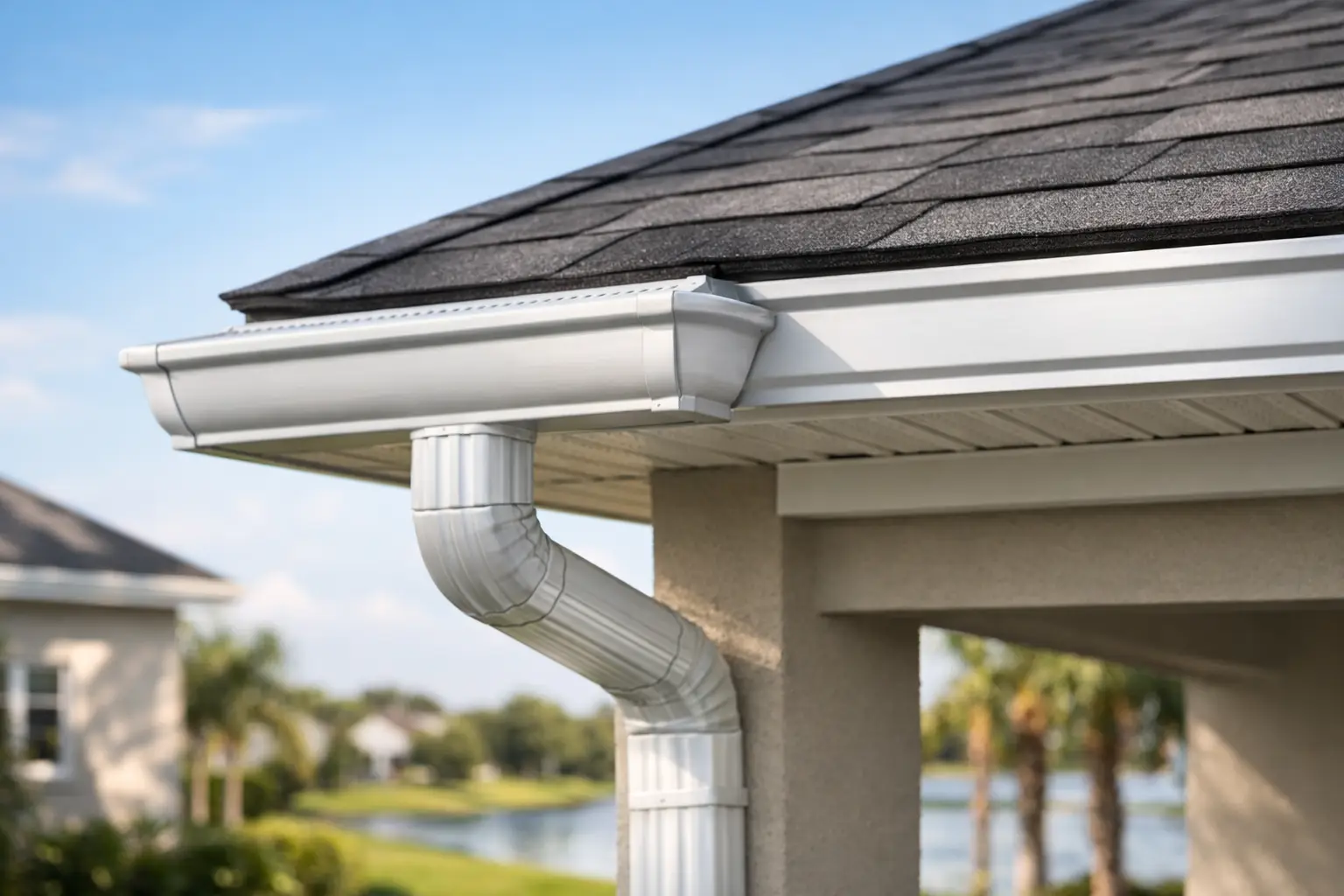
A gutter system usually gets attention only after water spills over the edge during a Florida downpour. By then, the signs can be hard to ignore: washed-out mulch, streaks on the siding, puddles near the foundation, or water running behind the gutter instead of through the downspouts. This aluminum gutter system review looks at whether aluminum is the right choice for Orlando-area homes and what separates a system that handles heavy rain from one that creates another maintenance problem.
For most residential properties in Central Florida, aluminum gutters are a practical, dependable option. They are lightweight, resist rust, come in a wide range of colors, and work especially well when formed into custom seamless K-gutters at the home. Still, the material alone does not guarantee good drainage. Proper sizing, secure fastening, correct slope, and well-placed downspouts matter just as much.
Aluminum Gutter System Review: The Main Takeaway
Aluminum gutters earn high marks for typical Orlando homes because they balance cost, appearance, and long-term performance. Unlike steel, aluminum will not rust when exposed to repeated rain and humidity. Unlike vinyl, it is less likely to become brittle or warp in prolonged heat. It can also be made into seamless gutter sections that reduce the number of joints where leaks commonly develop.
The trade-off is that aluminum can dent if it is hit by a ladder, falling branch, or hard impact. Thin, low-grade aluminum is also more likely to bend, sag, or pull away when a gutter is overloaded with wet leaves and standing water. That is why a quality installation should use appropriately sized material, strong hidden hangers, and enough downspout capacity for the roof area.
For homeowners who want a clean-looking system that can manage regular summer storms without paying for a premium metal option, aluminum is often the sensible choice.
Why Aluminum Works Well in Central Florida
Orlando gutters deal with more than occasional rain. Afternoon storms can drop a large amount of water in a short period, while oak leaves, pine needles, palm debris, and roof grit can build up over time. A gutter system needs to move water quickly and remain securely attached when the weather turns.
Aluminum handles moisture well because it does not develop the orange rust associated with unprotected steel. Most residential aluminum gutters also have a baked-on finish that helps maintain their appearance and gives homeowners color options that match the fascia, trim, or roofline.
Its lighter weight is another benefit. Properly installed aluminum does not place unnecessary stress on the fascia board, and seamless sections can be formed to the exact length of each roof edge. Fewer seams mean fewer places for sealant to fail over time.
That said, aluminum is not maintenance-free. Any gutter can clog, overflow, or pull loose if debris is allowed to sit inside it. A good material still needs routine cleaning and occasional inspection, particularly after a major storm or when trees hang over the roof.
Seamless vs. Sectional Aluminum Gutters
When reviewing aluminum gutter systems, the biggest difference often is not the metal but the construction method. Sectional gutters are assembled from pre-cut pieces and joined together during installation. They can work for small repairs or limited applications, but every connection is a future point to watch for leaks.
Seamless aluminum gutters are formed on-site to fit each run of the home. They still have connections at corners and downspout outlets, but they eliminate unnecessary seams across long straight sections. The result is a cleaner look and fewer leak-prone joints.
For a full replacement, seamless K-gutters are generally the better long-term option for most homes. They are custom measured, professionally pitched, and better suited to the varied rooflines common in Orlando neighborhoods. If only one short damaged section needs repair, a sectional replacement may be reasonable. The right answer depends on the condition of the remaining gutter system.
Why K-Style Gutters Are Common
K-style gutters, often called K-gutters, have a decorative front profile that resembles crown molding. They offer more water capacity than a rounded gutter of the same width, which is useful during heavy rainfall. Their shape also blends well with many residential exterior styles.
A standard 5-inch K-gutter works well for many homes, but some properties need 6-inch gutters or larger downspouts. Homes with steep roofs, broad roof planes, valleys that concentrate water, or frequent overflow issues may benefit from more capacity. Installing a larger gutter is not an upsell by default. It should be based on how much water the roof is directing to each section.
What Determines How Long Aluminum Gutters Last
A properly installed aluminum gutter system can serve a home for many years, but lifespan depends heavily on local conditions and maintenance. The material’s resistance to rust is a major advantage, yet physical stress and drainage issues can shorten its useful life.
The most common issues are preventable. Clogged downspouts allow water to back up and add weight to the gutter. Loose hangers let sections sag. Incorrect slope leaves standing water in the trough. Water getting behind the gutter can damage fascia boards, which eventually makes it difficult for any gutter to stay secure.
Homeowners should also pay attention to water at ground level. A gutter can look fine from the street but still create a drainage problem if the downspout discharges too close to the home. Downspout extensions, adjustments, or redirects may be needed to move water away from the foundation, walkways, and planting beds.
Aluminum Gutter System Costs and Value
Aluminum is usually more affordable than copper and can offer better long-term performance than basic vinyl in Florida conditions. The total project cost depends on the linear footage, gutter size, roof height, number of corners, downspout locations, existing gutter removal, and whether fascia repairs are needed before installation.
A homeowner comparing quotes should look beyond the total price. Ask whether the quote includes seamless gutters, the gauge of aluminum, hidden hangers, downspouts, end caps, removal of old materials, and cleanup. A low estimate can become less attractive if it leaves out necessary drainage components or uses light materials that may not hold up under repeated storm loads.
The best value is a system sized for the house, installed with proper pitch, and designed to direct water where it needs to go. Paying for a clean installation once is usually preferable to dealing with recurring leaks, overflow, and repairs after every rainy season.
Do Leaf Guards Make Sense With Aluminum Gutters?
Leaf guards can be a useful addition, but they are not automatically necessary for every property. Homes with overhanging trees or repeated clogging issues often benefit most. Guards can reduce the amount of leaves and larger debris entering the gutter, which helps water keep moving toward the downspouts.
They do not eliminate maintenance entirely. Fine debris, roof grit, and material that collects on top of the guard may still require periodic service. Some guard styles also perform better than others depending on the roof pitch, surrounding trees, and rainfall intensity.
Before adding guards, make sure the existing gutters have the right slope, secure hangers, and clear downspouts. A guard cannot correct a gutter that is undersized, sagging, or already draining poorly.
Signs Your Aluminum Gutters Need Attention
Small gutter problems tend to become exterior repair problems when they are ignored. Watch for water overflowing in areas that should drain normally, peeling paint near the roofline, visible gaps between the gutter and fascia, drips at seams, sagging sections, or downspouts that release very little water during rain.
It is also worth checking the ground after a storm. If soil is eroding near the home, mulch keeps washing away, or water pools beside the foundation, the issue may be gutter capacity or downspout placement rather than landscaping alone.
A direct inspection can identify whether cleaning, a targeted repair, downspout adjustment, or full gutter replacement makes the most sense. Precision K-Gutters focuses on that practical approach: address the drainage issue clearly, keep the work area clean, and recommend only the work the property needs.
The right aluminum gutter system should disappear into the background when it rains. Water should move off the roof, through the gutters, and safely away from the home without overflow, stains, or standing water becoming your next weekend project.
Leave a Reply