
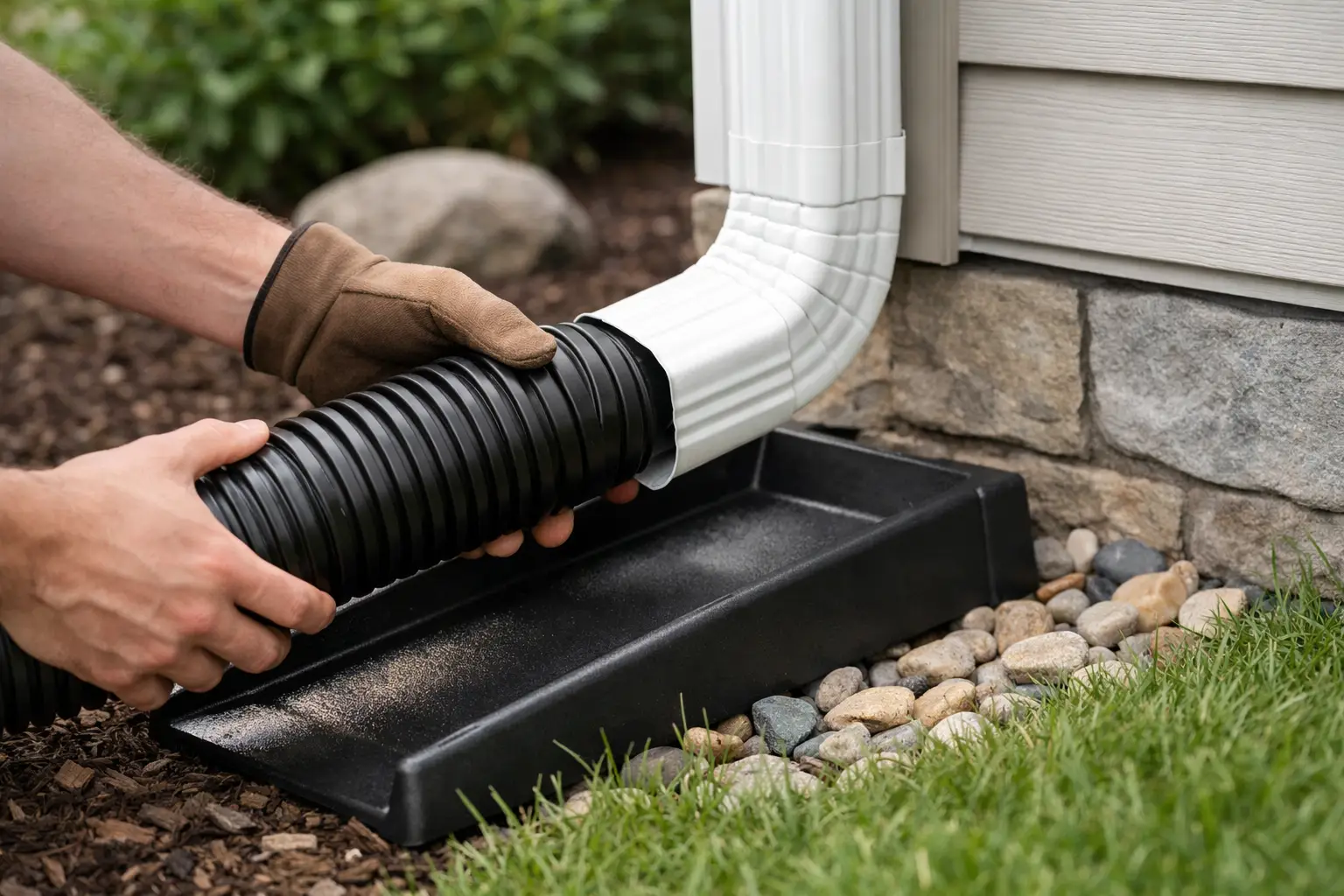
A short downspout can cause bigger problems than most homeowners expect. When rainwater dumps right next to the house, it can wash out mulch, stain concrete, soften the soil near the foundation, and leave standing water that never seems to fully dry. In Central Florida, where storms can drop a lot of water fast, proper downspout extension installation is a simple upgrade that can make a noticeable difference.
If your gutters are doing their job but water still ends up pooling near the house, the issue may not be the gutter system itself. It may be where the downspout stops. The goal is straightforward: collect roof runoff, move it efficiently, and discharge it far enough from the home that it does not circle back and create damage.
Why downspout extension installation matters
Gutters and downspouts work as a system. The gutter catches runoff from the roof, and the downspout carries that water down. But if the water exits too close to the home, you are still dealing with the same risk, just in a more concentrated spot.
That is why downspout extension installation matters. It helps direct water away from the foundation, landscaping beds, walkways, and lower exterior walls. This can reduce erosion, help prevent muddy areas, and lower the chance of water intrusion around the perimeter of the home.
In Orlando-area conditions, this is especially relevant. Frequent heavy rain can quickly overwhelm low spots in the yard. Even homes with otherwise solid gutter systems can develop drainage problems when downspouts discharge into areas that hold water or slope back toward the structure.
Signs your home needs a downspout extension
Sometimes the need is obvious. You see a trench forming under the downspout, or you notice water puddling against the slab after every storm. Other times, the signs are more gradual.
You may notice mulch washing away in the same corner of the yard, mildew on the lower wall, soil settling near the foundation, or grass that stays soggy long after the rest of the lawn dries out. In rental properties, tenants may simply report standing water near the entry path or a constant muddy spot near one side of the house.
A short extension can also create problems if it sends water across a walkway or driveway. That is not just a drainage issue. It can become a maintenance and safety concern, especially during repeated rain.
Choosing the right approach
There is no one-size-fits-all answer for downspout drainage. The right setup depends on the roofline, the grade of the yard, where water naturally flows, and how much runoff a section of roof produces.
A basic above-ground extension works well in many cases. It is a practical option when the yard slopes away from the house and there is a clear discharge area. These extensions are often the fastest and most cost-effective solution, but placement matters. If they are too short, they do not solve the problem. If they are too long or poorly positioned, they can create a tripping hazard or interfere with mowing.
In other situations, a buried drain line is the better choice. That usually makes sense when appearance matters, when the discharge path crosses a walkway, or when water needs to be carried farther across the property. The trade-off is that underground drainage requires more planning and may need periodic flushing or inspection to avoid hidden clogs.
A hinged or flip-up extension can be a good middle ground for homeowners who want better drainage without blocking regular lawn care. It is convenient, but it still needs to be positioned correctly and checked occasionally to make sure it stays clear.
What proper installation actually involves
Good downspout extension installation is not just attaching an extra piece at the bottom and calling it done. The extension needs to fit the downspout correctly, maintain a clear path for water flow, and discharge into an area that can handle runoff.
That starts with evaluating the outlet point. If the downspout already twists awkwardly, drains onto an uneven surface, or sits too close to a corner where water collects, those issues should be addressed first. Otherwise, the extension only carries the same problem a few feet farther.
The connection also needs to be secure. Loose fittings can separate during strong rain or lawn maintenance. Poor alignment can slow water flow and trap debris. A clean installation keeps the extension stable while allowing water to move out quickly.
Slope matters too. Water does not move well through flat or back-pitched extensions. Even a small grading issue can leave water sitting inside the line, which leads to sediment buildup over time. That is one reason drainage work should be looked at as part of the whole exterior water management picture, not as an isolated add-on.
Common mistakes that lead to repeat problems
The most common mistake is simply stopping too short. Many extensions push water only a foot or two away from the house, which is often not enough to make a meaningful difference during a Florida downpour.
Another issue is sending water into the wrong area. If the extension discharges into a bed that already floods, toward a neighbor’s property line, or into a low section of the yard, you are just relocating the problem. The best discharge point is one that allows water to spread out and drain naturally away from structures.
Clogging is another concern. Extensions connected to gutters full of leaves, shingle grit, and roof debris will not stay clear for long. If the gutter system needs cleaning or leaf protection, that should be part of the conversation. Water management works best when each part of the system supports the next.
There is also the appearance factor. Homeowners sometimes avoid extensions because they do not want something awkward sticking out into the yard. That is fair. The answer is not to skip the extension. It is to choose a cleaner, better-fitted solution that matches the layout of the property.
Why this matters for Orlando homes
Homes in Central Florida deal with a combination of heavy rain, intense summer storms, and soil conditions that can shift from very dry to saturated quickly. That puts extra pressure on drainage systems. A downspout that might be acceptable in a drier climate can become a problem here fast.
That is why local experience matters. The right recommendation depends on how water behaves on your property during real storm conditions, not just on what looks fine on a clear day. A clean install should account for roof runoff volume, surface drainage, nearby hardscaping, and how the yard holds water after repeated rain.
For homeowners and property managers, the practical question is simple: where is the water going now, and is that location causing wear, mess, or risk? If the answer is yes, extending the downspout is usually one of the most direct fixes available.
When to repair, adjust, or replace
Not every issue calls for a brand-new drainage setup. In some cases, the existing extension just needs to be repositioned, resecured, or lengthened. If the downspout elbow is loose or the outlet is angled poorly, a targeted adjustment may solve the issue.
If the current setup is crushed, disconnected, clogged beyond a simple cleaning, or never directed water properly in the first place, replacement is usually the better route. The same goes for extensions that have become a constant nuisance during mowing or that repeatedly wash out the same area of the yard.
When the bigger problem is undersized gutters, overflowing sections, or sagging runs, the extension alone will not fix it. That is an it-depends situation. Sometimes the extension is the missing piece. Sometimes it is only part of a larger gutter correction.
A practical next step for homeowners
If you want to check your own property, the next heavy rain will tell you a lot. Watch where each downspout discharges. Look for splashing, pooling, soil movement, and water that tracks back toward the home. Those are useful signs, and they are usually easy to spot once you know what to look for.
If you are seeing repeat drainage issues, it helps to have the full gutter and downspout system evaluated together. A professional can tell whether the fix is as simple as better downspout extension placement or whether the home needs a broader adjustment. For homeowners in the Orlando area, Precision K-Gutters focuses on practical solutions that keep water moving where it should.
A good drainage fix does not need to be complicated. It just needs to be correct, cleanly installed, and built around how water actually moves on your property.