
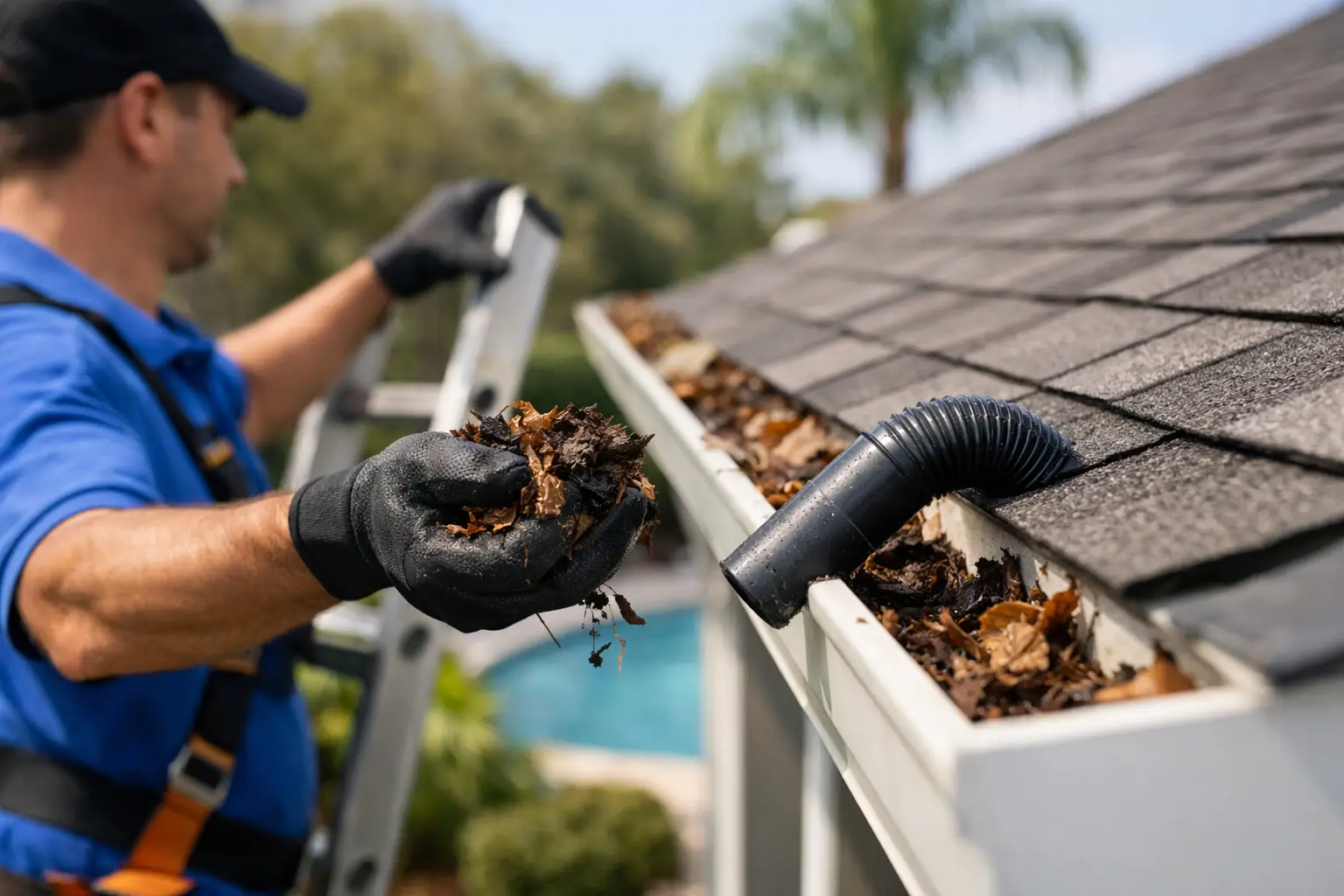
A hard Florida downpour can show you exactly how well your gutters are working. If water is spilling over the sides, pouring near the foundation, or backing up around the roofline, it is usually not a small issue. A reliable gutter cleaning service Orlando homeowners can call is often the difference between a quick fix and ongoing water damage.
In Central Florida, gutters deal with more than a few leaves. Pine needles, oak debris, seed pods, roof grit, and storm buildup can pack into channels and downspouts faster than many homeowners expect. Add frequent summer rain, and clogged gutters can go from inconvenient to damaging in a single season.
Why gutter cleaning matters in Orlando
Orlando homes take a steady beating from rain, humidity, and fast-changing weather. When gutters are clear, they move water away from the roof, siding, fascia, and foundation the way they are supposed to. When they are blocked, water starts finding its own path.
That is where the real problems begin. Overflow can stain exterior walls, soak soffits, and contribute to wood rot around the roof edge. Water that drops too close to the house can collect near the foundation or create erosion in landscaped areas. If the clog is heavy enough, the added weight can also strain hangers and pull sections of gutter out of alignment.
This is one of those maintenance items that seems easy to postpone because the damage is not always obvious right away. But with Florida storms, a clogged system rarely stays harmless for long.
What a gutter cleaning service in Orlando should actually do
Not every service is the same, and that matters. A proper gutter cleaning is not just scooping out visible debris from a few sections and calling it done. The goal is to restore full water flow through the entire system.
A professional crew should remove buildup from the gutters, clear the downspouts, and check that water is moving away from the home correctly. If a downspout is clogged below the visible opening, that needs to be addressed too. It also helps when the service includes a basic look at the condition of the system, since cleaning often reveals loose brackets, separated joints, sagging runs, or drainage issues that were hidden by debris.
Clean job sites matter as well. Homeowners should not be left with wet debris on walkways, flower beds, or the driveway. Clear communication matters just as much. If there is a repair issue, you should hear about it directly and get a straightforward recommendation instead of a vague warning.
Signs you need gutter cleaning sooner, not later
Some homes can stay on a predictable cleaning schedule, but others need attention based on what is happening around the property. Trees close to the roofline, frequent storms, and certain roof layouts can all speed up buildup.
If you notice water overflowing during rain, that is the clearest sign. You may also see gutters sagging, plant growth in the channels, dark streaking on siding, or puddling near the base of the home. In some cases, homeowners first notice the problem from inside, with moisture showing up around fascia boards or roof edges.
Another common sign is water that exits one downspout strongly while another barely trickles during the same storm. That often points to a blockage, poor pitch, or a disconnected section that needs more than a quick rinse.
How often Orlando homeowners should schedule service
There is no single schedule that fits every property, but most homes in this area benefit from regular inspections and cleaning at least twice a year. Homes under heavy tree cover may need more frequent service, especially after storm season or during periods of heavy leaf drop.
For residential property managers, the right schedule usually depends on the number of buildings, the amount of surrounding vegetation, and whether past overflow has already caused repairs. A one-time cleaning may solve the immediate issue, but recurring maintenance is often the better value when you are trying to avoid emergency calls during the rainy season.
This is where local experience matters. Orlando-area weather is different from drier regions where gutters can sit longer between service visits. Here, buildup combines with fast, heavy rainfall, so small clogs tend to become large problems quickly.
Why DIY gutter cleaning is not always the cheaper option
Many homeowners consider doing it themselves, and in some cases that can work for a single-story home with safe access and light debris. But the trade-off is not just time. It is safety, thoroughness, and whether the actual drainage problem gets solved.
Ladder work around rooflines carries real risk, especially after rain or in humid conditions. Beyond that, many DIY cleanings remove surface debris without fully clearing downspouts or checking for pitch, loose fasteners, and problem areas along the run. The gutter may look cleaner from the ground and still fail during the next storm.
If the system is older, sagging, or leaking at seams, cleaning alone may not be enough. That is another reason professional service helps. You get a clearer picture of whether you are dealing with a simple clog or a larger drainage issue.
The connection between cleaning, repairs, and long-term performance
Gutter cleaning works best when it is part of a broader maintenance approach. If sections are pulling away from the fascia, if downspouts are not directing water far enough from the house, or if seams are leaking, debris removal only solves part of the problem.
That is why homeowners often benefit from working with a company that also handles repairs and system adjustments. A clogged downspout may need clearing, but it may also need repositioning. Overflow in one corner may be caused by debris, but it can also point to improper slope or undersized drainage for that roof section.
For some properties, especially those with recurring debris issues, leaf guard options may also make sense. They are not a complete replacement for maintenance in every situation, but they can reduce buildup and cut down on how often the system needs full cleaning. It depends on the tree coverage, roof design, and the type of debris collecting around the home.
Choosing a gutter cleaning service Orlando residents can trust
A good service company should be easy to reach, clear about what is included, and realistic about what your home needs. That means no pressure, no confusing upsell language, and no guesswork about whether the crew will actually address the drainage problem.
Look for a provider that understands local conditions and focuses specifically on gutters, not one that treats it like a side task. Specialized gutter work usually leads to better results because the team is more likely to notice issues with alignment, downspout flow, fastening points, and runoff patterns around the property.
It also helps to choose a company that can support the next step if cleaning uncovers a larger issue. If your home needs a repair, downspout adjustment, or replacement section, it is easier when the same team can explain the problem clearly and provide a direct solution. Precision K-Gutters approaches service that way, with practical recommendations built around protecting the home and keeping the system working as it should.
What to expect before the next heavy rain
The best time to deal with gutter buildup is before the next storm exposes it. Waiting until water is pouring over the sides usually means the system has been struggling for a while. By then, you may already have damage starting at the fascia, soffits, landscaping, or foundation line.
A clean, properly draining gutter system does not get much attention when it is working well, and that is exactly the point. It quietly moves water away from the house and helps prevent the expensive issues homeowners never want to deal with in the first place.
If your gutters are overflowing, holding debris, or just have not been checked in too long, a professional cleaning is a practical step that protects more than the gutter itself. It protects the parts of your home that are much more expensive to fix later.