
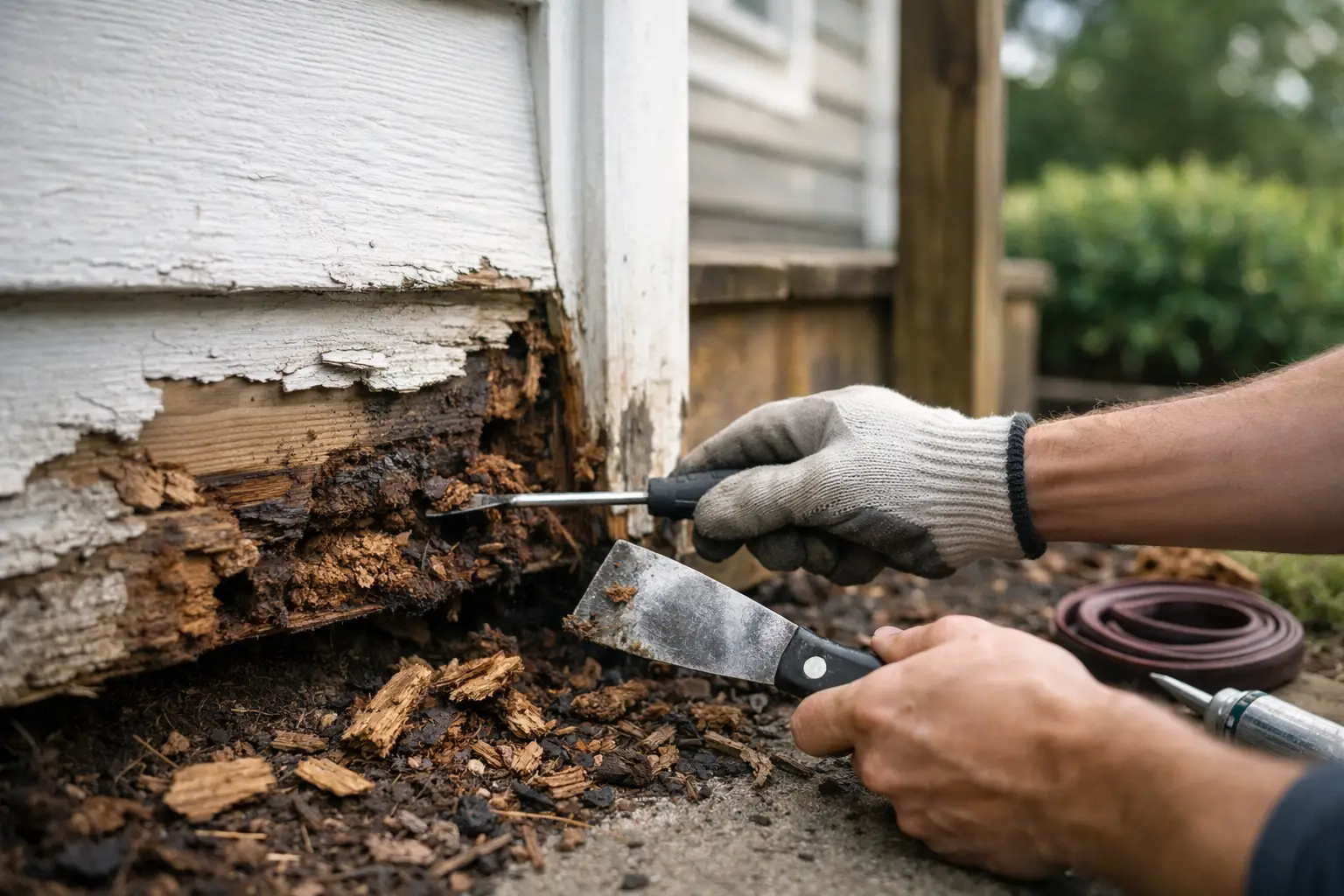
A soft window sill, peeling paint on fascia boards, or dark stains beneath a roof edge can all point to the same problem: water has been sitting where it should not. Knowing how to prevent wood rot is especially valuable for Orlando homeowners, where hard rain, high humidity, and year-round warmth can keep exterior wood damp long enough for decay to take hold.
Wood rot is rarely caused by one major storm. More often, it starts with a small gutter leak, a clogged downspout, a drip line that hits the same spot every day, or paint that has failed at a joint. Addressing those small water-management issues early is far less expensive than replacing damaged trim, siding, decking, roof sheathing, or structural framing later.
Why Wood Rot Starts Around Florida Homes
Wood rot develops when fungi have the moisture, oxygen, warmth, and untreated wood they need to grow. Central Florida supplies plenty of warmth and humidity. The part homeowners can control is repeated moisture exposure.
Exterior wood can get wet during a storm without rotting. The risk rises when it cannot dry out between storms or when water is consistently directed into a crack, seam, or unprotected end grain. This is why areas near the roofline, windows, doors, decks, and ground contact deserve regular attention.
Rot can be difficult to spot at first. Painted wood may look mostly normal while moisture works behind the surface. By the time a board feels soft or flakes apart under a screwdriver, the water source may have been active for months.
How to Prevent Wood Rot by Managing Rainwater
The most reliable way to protect wood is to move rainwater away from the roof, walls, and foundation quickly. Gutters and downspouts are not just finishing details on a home. They are a drainage system that keeps thousands of gallons of water from repeatedly running down exterior surfaces.
Keep Gutters Clear Before They Overflow
When gutters fill with leaves, roof grit, seed pods, and other debris, water can spill over the front or back edge. Front overflow often stains siding and landscaping. Back overflow is more concerning because water can run behind the gutter and soak the fascia board that supports it.
Clean gutters at least twice a year, and more often if your property has heavy tree cover. In Orlando, it also makes sense to check them before the wetter summer months and after major storms. A gutter may look clear from the ground while a downspout outlet or inside corner remains blocked.
Look for water marks on the gutter face, streaks below seams, plant growth inside the channel, or water pouring over one section during rain. These are signs that cleaning, repair, or slope adjustment may be needed.
Repair Leaks and Sagging Sections Promptly
A leaking gutter seam can drip onto the same piece of fascia, soffit, trim, or siding every time it rains. That concentrated exposure is enough to cause rot, even if the rest of the system appears to work normally.
Sagging gutters create another problem. Water settles in the low area instead of flowing toward the downspout. The added weight can pull fasteners loose, open gaps behind the gutter, and allow water to reach the wood at the roof edge.
Seamless K-gutters reduce the number of joints along a run, which means fewer common leak points. They still need proper installation, secure fastening, and the correct slope. If a gutter holds standing water after rainfall, it should be inspected rather than ignored.
Make Sure Downspouts Discharge Away From the House
A downspout that ends beside the foundation can saturate soil and splash water back onto lower siding, trim, and door frames. Over time, that moisture can damage wood and contribute to foundation drainage problems.
Downspouts should carry water away from the home to a location where it can drain safely without affecting a neighboring property. The right setup depends on the lot grade, landscaping, hardscape, and local drainage conditions. Extensions, underground drainage, or downspout adjustments can all be useful, but the goal remains simple: do not let roof runoff collect against the house.
During a heavy rain, walk around the exterior and watch where water lands. This is one of the quickest ways to find a downspout that is too short, disconnected, clogged, or aimed at a problem area.
Protect the Wood Around Roof Edges and Openings
Gutters manage roof runoff, but other exterior details also need attention. Wood rot often begins at openings and transitions where water can get behind the finished surface.
Inspect fascia and soffit along the roofline for peeling paint, stains, sagging areas, cracks, or soft spots. Fascia damage can be associated with gutter overflow, leaks, or roof issues. Repainting a damaged board without correcting the water source only covers the problem temporarily.
Check window and door trim as well. Caulk can shrink, split, or separate over time, especially in strong sun and changing temperatures. Replace failed caulk with a suitable exterior product, and keep paint or stain in good condition. Paint is not a permanent waterproof barrier, but it is an important layer of protection when the wood beneath it is dry and sound.
Decks, porch posts, railings, and steps need their own maintenance plan. Keep leaves and mulch from staying packed against wood, because trapped debris holds moisture. Make sure posts and framing are designed for ground contact where applicable, and keep vegetation trimmed back so air can circulate around the structure.
A Practical Exterior Checkup
A few checks after storms and at least twice a year can catch water issues before they become wood replacement projects. Focus on the areas where water enters, travels, or pools:
- Gutters that overflow, hold water, pull away from the roofline, or leak at seams
- Downspouts that are loose, clogged, crushed, or empty too close to the foundation
- Fascia, soffit, siding, and trim with stains, bubbling paint, cracks, or soft wood
- Windows and doors with failed caulk, damaged flashing, or moisture marks
- Deck boards, porch posts, and railings that stay damp or contact soil and debris
- Soil and landscaping that slope toward the home or trap water near exterior walls
Use caution with ladders, especially after rain. If you cannot safely inspect the upper roofline or gutter system, a professional inspection is the better choice.
Do Not Ignore Indoor Clues
Exterior drainage problems can create interior warning signs. A musty smell near an exterior wall, discoloration around a window, swollen baseboards, bubbling drywall, or a ceiling stain may indicate water intrusion. The source is not always directly above the visible damage. Water can travel along framing or behind finishes before it becomes obvious.
If you see these signs, identify and stop the moisture source first. A gutter issue, roof leak, failed flashing, plumbing leak, or condensation problem may require different repairs. Replacing visible damaged material without correcting the cause can lead to repeat damage.
When Cleaning Is Not Enough
Some maintenance tasks are straightforward, but recurring overflow or leaks usually mean there is a system issue to solve. Gutters may be undersized for a roof area, pitched incorrectly, improperly secured, damaged by a ladder or storm, or paired with downspouts that cannot handle the runoff. Leaf guards can help reduce debris buildup, but they are not a substitute for correctly sized, properly installed gutters and periodic maintenance.
For property managers, consistent inspections matter even more. Tenants may notice a leak only after it has affected a ceiling or wall, while exterior water issues can develop quietly between visits. A scheduled gutter cleaning and drainage check can help protect the property, reduce surprise repairs, and document proactive maintenance.
Precision K-Gutters helps Orlando-area homeowners and property managers address the gutter leaks, clogs, drainage issues, and loose sections that can lead to costly moisture damage. Clear recommendations and clean, properly fitted work make it easier to keep rainwater where it belongs.
Wood does not have to stay dry every minute to last. It needs a home where water is directed away, surfaces can dry, and small warning signs get attention before Florida’s next heavy rain turns them into a larger repair.
Leave a Reply