
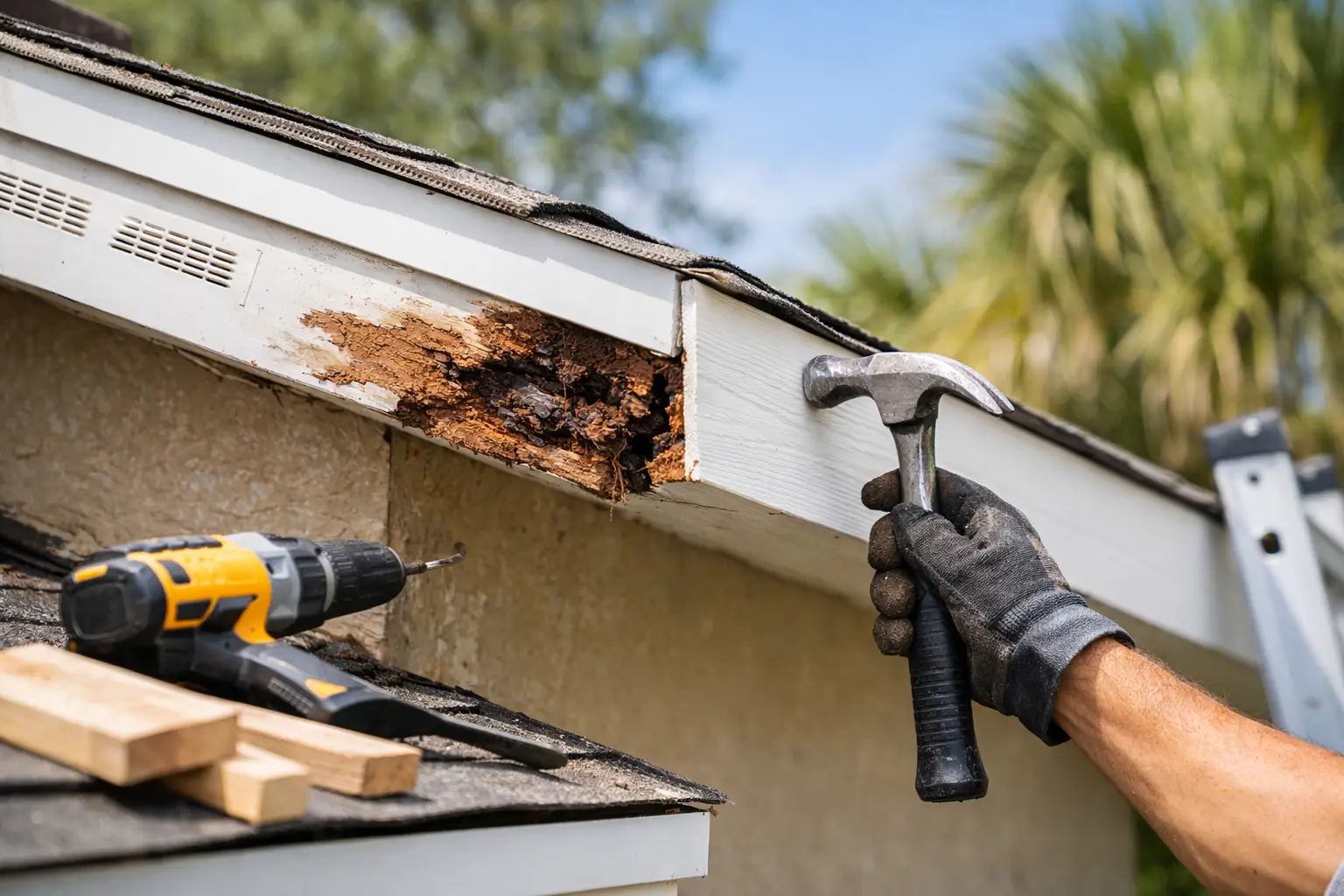
A gutter that keeps pulling away from the roof is rarely just a gutter problem. In many Orlando homes, the real issue is hidden in the wood behind it. Fascia board rot repair becomes necessary when moisture gets trapped along the roof edge, softens the wood, and leaves the gutter with nothing solid to hold onto.
That matters for more than appearance. Once the fascia starts to rot, gutters can sag, overflow gets worse, and water begins moving in the wrong direction – behind the gutter, into the soffit, or down the exterior walls. In Central Florida, where heavy rain and humidity are part of the routine, that kind of damage tends to spread faster than homeowners expect.
What the fascia board actually does
The fascia board runs along the edge of the roof and creates a straight, stable surface for the gutter system to attach to. It also helps close off the roofline and protect the edge of the roof structure from moisture and pests.
When that board is solid, gutters stay properly aligned and water can move where it should. When it is soft, cracked, or deteriorated, the fasteners holding the gutter may loosen or pull out. At that point, even a newer gutter can start acting like it is failing.
This is why fascia damage and gutter trouble often show up together. Homeowners may notice a leak, a sagging section, or water spilling over during a storm, but the underlying problem may be the wood behind the gutter rather than the metal itself.
Why fascia board rot happens
Most fascia rot starts with water that does not drain cleanly off the roofline. Clogged gutters are a common cause because standing water sits against the fascia for long periods. Overflow during heavy rain can also soak the wood repeatedly, especially if gutters are undersized, pitched incorrectly, or packed with debris.
In Orlando, frequent storms and year-round humidity add to the problem. Wood that stays damp never gets much of a chance to fully dry out. Small paint failures or hairline gaps can let water in, and once moisture gets beneath the surface, decay can begin quietly.
Poor flashing details can contribute too. If water is slipping behind the gutter instead of into it, the fascia may be getting wet every time it rains. Sometimes the damage is tied to an older gutter system that has been leaking at seams or joints for years.
It depends on how long the exposure has been happening. A small isolated area near a leaky corner may be repairable. Rot that runs across long sections of roof edge usually points to a larger drainage problem that needs to be corrected at the same time.
Signs you may need fascia board rot repair
The obvious sign is soft or crumbling wood along the roof edge, but many homeowners catch it earlier through gutter symptoms. If spikes or screws keep backing out, if one section of gutter is separating from the house, or if the gutter line looks uneven, the fascia may no longer be sound.
Peeling paint, dark staining, mildew, or swelling around the roofline are also warning signs. In some homes, you will see water marks on the soffit or notice dripping behind the gutter during rain. In others, the first clue is pest activity. Rotting wood can create openings that attract insects or small animals.
A close inspection matters because not all damage is visible from the ground. The outer face of the fascia may still look acceptable while the wood behind the paint is soft. That is one reason repairs sometimes turn out to be more involved once the gutter is removed.
When repair makes sense and when replacement is the better call
Not every damaged fascia board needs a full replacement. If rot is limited to a short section and the surrounding wood is still structurally sound, a localized repair may be enough. That can be a practical option when the issue is caught early and the gutter system is otherwise in good shape.
Full replacement is usually the better route when the wood is soft across longer stretches, when fasteners no longer hold securely, or when multiple problem areas show the same pattern. If the gutter needs to come down anyway, it often makes sense to address the full damaged section rather than patching around it.
There is a cost trade-off here. A smaller repair may be less expensive upfront, but if the underlying drainage issue remains or the neighboring wood is already compromised, another repair may follow sooner than expected. Replacing the affected run can cost more initially but may provide a more reliable base for the gutter system.
For residential property managers, consistency matters too. A patch may work on one elevation, but repeated piecemeal fixes across a portfolio can become harder to track and less efficient over time.
How fascia board rot repair is typically handled
A proper fascia board rot repair starts with inspection, not guesswork. The damaged area needs to be identified, and the cause of the moisture needs to be understood before the repair is made. Otherwise, new wood may end up facing the same conditions as the old wood.
In many cases, the gutter section has to be removed to expose the fascia fully. That allows the damaged wood to be checked from end to end and helps confirm whether the rot is shallow, isolated, or spread farther than expected. Any unsound material should be removed back to solid wood.
From there, the repair may involve replacing a section of fascia board, improving flashing, resecuring the gutter with proper fastening, and making sure the gutter pitch supports drainage. If clogs or overflow caused the problem, cleaning or upgrading the gutter system may be part of the fix.
This is also a good time to check the soffit and the rafter tails behind the fascia. If moisture has been present for a while, damage can extend beyond the board you can see. That does not always happen, but it is worth ruling out before everything is closed back up.
Gutters and fascia have to work together
A lot of roof-edge problems come from treating the wood and the gutter as separate issues. They are connected. If the fascia is replaced but the gutter still overflows, leaks, or pulls at the attachment points, the repair is vulnerable. If the gutter is rehung on rotted wood, it may look fine for a short time and then fail again.
That is why a service-led approach matters. The goal is not just to replace damaged material. The goal is to restore proper water control at the roofline so the home is protected during the next heavy storm.
For some homes, that means cleaning and resecuring existing gutters after the fascia is repaired. For others, it may mean replacing an older sectional system with a custom-fit seamless setup that reduces leak points and handles runoff more reliably. Precision K-Gutters often sees this connection firsthand on homes where gutter problems keep returning until the fascia issue is addressed too.
What Orlando homeowners should keep in mind
Central Florida weather is hard on exterior wood. Afternoon downpours, wind-driven rain, humidity, and storm season all increase the chance of recurring moisture exposure. Homes with lots of tree cover face an added risk because gutters fill faster and stay wet longer.
That does not mean every home needs major work. It does mean small warning signs should not be ignored. A single loose gutter spike or a stain near the roof edge can seem minor until a summer storm pushes enough water into the weak area to turn it into a broader repair.
Regular gutter cleaning, prompt leak repairs, and periodic inspection of the roofline can make a big difference. The earlier fascia damage is found, the more options you usually have. Once the wood loses its ability to hold the gutter securely, the repair tends to become more involved.
Choosing the right fix
If you are dealing with suspected fascia damage, the right next step is a clear evaluation of both the wood and the gutter system. That should answer a few practical questions. How far has the rot spread? Is the gutter still worth keeping? Is water getting behind the gutter, or is the main issue overflow from clogs or poor pitch?
Good repair work is not about selling the biggest job. It is about fixing the actual failure point and making sure water moves away from the home the way it should. Sometimes that is a targeted repair. Sometimes it is smarter to replace damaged fascia and correct the gutter setup at the same time.
If your gutter is sagging, leaking at the roof edge, or pulling away from the house, do not assume it is only a hardware issue. Catching fascia damage early can protect the roofline, extend the life of the gutter system, and help you avoid a much larger repair after the next stretch of heavy rain.