
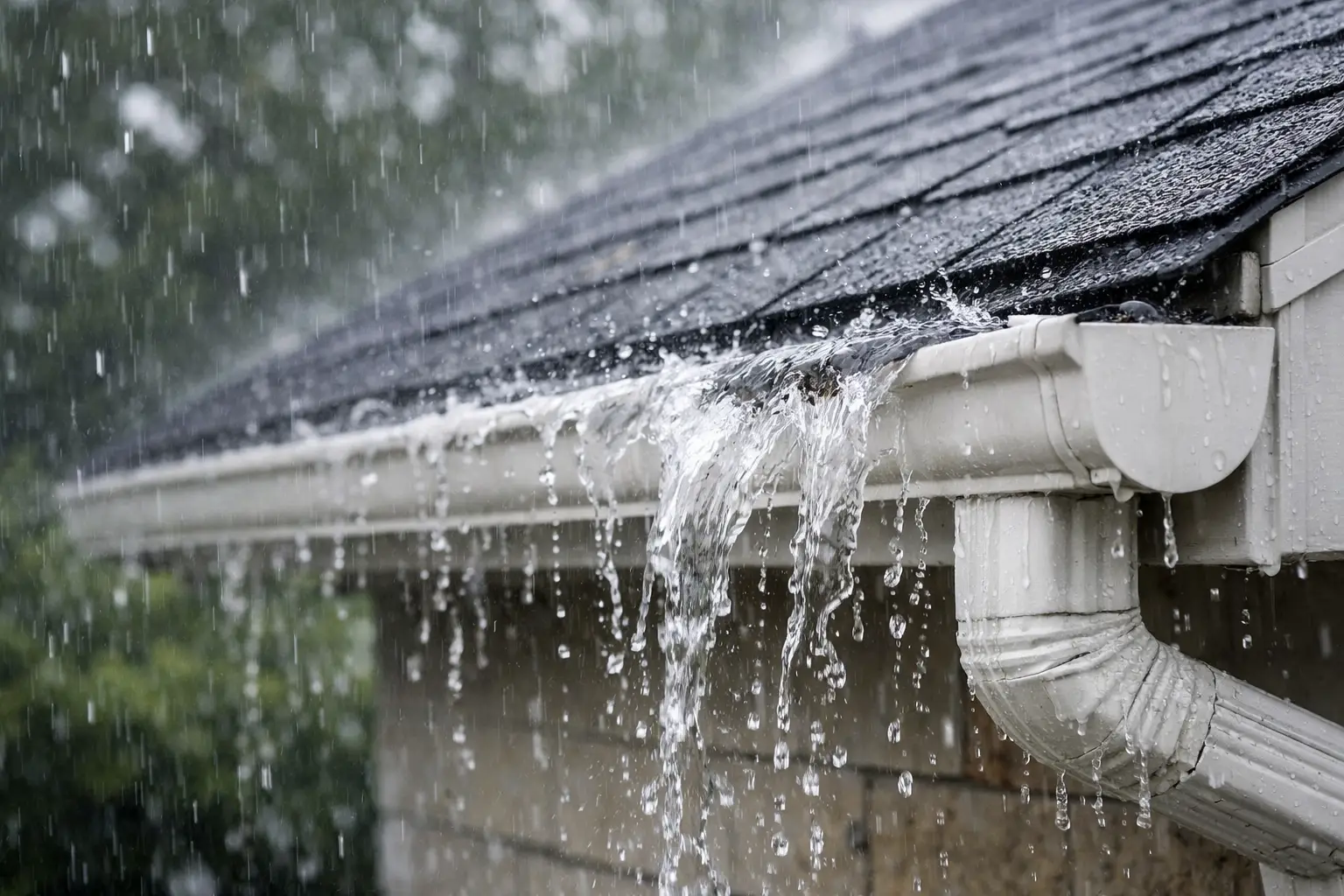
A gutter that spills water like a waterfall during a Florida storm is not just annoying. It is a warning sign. If you are asking why are gutters overflowing, the answer usually comes down to a drainage problem, a sizing issue, or a gutter system that is no longer doing its job under heavy rain.
In Orlando, that matters fast. One hard storm can send water behind the gutter, down the fascia, into soffits, against the foundation, and across walkways. The good news is that overflowing gutters usually leave clues before the damage gets expensive.
Why are gutters overflowing?
Most overflowing gutters fail for one of a few practical reasons. Debris buildup is the most common, but it is not the only one. Gutters can also overflow when the pitch is off, the downspouts cannot move water quickly enough, the system is too small for the roofline, or the gutters are pulling away from the house.
Sometimes the issue is simple and easy to correct. Other times, overflow is a sign that the whole system needs adjustments or replacement. The right fix depends on when the overflow happens, where it happens, and what the water is doing once it leaves the gutter.
Clogs are the first thing to check
Leaves, pine needles, oak debris, seed pods, and roofing granules all collect in gutters over time. In Central Florida, even homes without large trees can end up with packed gutters after storms and windy weather. When debris builds up, water cannot move freely to the downspouts. It backs up, rises over the front edge, and spills where it should not.
The pattern matters here. If the whole gutter run is overflowing, there may be a widespread clog. If water pours over in one area while the rest looks normal, the blockage may be near a downspout opening or in the downspout itself.
A clogged system often causes water to sit in the gutter long after the rain stops. You may also notice plant growth, black streaking, or insects around standing water.
Downspouts may be blocked or undersized
A gutter is only as effective as the downspouts draining it. Even if the gutter channel is mostly clear, a blocked downspout can stop the whole system from working. Water reaches the outlet, hits a blockage, and backs up quickly.
In other homes, the downspouts are clear but not adequate for the volume of water coming off the roof. That happens more often on larger roof sections or areas where two slopes push runoff into one gutter run. During a typical rain, the system may seem fine. During a hard Florida downpour, it cannot keep up.
This is where a professional inspection helps. What looks like a cleaning issue may actually be a capacity issue.
Overflow does not always mean the gutters are dirty
Homeowners are often surprised by this. A clean gutter can still overflow if it is pitched incorrectly or installed in a way that fights the natural flow of water.
Improper pitch keeps water from draining
Gutters need a slight slope so water moves toward the downspouts. If a section is level or sloped the wrong way, water pools in the middle or at the far end of the run. Once that water builds up, even a moderate rain can push it over the edge.
You might see this in older systems or in gutters that were repaired without resetting the pitch correctly. Sagging sections can create the same problem. Over time, fasteners loosen, wood trim softens, or the gutter simply shifts enough to interrupt flow.
Gutters can pull away from the fascia
If the gutter is separating from the house, rainwater may run behind it instead of into it. From the ground, that can look like overflow even when the gutter itself is not completely full. This is common when spikes pull loose, brackets fail, or fascia boards begin to rot.
Once water starts getting behind the system, the risk goes beyond the gutter. You can end up with wood rot, soffit damage, staining, and moisture problems around the roofline.
The gutter size may not match the roof
Some homes simply have more runoff than the current gutter system can handle. This shows up on steep roof sections, long runs, valleys, or areas where water concentrates heavily during storms. A small or outdated gutter profile may overflow even when it is clean and properly pitched.
That is one reason seamless K-gutter systems are a strong fit for many Orlando homes. When they are sized and installed correctly, they manage water more efficiently and reduce leak points along the run.
What heavy Florida rain changes
Not every overflow problem points to a defect. Sometimes the weather exposes a system that is only barely adequate. Central Florida storms can dump a lot of water in a short time. If your gutters handle light rain but fail during intense storms, that is still a problem worth addressing.
The question is whether the system is overwhelmed occasionally or failing consistently. If overflow happens only in extreme weather and only in one concentrated area, targeted upgrades may solve it. If it happens every rainy week, the system is underperforming.
Wind also plays a role. Blowing rain can make water appear to overshoot the gutter, especially near roof valleys or corners. But if the same area repeatedly pours over in straight rainfall too, there is likely an underlying drainage issue.
Signs the overflow is causing real damage
Overflowing gutters do more than make a mess. The water has to go somewhere, and it usually goes where you do not want it.
Watch for soil erosion near the foundation, mulch washout, staining on siding, peeling paint, wood rot, mildew near the soffits, or puddling around the home after rain. You may also notice water dripping from joints, corners, or behind the gutter line.
On driveways and walkways, overflow can create slippery surfaces and messy runoff. Around entry points, it can soak door frames and splash dirt onto exterior walls. Over time, repeated exposure adds up.
For rental properties and regularly occupied homes, these smaller warning signs are worth addressing early. A routine gutter correction is much easier than exterior wood replacement or drainage repair later.
How to fix overflowing gutters
The right fix starts with the cause. If debris is the problem, a thorough cleaning and downspout flush may restore proper flow. If the gutters are sagging, sections may need to be rehung and pitched correctly. If water is running behind the system, the attachments and fascia condition need to be checked.
In some cases, repairs are enough. In others, repairs only buy time because the overall design is not working for the roof. A system with too few downspouts, poor placement, or undersized gutters may need a more complete update.
Leaf guard solutions can also help, but only when they match the home and the debris pattern. They reduce buildup, but they do not correct bad pitch, loose gutters, or inadequate drainage capacity. That is the trade-off. Guards can lower maintenance, but they are not a cure-all.
A professional evaluation is especially useful when the overflow is isolated to one side of the house, one corner, or one roof section. Those cases often involve roof valleys, hidden downspout clogs, or installation details that are hard to diagnose from the ground.
When to stop waiting
If your gutters overflow once, pay attention. If they overflow more than once, especially in normal rain, it is time to correct it. Waiting usually means more water where it does not belong and a bigger repair bill later.
For many homes, the best time to address gutter issues is before the next stretch of heavy weather, not after water has already stained trim or collected around the foundation. That is especially true in Orlando, where sudden storms do not leave much room for a failing system.
A dependable gutter system should move water off the roof, through the downspouts, and away from the house without drama. If yours is pouring over the edge, there is a reason. The sooner that reason is identified, the easier it is to protect the home around it.
If you are noticing repeat overflow, strange drainage patterns, or water collecting where it should not, getting a clear diagnosis now can save a lot of cleanup later.