
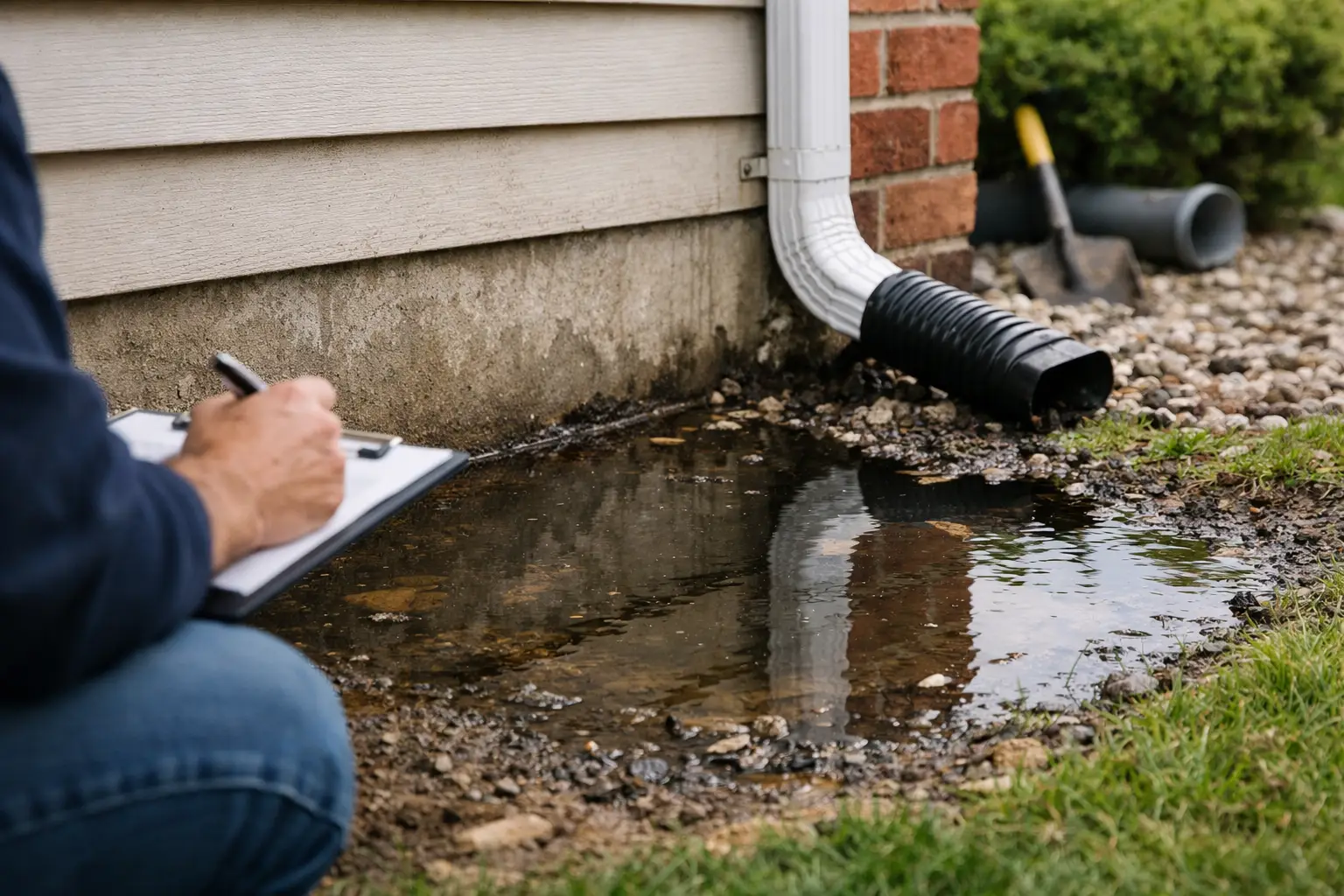
After a hard Orlando rain, it does not take much to spot trouble. If you see pooling water by foundation walls, soggy mulch beds, or runoff sitting near the base of the house for hours, the issue is not just cosmetic. Water that repeatedly collects near your home can work its way into crawl spaces, damage siding and trim, stain concrete, and put steady pressure on areas that should stay dry.
In Central Florida, this problem often shows up fast. Sudden downpours, flat lots, heavy runoff from rooflines, and clogged gutters can all send a surprising amount of water to the same few spots around a house. The good news is that the source is usually traceable. The better news is that many cases can be corrected before they turn into a larger repair.
Why pooling water by foundation matters
Most homeowners notice standing water because it looks wrong, but the real concern is what keeps happening after the storm passes. When water drains toward the house instead of away from it, the soil around the foundation stays saturated. Over time, that can contribute to settling, minor movement, slab issues, and moisture intrusion.
It also affects the exterior materials above ground. Fascia boards, siding edges, door frames, landscaping borders, and lower wall areas all take a hit when runoff is poorly managed. If you have mulch piled against the house or planting beds that hold moisture, the area can stay wet much longer than you think.
Not every puddle means structural damage is around the corner. A brief shallow puddle after a major storm may dry out without causing harm. The pattern matters more than the single event. If the same area gets saturated after every rain, it deserves attention.
The most common causes
In our experience, water collecting near a foundation usually starts above the ground, not below it. Roof drainage is often the first place to look.
Gutters that overflow or leak
When gutters are clogged with leaves, shingle grit, or roof debris, rainwater cannot move to the downspouts the way it should. It spills over the front edge or back edge instead. That dumps concentrated water right next to the house.
Leaks in seams, corners, and end caps can do the same thing, just in a less obvious way. A small drip during light rain may turn into a steady stream during a storm. If that leak happens over the same section of soil every week, the ground below gets overloaded.
Downspouts that discharge too close to the house
A downspout can be working perfectly and still create a drainage problem. If it ends right at the base of the wall or only extends a foot or two, the water has nowhere useful to go. It simply spreads into the soil next to the foundation.
This is especially common on homes where splash blocks have shifted, extensions were removed, or landscaping was added after the original drainage setup. The roof may be shedding hundreds of gallons during a storm. Without enough distance, all of it ends up where you do not want it.
Poor grading around the home
The ground should slope away from the house. When it slopes inward, even slightly, rainwater settles near the foundation instead of draining toward the yard or street. This can happen naturally over time as soil settles, but it is also common after landscape work, bed edging, paver installation, or erosion.
Florida lots can be tricky because they often look flat even when they are not draining well. A surface can appear harmless and still hold water in all the wrong places.
Short roof overhangs and concentrated runoff
Some homes have rooflines that drop a lot of water in a narrow area. Valleys, inside corners, and steep sections can send runoff to one side of the house with surprising force. If the gutter in that section is undersized, clogged, or pitched incorrectly, overflow follows quickly.
Compacted soil and dense landscaping
Not all drainage problems are caused by the gutter system alone. Compacted soil does not absorb water well, and dense landscaping beds can trap runoff before it has a chance to move away. Decorative borders may also act like small dams, keeping water close to the house longer than intended.
What to check after the next rain
If you want to find the source, do not start on a dry day. Walk the property during or right after a moderate rain and watch how the water actually moves.
Look at the gutters first. Are they overflowing in any section? Is water dripping from seams or corners? Are there areas where the gutter appears to sag or hold water instead of carrying it toward the downspout?
Then watch the downspouts. Make sure water is exiting freely and not backing up. If it pours out at the base and immediately circles back toward the house, the extension is too short or the grading is working against you.
Finally, check the ground. Look for low spots, trenches along the foundation, washed-out mulch, exposed roots, or areas where splash marks show repeated runoff. Those clues usually tell a clear story.
When the fix is simple and when it is not
Some causes of pooling water by foundation are straightforward. Others need a more layered fix.
If gutters are clogged, cleaning them may solve the problem right away. If a downspout ends too close to the home, adding a proper extension or redirecting discharge farther out may be enough. If one section of gutter leaks at a seam, repair or replacement in that area can stop concentrated runoff.
The more complicated cases usually involve multiple issues at once. A home may have clogged gutters, short downspouts, and poor grading in the same area. In that situation, fixing just one part helps, but it may not fully stop the water from collecting. That is why a full drainage picture matters.
There is also a trade-off between quick patches and long-term solutions. A temporary splash block may help in the short term, but it will not correct a sagging gutter run or a roof drainage layout that overwhelms one corner of the house. Likewise, regrading alone will not solve overflow caused by blocked gutters.
Why gutters matter more than many homeowners think
Homeowners often assume foundation drainage is only a grading issue. In reality, the gutter system controls where roof water goes in the first place. If that water is not captured and moved away correctly, the yard never gets a fair chance to drain well.
That is why clean, properly pitched gutters and correctly placed downspouts are so important. Seamless systems can also reduce leak points compared to older sectional setups. Fewer joints generally mean fewer opportunities for water to escape where it should not.
For homes in storm-prone areas like Orlando, this matters even more. Heavy rain can expose small gutter issues quickly. A section that seems fine during light weather may fail during the kind of afternoon storm we see regularly in Central Florida.
Signs the problem is becoming more serious
If water near the foundation has been happening for a while, the surrounding symptoms usually start to show up. You may notice mildew smell near entry points, damp garage edges, soft or rotting trim, staining on the lower exterior wall, or cracks that seem to worsen over time.
Inside the home, warning signs can include musty odors, wet baseboards, flooring issues near exterior walls, or repeated moisture in the same room after storms. These symptoms do not always mean major structural damage, but they do mean the water issue has likely moved beyond a simple puddle in the yard.
The value of addressing it early
Water management problems rarely get cheaper by waiting. A minor gutter overflow can turn into fascia repair. Short downspout discharge can become erosion or slab-edge moisture problems. Wet soil around the house can also make other maintenance harder, from landscaping to exterior painting.
Early correction is usually the most practical path. A targeted gutter repair, downspout adjustment, or drainage improvement costs far less than repairing damage after months or years of repeated saturation. For many homeowners, the goal is not a perfect-looking yard after every storm. It is keeping water off the house and away from the foundation consistently.
If you are seeing pooling water by foundation areas after rain, the best next step is to identify where the water starts, not just where it ends. In many cases, the problem is a manageable combination of gutter performance and drainage layout. Getting that corrected protects more than the foundation. It helps protect the whole exterior envelope of the home.
A dry perimeter after a storm is not luck. It is the result of a system that moves water where it belongs.