
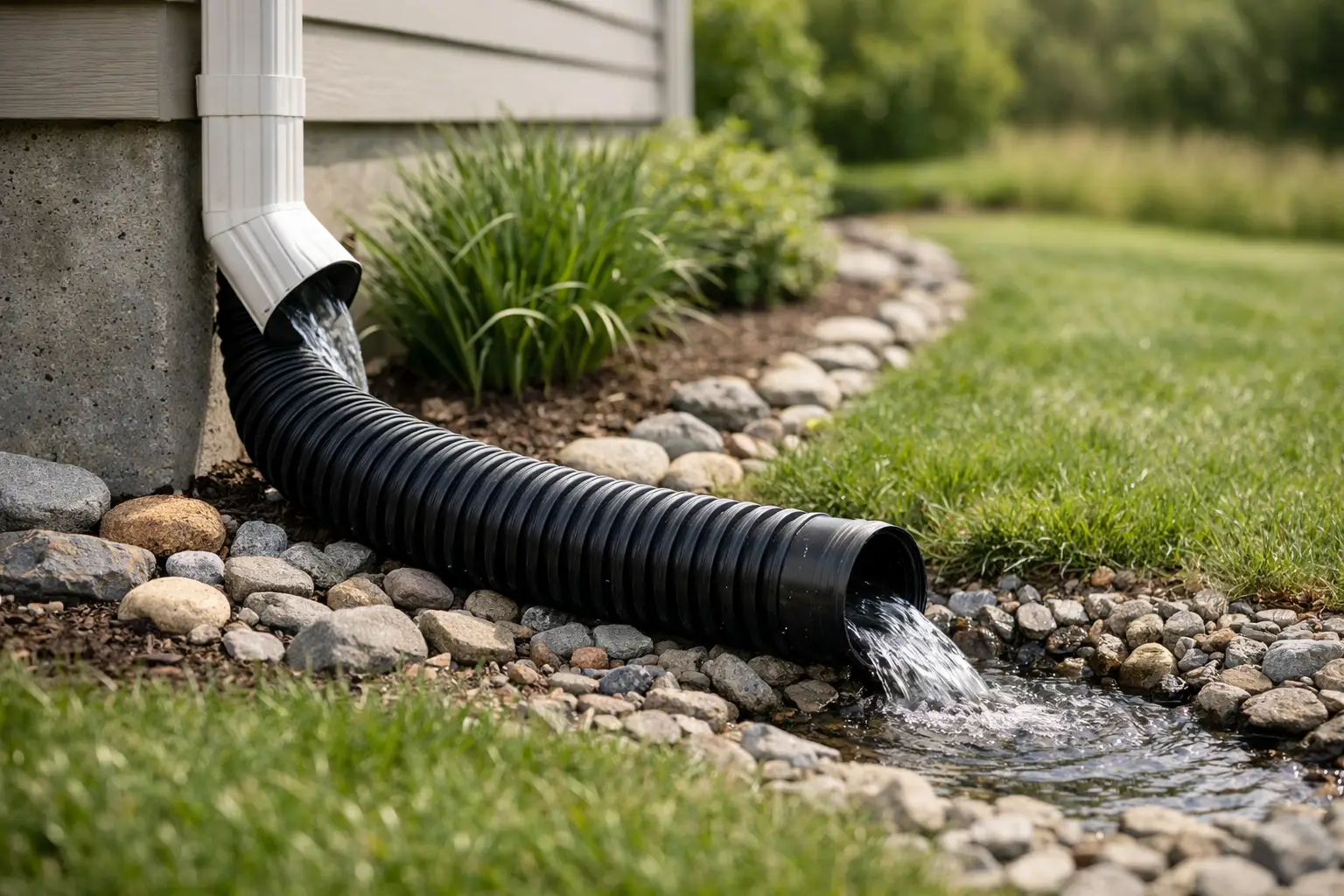
When water dumps off the roof and lands next to the foundation, the problem usually is not the rain. It is the path that rainwater takes after it reaches your gutters. If you are trying to figure out how to redirect gutter drainage away from house, the goal is simple: collect roof runoff, move it away fast, and keep it from coming back toward the structure.
In Central Florida, that matters more than many homeowners expect. A short, hard storm can push a lot of water through a gutter system in minutes. If downspouts empty too close to the house, or if the gutters are clogged, that water can pool near slab edges, wash out mulch beds, stain walls, and turn small drainage issues into larger repair bills.
Why gutter drainage causes trouble so quickly
A roof sheds a surprising amount of water. Even a moderate rain on a large roof can send hundreds of gallons toward the gutter system. When that water is not directed far enough away, it tends to collect in the same trouble spots – near corners, by entryways, around AC pads, and along low sides of the yard.
That can lead to erosion, soggy landscaping, mildew growth, and settlement concerns over time. On homes with repeated overflow, you may also see fascia damage, rotted trim, or staining where water runs behind the gutter instead of through it. The drainage fix depends on the cause, and the cause is not always the downspout alone.
Start by checking where the water is really failing
Before you add extensions or bury pipe, watch the system during a rain if you can do so safely. If not, use a hose to simulate runoff. Look at whether the gutters overflow, whether water leaks from seams or corners, and where the downspouts discharge.
Sometimes the issue is obvious. The downspout ends six inches from the wall, and the soil is washed out beneath it. Other times it is more layered. A clogged gutter can overflow at one end, while a second downspout is discharging properly but onto a yard that slopes back toward the house.
The main things to inspect are gutter clogs, sagging sections, poor pitch, loose downspouts, crushed extensions, splash blocks that have shifted, and low grading around the home. If one of those is off, adding more drainage hardware may not solve much.
How to redirect gutter drainage away from house the right way
The best solution is usually the one that matches the property layout. Some homes only need a simple extension. Others need a buried drain line or a reworked downspout path because the wrong side of the home is taking too much water.
Extend the downspout discharge point
This is the most common fix because it is often the most effective. A downspout should discharge far enough from the home that water does not soak the soil right next to the foundation. In many cases, moving the outlet 4 to 6 feet away is a strong improvement, though some lots need more distance depending on slope and soil conditions.
A basic extension works well when the yard slopes away from the house and there is clear space for runoff to spread out. It is affordable, quick to install, and easy to replace. The trade-off is appearance and foot traffic. Above-ground extensions can get kicked loose, crushed by lawn equipment, or become a tripping issue if they cross a walkway.
Use a splash block if flow is moderate
A splash block helps guide water away from the base of the downspout and reduces erosion directly below the outlet. It is useful when the volume is manageable and the surrounding grade already moves water away from the home.
It is not a cure for heavy discharge or poor slope. If the yard is flat or pitches back toward the slab, a splash block may simply spread the same problem over a slightly wider area.
Install a buried drain line
If you want a cleaner look or need to carry water across a patio edge, walkway, or planting bed, a buried drain line is often the better option. This setup connects to the downspout and moves water underground to a lower discharge point away from the house.
This can work very well, but only if the pipe is pitched correctly and the exit point stays clear. A buried line that holds sediment or roots can become its own drainage problem. In areas with frequent storms, it is worth planning access points for cleaning and making sure the outlet does not drain into a spot that stays saturated.
Add or adjust downspouts
Some homes do not have enough downspout capacity for the roof area they are draining. Others have downspouts in awkward spots that send water into corners where it collects. In that case, the fix may be to add another downspout, relocate one, or rework the run so water exits on a more suitable side of the house.
This is especially common on longer gutter sections. If water has too far to travel before it exits, the gutter may overflow during heavy rain even if it is clean. Proper placement can improve performance without changing the whole system.
Gutter condition matters as much as the drainage path
A lot of homeowners focus on where the downspout ends and miss the fact that the gutter itself is failing first. If a gutter is clogged with leaves and shingle grit, water can spill over the front edge and never make it to the downspout. If the section is loose or pitched incorrectly, water may stand in the channel and back up.
That is why any plan to redirect water should start with a clean, functioning gutter line. Repairs may include resecuring loose sections, sealing leaks, adjusting pitch, replacing damaged downspouts, or upgrading an undersized or aging system. On some homes, seamless gutters reduce leak points and improve overall water control because there are fewer joints to fail along the run.
Don’t ignore the ground around the house
Even a perfect gutter system can struggle if the soil around the foundation is low or sloped the wrong way. Water should move away from the home once it leaves the downspout. If it meets a sunken bed, compacted soil, or a low spot beside the slab, it can still collect near the structure.
This is where grading and gutter drainage work together. If the discharge point is correct but the yard does not drain, the fix may involve adding soil, reshaping the bed, or routing the outlet farther toward a lower section of the property. It depends on the lot. On a flat site, the drainage path often needs more planning than on a lot with natural fall.
When a DIY fix is enough and when it isn’t
If your gutters are in good shape and the only problem is a short downspout discharge, a basic extension or splash block may be enough. The same goes for a minor clog that can be cleaned safely and fully.
If you are seeing repeated overflow, standing water near the slab, detached downspouts, sagging gutters, or drainage issues in multiple areas, the smarter move is to have the full system evaluated. Those problems usually connect. Fixing one symptom at a time can cost more in the long run if the main issue is gutter design, pitch, or capacity.
For homeowners in the Orlando area, storm volume, leaf debris, and fast roof runoff can expose weak points quickly. A professional inspection can show whether you need a simple adjustment or a more complete drainage correction. If you need help with gutter repairs, downspout adjustments, or a custom-fit replacement system, Precision K-Gutters can assess the setup and recommend a direct solution based on how your home actually handles water.
Prevent the same problem from coming back
Once water is redirected properly, maintenance keeps it working. Gutters should stay clear, downspouts should remain firmly attached, and discharge points should be checked after major storms. Buried lines need occasional inspection, especially if the outlet is near mulch, grass, or areas where debris can accumulate.
Leaf protection can also help, but it is not one-size-fits-all. Guards reduce buildup in many systems, but the right product depends on roof type, tree coverage, and how the current gutters are installed. The best result is not just fewer clogs. It is more reliable water movement when the next hard rain comes through.
A good gutter system does not need to be complicated. It just needs to move water away from the house consistently, without leaks, overflow, or guesswork. When that path is clean and properly set up, you are not just fixing a wet spot in the yard. You are protecting the home where it counts.