
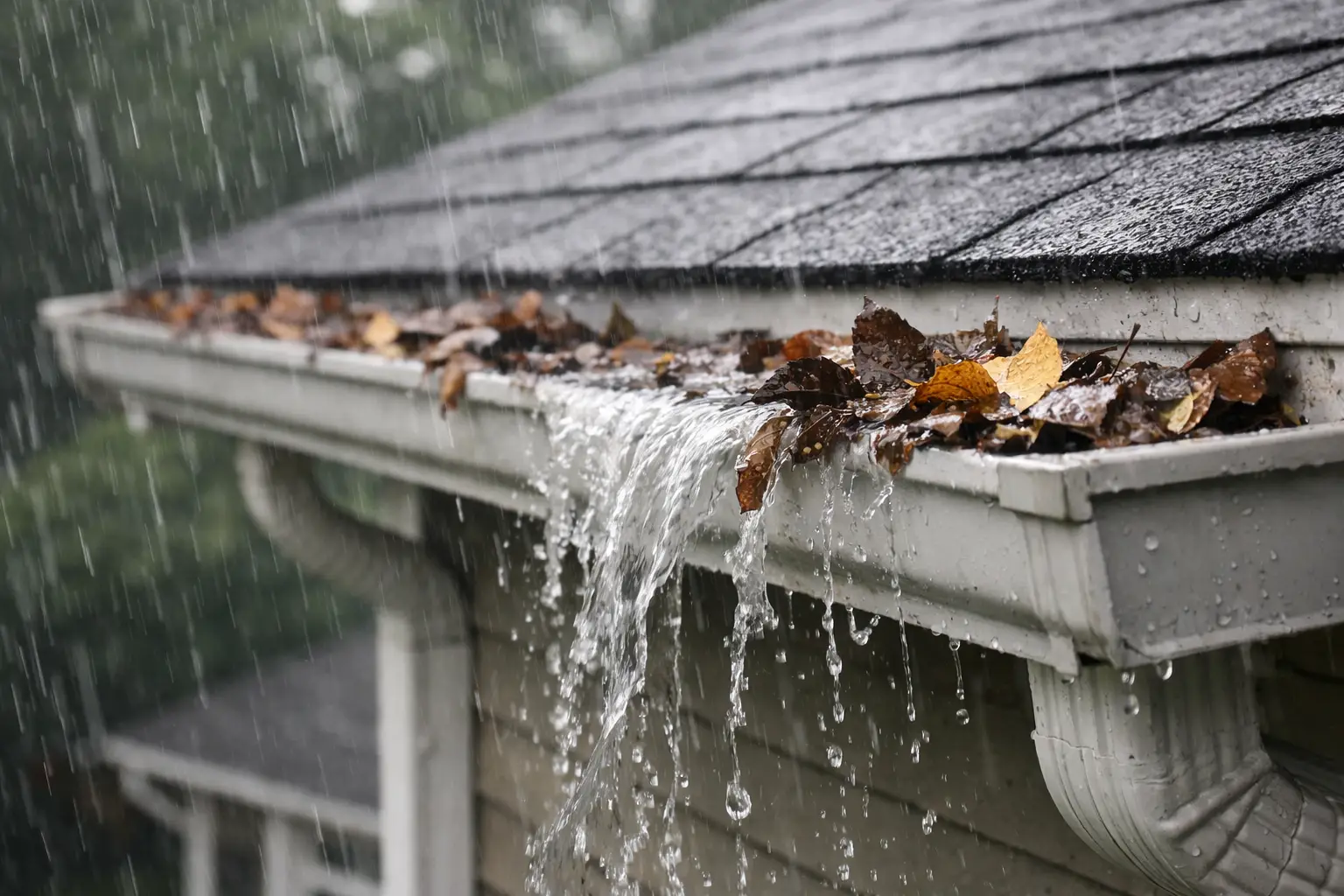
A hard Florida rain can tell you a lot about your gutter system in about thirty seconds. If water is pouring over the front edge instead of moving cleanly to the downspouts, it makes sense to ask, why are my gutters overflowing? In most cases, the problem is not just “too much rain.” It is a sign that something in the system is blocked, undersized, out of alignment, or starting to fail.
Overflowing gutters are easy to ignore when the rain stops. The trouble is what happens after that. Water can soak fascia boards, stain siding, wash out landscaping, pool near the foundation, and create rot around roof edges. In Central Florida, where fast-moving storms are common, small gutter issues can become expensive exterior repairs if they are left alone.
Why are my gutters overflowing during heavy rain?
Sometimes the answer is simple. Leaves, pine needles, roof grit, and shingle granules collect inside the gutter channel and slow the flow of water. Once the system cannot move water fast enough, it spills over the edge. If overflow only happens in one section, the clog may be local. If it happens across the whole house, you may be dealing with a larger capacity or drainage issue.
Heavy rain also exposes installation problems that stay hidden in mild weather. A gutter can look fine on a dry day and still have the wrong pitch, too few downspouts, loose hangers, or sections that sit slightly low in the middle. Water follows gravity, so even a small alignment issue can cause standing water and overflow when storms hit hard.
Another common cause is a downspout problem. The gutter itself may be open, but if the downspout is blocked or cannot move water away fast enough, the entire run backs up. That backup often shows up as water dumping over the gutter edge near corners or near the top of the downspout connection.
The most common causes of gutter overflow
Clogs are still the number one issue. Oak leaves, palm debris, seed pods, and roof sediment build up over time. In Orlando-area neighborhoods with tree cover, this can happen faster than many homeowners expect. Even a partial blockage can create a dam effect that forces water over the front lip.
Improper pitch is another frequent problem. Gutters should slope slightly toward the downspouts so water does not sit in place. If the slope is too flat, or if a section has shifted, water can stall and spill. You may also notice water lingering in the gutter long after the rain ends.
Undersized gutters can also be part of the problem. Some homes simply need a system that handles more roof runoff, especially on long roof lines or sections that catch a high volume of water. If the gutters were installed years ago without considering roof design, additions, or local storm intensity, they may not be sized well for current conditions.
Loose or sagging sections matter too. When hangers pull away from the fascia, the gutter loses its shape and pitch. Instead of directing water toward the downspout, it creates low spots where water and debris collect. Overflow then becomes more likely with every storm.
Downspout placement can be a hidden issue. A gutter run may be too long for the number of downspouts serving it. In that case, even a clean gutter can be overwhelmed in a strong rain. The fix may be less about cleaning and more about improving drainage design.
Signs the issue is more than just a cleaning problem
If your gutters overflow once after a season of falling leaves, cleaning may solve it. But repeated overflow usually points to something more. Water marks on the gutter face, peeling paint on fascia, mildew near soffits, and erosion below the same section are clues that the system has been struggling for a while.
You should also pay attention to where the water lands. Overflow near entryways, garage corners, or foundation beds can lead to bigger property issues than a messy rainstorm. If water is repeatedly collecting near the home, the gutter problem is now a drainage problem.
Another red flag is overflow from newly cleaned gutters. If the debris is gone but the water still spills over, the cause may be poor pitch, a hidden downspout clog, or a system that needs repair or replacement rather than another cleaning.
Why are my gutters overflowing in one spot?
When overflow happens in one area, that section usually has a local issue. It may be a compact clog at a downspout opening, a sagging span, or a corner where water from two roof lines meets and overwhelms the gutter. Valleys are especially important to inspect because they send concentrated water into one section very quickly.
A single trouble spot can also mean the gutter is pulling away from the fascia there. Once the front edge dips or the back edge separates, water does not enter and move through the system the way it should. Instead, it can shoot over the side or run behind the gutter, which is even worse for the wood trim.
If one spot keeps failing, the repair should focus on that section’s structure and water volume, not just surface debris.
Can leaf guards stop gutter overflow?
Leaf guards can help, but they are not a cure-all. A good guard system reduces the amount of debris entering the gutter, which lowers the chance of clogs and cuts down on cleaning frequency. That is especially useful in areas with heavy leaf drop or roof grit buildup.
Still, leaf guards do not fix bad pitch, sagging gutters, undersized sections, or poorly placed downspouts. In some cases, a guard can even mask a drainage issue for a while because the gutter looks cleaner from the ground. If the underlying system is not draining correctly, overflow can still happen.
The best results usually come from matching the guard solution to the property and making sure the gutter system itself is sound first.
What homeowners can check safely from the ground
You do not need to climb a ladder during a storm to get useful information. Watch where the water starts to overflow. If it happens near a downspout, there may be a blockage. If an entire run spills over evenly, the gutter may be full of debris or undersized for the roof section.
Look for visible sagging, separated joints, staining on fascia, and splash marks below problem areas. You can also check whether water keeps dripping from the gutters long after the rain ends, which often points to standing water caused by poor slope.
If you see granules, leaves, or plant growth sticking out of the gutter edge, cleaning is likely overdue. If the gutters look clear but still fail, the issue probably goes beyond routine maintenance.
When repair makes sense and when replacement is smarter
A targeted repair makes sense when the gutters are generally in good shape and the issue is limited to clogs, loose hangers, downspout adjustments, or a section that needs re-pitching. Those fixes can restore proper flow without replacing the whole system.
Replacement becomes the better choice when the gutters are older, repeatedly overflowing, leaking at multiple joints, or showing widespread sagging and fascia stress. Seamless systems are often a strong upgrade because they reduce leak points and create a cleaner fit along the home. For many Orlando homeowners, that means better water control during frequent storms and less ongoing trouble.
A professional inspection can usually tell the difference quickly. That matters because spending money on repeated cleanings and spot fixes does not help much if the real issue is poor design or a failing system.
Preventing future overflow
The right maintenance schedule depends on the home. A property with overhanging trees may need more frequent cleaning than an open lot. After major storms, it is smart to check for new debris, loose sections, and signs of water pooling near the foundation.
It also helps to think beyond the gutter channel itself. Downspouts should discharge water away from the home, and the system should be sized and pitched for the roof it serves. Clean workmanship and proper drainage design make a bigger difference than many people realize.
If your gutters keep overflowing, the goal is not just to stop the mess at the roofline. It is to protect the siding, fascia, landscaping, and foundation below it. For homeowners who want direct answers and clean, dependable service, a professional evaluation from a local specialist such as Precision K-Gutters can save time, prevent repeat issues, and help you fix the actual cause instead of just reacting to the next storm.