
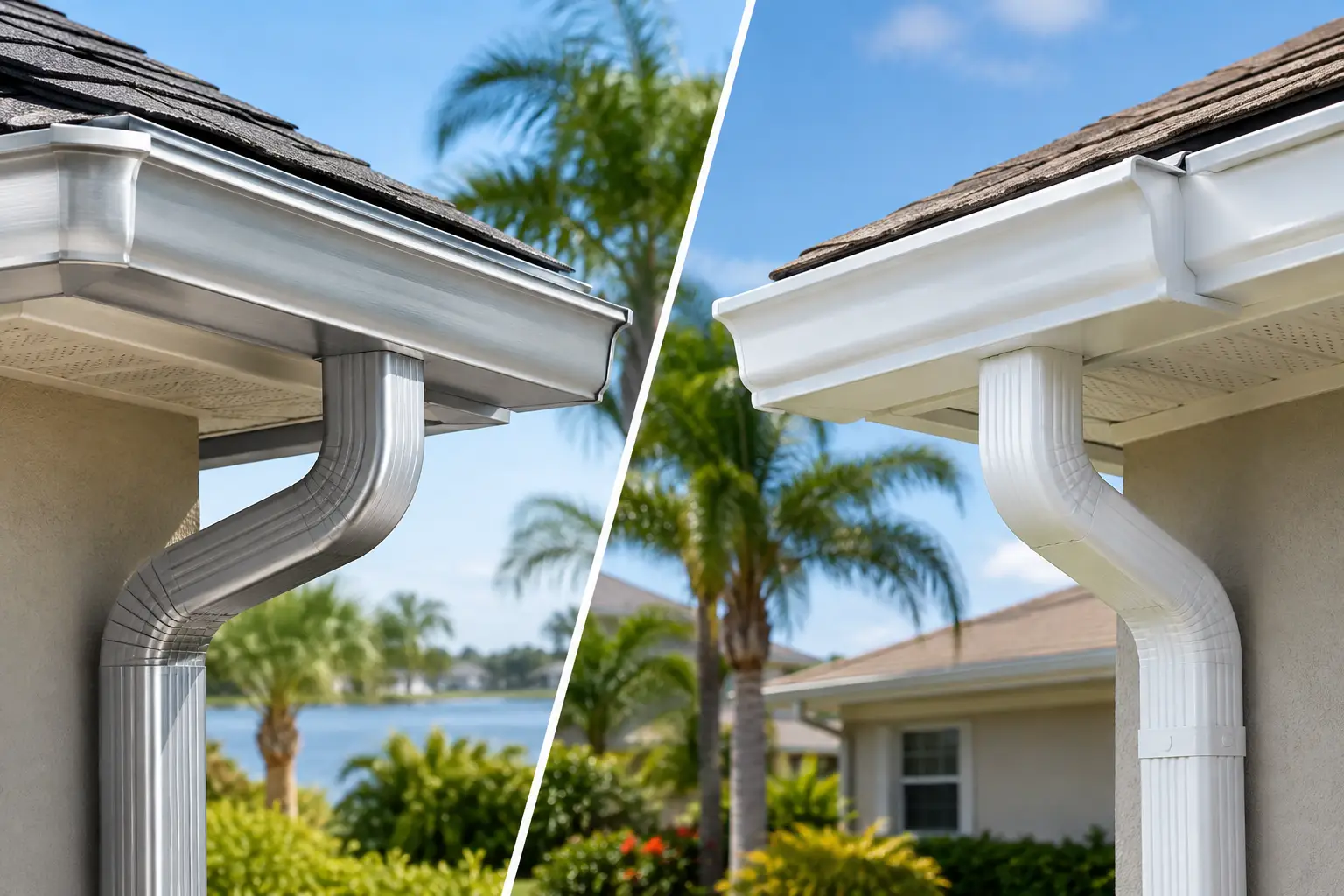
A gutter system may look simple from the ground, but its material matters when Central Florida rain starts falling hard. In the aluminum versus vinyl gutter decision, the lowest upfront price is not always the best value for your home. Orlando homeowners need gutters that can manage intense downpours, heat, humidity, wind, and year-round debris without creating more maintenance problems.
For most local homes, aluminum is the more dependable long-term choice. Vinyl can work in limited situations, especially when budget is the main concern, but it has clear trade-offs in Florida conditions. The right answer also depends on your roofline, drainage needs, and whether the gutter system is installed as a custom-fit solution or assembled from standard sections.
Aluminum Versus Vinyl Gutters: The Main Difference
Aluminum gutters are lightweight metal gutters, typically finished with a baked-on paint coating. They are available in sectional pieces, but professional installers commonly form seamless aluminum K-gutters on site to match each roofline. Fewer seams mean fewer locations where leaks can develop over time.
Vinyl gutters are plastic sections that connect with joints, connectors, end caps, and sealant. They are widely available and often used as a do-it-yourself option because the pieces are light and easy to handle. That convenience is part of their appeal, but the connected sections add more potential leak points than a seamless system.
Both materials are designed to collect rainwater and move it safely toward downspouts. The difference is how well they hold their shape, handle weather exposure, and continue performing after repeated storms.
How Orlando Weather Affects Each Material
Florida gutters have to deal with more than occasional rain. A single summer storm can send a large volume of water off the roof in minutes. Gutters also sit in direct sun for long stretches, then face rapid temperature changes when afternoon rain arrives.
Aluminum handles these conditions well when it is properly sized, pitched, and secured. It does not become brittle from normal sun exposure, and it can be formed into long, continuous runs for cleaner drainage. Quality aluminum gutters resist rust, though scratches, standing debris, and neglected joints can still lead to wear over time.
Vinyl does not rust either, which sounds attractive. However, high heat and ultraviolet exposure can cause vinyl to fade, warp, or become more brittle as it ages. Expansion and contraction are also a concern. Vinyl sections can move at their connectors, which may affect alignment and cause joints to separate or leak.
Florida does not bring the freeze-and-thaw cycle that challenges vinyl gutters in northern states, but heat is still a real factor. On an exposed roofline, a low-cost vinyl system may not keep its original fit and appearance as long as a professionally installed aluminum system.
Cost: Upfront Price Versus Long-Term Value
Vinyl is generally the less expensive material at the start. Homeowners can purchase prefabricated lengths and connectors from a home improvement store, and some choose to install them without professional help. For a small shed, detached structure, or temporary budget solution, that lower entry cost can make sense.
For a primary residence, the total cost should include more than the price per gutter section. Consider the number of seams, the quality of hangers, the downspout layout, the chance of future adjustments, and how quickly the system can move water away from the home. Repairing recurring leaks or replacing warped sections can narrow the initial price gap.
Aluminum usually costs more upfront, particularly when it is formed on site as a seamless system. In return, homeowners get custom lengths, fewer joints, a cleaner finished appearance, and a material that is better suited to long runs along the eaves. It is often the stronger value when the goal is reliable water management rather than the cheapest immediate fix.
Appearance and Fit Matter More Than Many Homeowners Expect
A gutter system is visible from the street. Crooked runs, sagging sections, mismatched connectors, and stained seams can make an otherwise well-maintained home look neglected.
Vinyl gutters come in a limited range of common colors, usually white and a few neutral shades. Over time, the color can fade or chalk in direct Florida sun. Because vinyl is normally sectional, the connectors remain visible along the roofline.
Aluminum gutters are available in more color options and can be matched closely to trim, fascia, or exterior paint. Seamless K-gutters are measured and formed for the home, so they create long, clean lines with minimal joints. That custom fit is not only about curb appeal. It also helps reduce areas where water can escape.
Strength, Sagging, and Storm Performance
Neither aluminum nor vinyl is indestructible. Aluminum can dent if struck by a ladder, a falling branch, or a hard impact. Thin aluminum is more vulnerable to dents and bending than heavier-gauge material. This is one reason material quality and proper hanger spacing matter.
Vinyl will not dent in the same way, but it can crack, bow, or pull apart at connectors. When a long gutter run fills with water because of a clog or overwhelmed downspout, the weight adds up quickly. A vinyl system with weak support can sag, which changes the slope and allows water to stand inside the gutter.
Aluminum systems installed with secure fasteners and correctly placed hangers generally provide better support for the heavy rain loads common in Orlando. They also work well with larger gutter and downspout configurations when a roof produces a high volume of runoff. For homes with steep roof pitches, wide roof planes, or problem areas where water regularly overshoots, sizing the system correctly is just as important as choosing the material.
Maintenance Needs for Aluminum and Vinyl
No gutter material stays maintenance-free. Leaves, oak tassels, pine needles, roof grit, and shingle debris can collect in either type of system. Once debris blocks the outlet or downspout, water can overflow behind the gutter, spill near the foundation, stain siding, and contribute to fascia damage.
Vinyl joints deserve regular attention because sealant can fail and connectors can shift. Homeowners should also look for cracks, separation at the corners, and sections that have started to sag.
Aluminum gutters should be checked for loose fasteners, standing water, damaged end caps, and leaks at the seams that do exist around corners and downspout outlets. Painted aluminum can last for years, but prompt repair of loose or leaking sections helps prevent water from reaching the fascia board.
Leaf guards can reduce the amount of debris entering either material, but they are not a substitute for proper installation and occasional inspection. A guard system must fit the roof and gutter correctly so water flows into the trough instead of running over the edge during heavy rain.
When Vinyl Can Be a Reasonable Choice
Vinyl is not automatically the wrong choice. It may be reasonable for a small outbuilding, a short and protected gutter run, or a homeowner who needs a low-cost temporary solution. It can also suit people comfortable with checking connectors and making small repairs themselves.
The limitations become more noticeable on a full-size home with long rooflines, high water volume, and frequent storm exposure. If the priority is a durable, clean-looking system with fewer leak points, vinyl often falls short of seamless aluminum.
Why Installation Quality Decides the Outcome
Even the best gutter material will fail if it is installed with poor pitch, too few hangers, undersized downspouts, or drainage that ends too close to the home. Gutters need a controlled slope toward the outlets, and downspouts need to direct water away from the foundation, walkways, and low-lying areas.
A professional assessment should look at where water is currently overflowing, how large the roof area is, where downspouts can be placed, and whether the fascia can securely support the system. At Precision K-Gutters, custom-measured seamless aluminum K-gutters are designed around those practical details, not just a standard gutter length pulled from a shelf.
When choosing between aluminum and vinyl, focus on the water problems you need to prevent. A properly fitted aluminum system may cost more on day one, but it gives many Orlando homes a cleaner look, fewer joints to maintain, and more dependable protection when the next heavy storm moves through.