
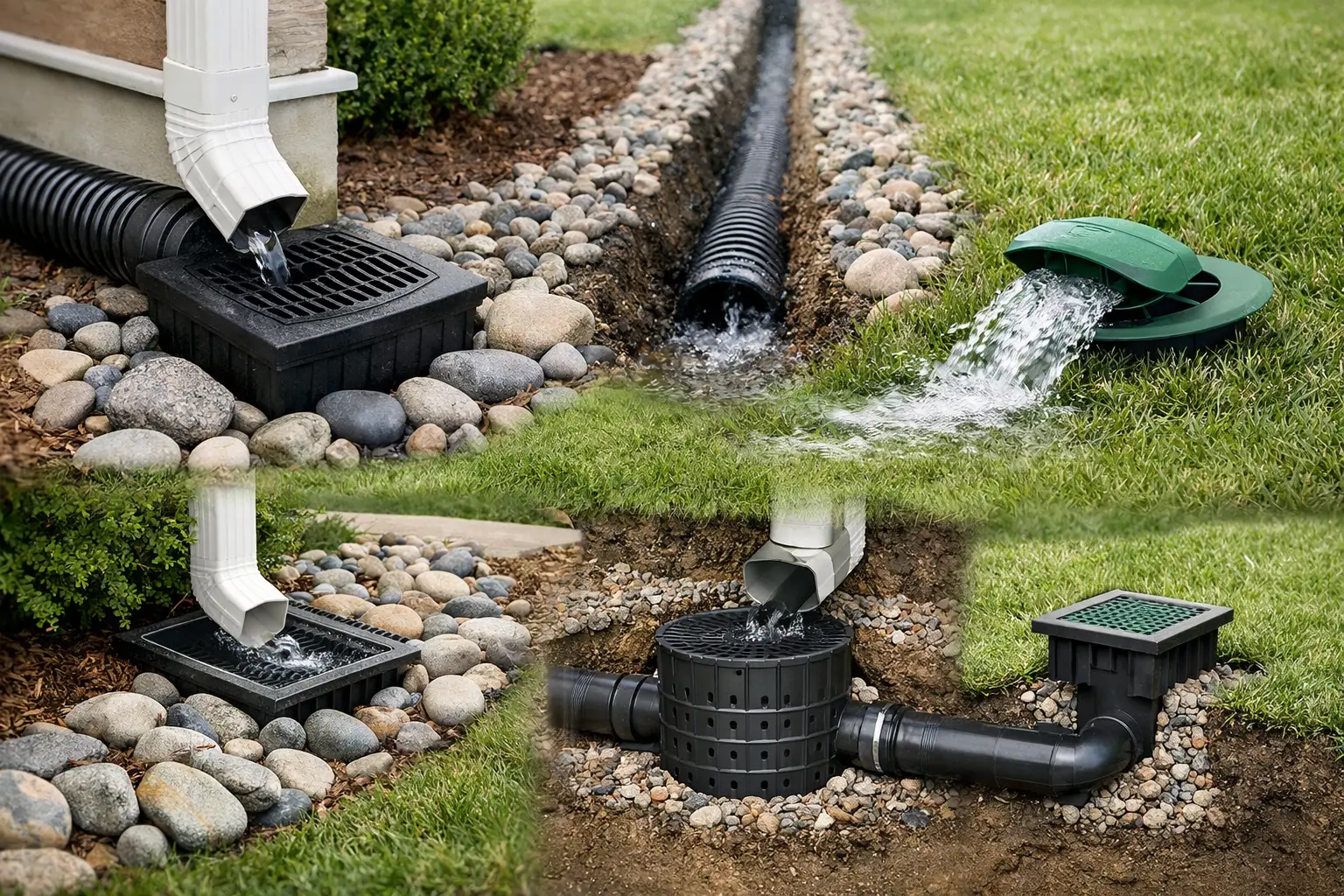
A downspout that dumps water right next to the house can cause more trouble than a clogged gutter. In Central Florida, one hard afternoon storm can leave standing water at the foundation, wash out mulch beds, and turn small drainage issues into expensive repairs. That is why homeowners often ask about the best downspout drainage solutions – not just what looks neat, but what actually moves water away from the home.
The right answer depends on your lot, your gutters, and where water already collects. A short splash block might be enough for one house. Another may need buried drain lines and a pop-up emitter to keep runoff from backing up near the slab. The goal is simple: get roof water away from the home in a controlled way.
What the best downspout drainage solutions need to do
A good drainage setup should handle heavy rain without spilling water back toward the structure. It should also reduce erosion, avoid creating soggy areas in the yard, and stay serviceable over time. If a solution works well for six months but clogs every storm season, it is not really solving the problem.
In Orlando-area neighborhoods, drainage can be tricky because many homes sit on relatively flat lots. Water does not always have a natural downhill path, so downspout drainage needs to be planned, not improvised. That is where many quick fixes fall short.
Splash blocks and surface diverters
For homes with mild runoff issues, a basic splash block can work. It sits at the bottom of the downspout and pushes water a few feet away from the house. This is one of the simplest and least expensive options, and it can help when the grading around the home already slopes away properly.
The trade-off is reach. A splash block does not move water very far, so if your soil stays saturated or your planting beds are already washing out, it may not be enough. It can also shift out of place over time, especially after strong storms or routine yard work.
Surface drain extensions do a little more. These attach to the bottom of the downspout and carry water farther into the yard. Some are flexible and easy to install, while others are rigid and hold their shape better. They are practical for homeowners who need a straightforward upgrade without digging up the yard.
Still, exposed extensions are not always ideal. They can get kicked loose, become a mowing obstacle, or stand out visually. If appearance and long-term durability matter, a buried system is usually the better move.
Buried drain lines are often the best long-term fix
When homeowners ask for the best downspout drainage solutions, buried drain lines are usually near the top of the list for a reason. They collect water from the downspout and carry it underground to a discharge point away from the house. Done correctly, they keep runoff controlled, protected, and mostly out of sight.
This option works especially well where water collects near the foundation or where multiple downspouts are contributing to the same problem area. It also gives a cleaner finished look than long above-ground extensions.
The key phrase is done correctly. Buried drainage lines need proper slope, the right pipe, and a clear outlet. If the line is too flat, water can sit in the pipe. If the outlet is poorly placed, you simply move the drainage problem from one part of the yard to another. In some cases, a buried line also needs cleanout access so future maintenance is easier.
Pop-up emitters for controlled discharge
A pop-up emitter is a common end point for a buried downspout line. Water travels underground and then releases through the emitter when flow builds up. Once the rain stops, the emitter closes again. For many residential yards, this is a practical way to move water away from the home without leaving an open pipe visible.
This works best when the emitter is placed in a spot where water can safely spread or continue draining away. If it is installed in a low area that already stays wet, it will not solve much. Pop-up emitters also need occasional inspection because grass, mud, and debris can block the opening.
Catch basins and area drains for problem spots
Sometimes the issue is not just the downspout itself. Water may be overflowing from one area and pooling in a low section of the yard, near a patio, or beside a walkway. In those cases, a catch basin or area drain can be part of the solution.
These systems collect surface water and channel it into a drainage line. They are helpful when downspout runoff combines with yard drainage problems, especially after repeated heavy rain. For homes with hardscaping, they can protect concrete edges, pavers, and entry areas from standing water.
The downside is maintenance. Catch basins collect leaves, shingle grit, and sediment over time, so they need to be cleaned out. If they are ignored, they can clog and lose effectiveness right when you need them most.
Rain barrels and water collection systems
Rain barrels are not usually the first choice for storm-heavy Florida drainage, but they can be useful in the right setup. They collect roof runoff for later use in landscaping and can reduce the amount of water discharging at one downspout during lighter rains.
For homeowners who want a simple conservation option, they are worth considering. But they do have limits. A single heavy storm can fill a barrel fast, and once it is full, overflow has to go somewhere. That means a rain barrel should still be paired with a proper overflow path so water does not end up back at the foundation.
Dry wells can work, but only in the right yard
A dry well is an underground structure that collects runoff and lets it disperse slowly into the surrounding soil. In some properties, this is one of the best downspout drainage solutions because it handles runoff underground and reduces visible discharge.
But this is very much an it depends option. Dry wells rely on soil conditions and available space. In areas with poor drainage, a high water table, or frequent saturation, they may not perform the way homeowners expect. If the soil cannot absorb water efficiently, the system can back up.
That is why dry wells should be evaluated carefully before installation. They are not a universal fix, especially in parts of Central Florida where storm volume can be intense and prolonged.
Gutter and downspout condition still matter
Even the best drainage plan will struggle if the gutter system itself is undersized, loose, or clogged. A downspout cannot carry water properly if debris is slowing the flow above it. Likewise, if gutters are overflowing at the corners, the drainage line below will not solve the full problem.
This is where homeowners sometimes spend money in the wrong order. They add an extension or buried line without correcting sagging gutters, poor pitch, or a blocked outlet. The smarter approach is to look at the whole water path from roof edge to final discharge point.
For many homes, that means starting with clean, properly functioning gutters and correctly placed downspouts. From there, the drainage solution can be matched to the runoff volume and yard layout.
How to choose the right solution for your home
If water only splashes near one corner during very heavy rain, a simple extension may be enough. If you see recurring pooling, soil erosion, stained siding, or water sitting near the slab, it is time to think beyond a basic add-on. Homes with flat lots, short roof overhangs, and repeated overflow issues usually benefit from more controlled drainage.
A practical evaluation should look at roof size, number of downspouts, grading, soil behavior, and where the water can discharge safely. It should also account for maintenance. A system that hides everything underground may look better, but it still needs to be designed so it can be inspected and cleared when necessary.
That is usually where professional input saves time and frustration. Precision K-Gutters works with homeowners across Orlando who need direct answers about runoff, overflow, and better water control around the home. The best recommendation is rarely the most complicated one. It is the one that fits the property and keeps performing after the next hard storm.
If your yard stays wet long after the rain stops, or you keep seeing water gather near the same part of the house, pay attention now. Small drainage corrections are a lot easier to deal with than foundation repairs, rotted trim, or recurring erosion.