
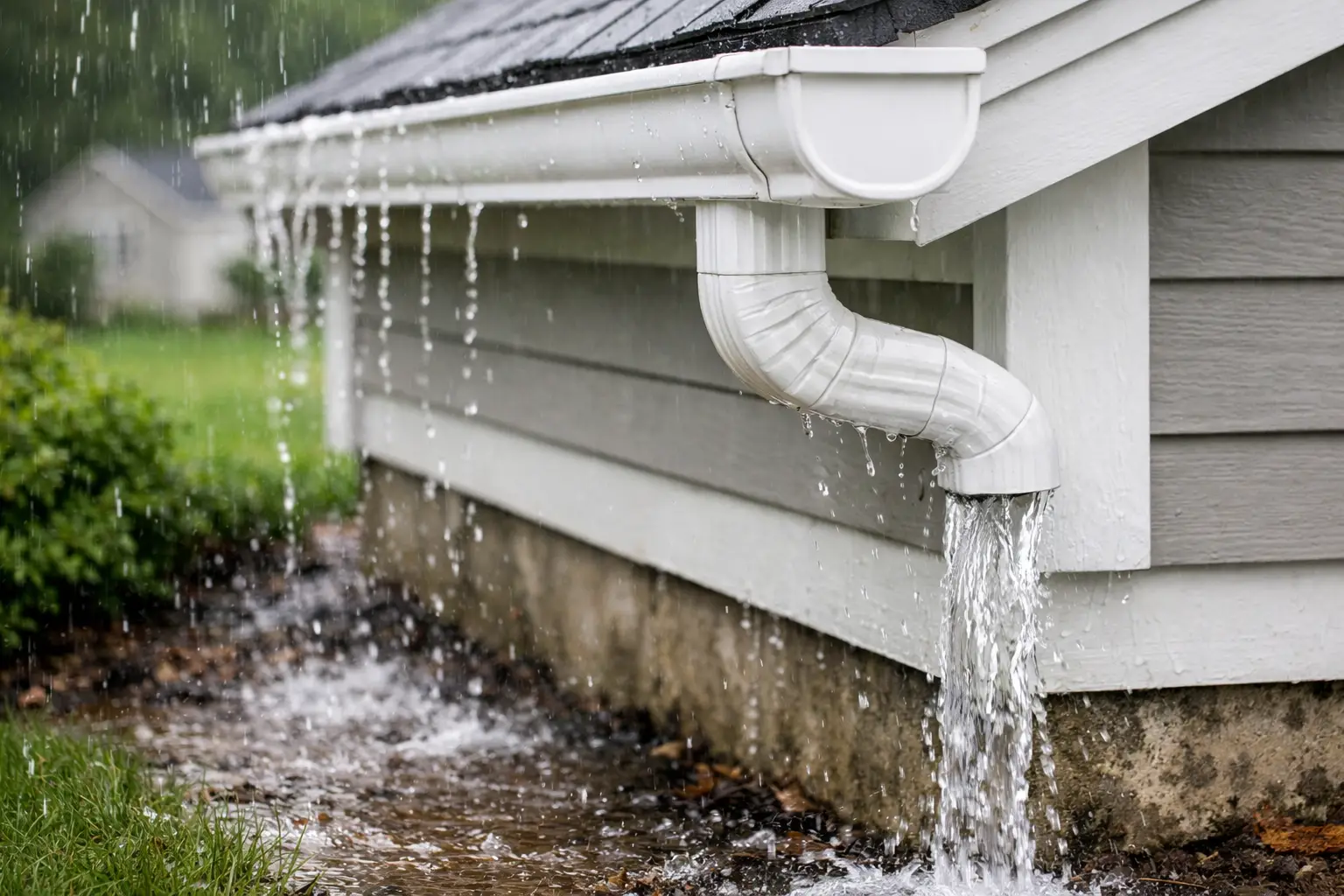
A lot of expensive home repairs start with a simple problem during a hard rain – water going where it should not. That is the real story behind water damage prevented by gutters. When a gutter system is installed correctly, kept clean, and able to drain properly, it moves runoff away from the parts of your home that are most vulnerable.
In Central Florida, that matters even more. Heavy downpours can dump a lot of water off a roof in a short amount of time, and if your gutters are clogged, leaking, undersized, or pulling away from the fascia, that water usually does not just disappear. It spills over edges, soaks wood, stains walls, erodes soil, and collects near the foundation. Good gutter performance is not about appearance alone. It is about directing water with control.
How water damage prevented by gutters starts at the roofline
Your roof sheds water fast. Gutters are there to catch that runoff and send it to downspouts before it can spread across the exterior of the house. Without that control point, rainwater can run behind fascia boards, down siding, and into areas that stay damp longer than they should.
That repeated moisture exposure creates avoidable problems. Fascia and soffit materials can begin to rot. Paint can peel. Trim can soften. In some homes, water can even work its way into roof edges or wall assemblies if drainage issues are ignored long enough. This is one of the clearest examples of water damage prevented by gutters – stopping runoff before it can soak the outer shell of the home.
Seamless systems help here because they reduce the number of joints where leaks commonly start. Fewer seams mean fewer weak points, which is one reason many homeowners choose custom-fit K-gutters instead of pieced-together sections from a store shelf.
Gutters protect more than the roof
When people think about gutters, they usually picture water coming off the roof. What they do not always think about is what happens lower down once that water is not managed well.
Siding and exterior walls
Overflowing gutters send water straight down the face of the home. Over time, that can stain siding, encourage mildew growth, and wear out painted surfaces faster. If there are cracks, gaps, or aging caulk joints, repeated wetting can also increase the chance of moisture getting behind exterior materials.
In Florida humidity, surfaces already take a beating. Add regular overflow to that mix, and maintenance costs rise quickly. Properly pitched gutters and functioning downspouts help prevent that constant wash of water against the walls.
Windows and doors
Water does not need a large opening to become a problem. If runoff keeps splashing around window trim, door frames, and lower wall sections, small failures in sealant or flashing become more likely to matter. A properly draining gutter system reduces that exposure and lowers the chance of water intrusion around openings.
Landscaping and hardscaping
Uncontrolled roof runoff can carve trenches into mulch beds, flatten plants, and wash soil away from the house. It can also stain concrete, create slippery areas, and leave puddles near walkways or patios. While that might seem less serious than structural damage, it often points to the same drainage issue: too much water concentrated in the wrong place.
Foundation problems often begin with poor drainage
One of the most important forms of protection gutters provide is at ground level. When downspouts discharge properly and move water away from the home, the soil around the foundation stays more stable. When they do not, water gathers where it should not.
That can lead to erosion, settlement concerns, and recurring damp areas around the base of the house. In some properties, pooling water may find its way into cracks, crawl spaces, or slab edges. The exact risk depends on grading, soil conditions, roof size, and how the downspouts are set up, but the general rule is simple: the closer water stays to the house, the more opportunities it has to cause trouble.
This is why gutters alone are not the full answer. The whole drainage path matters. A clean gutter that empties next to the foundation is still leaving part of the problem unsolved. Downspout placement, extensions, splash control, and slope around the home all work together.
The Orlando factor: why local weather raises the stakes
In Orlando and surrounding areas, storms are not a rare event. Sudden afternoon rain, tropical weather, and long wet stretches put more pressure on gutter systems than many homeowners expect. A gutter that seems “good enough” in light rain may fail during a real storm.
That is when hidden problems show up. Water pours over the front edge because of a clog. A loose section tilts and spills. A short downspout dumps water into the same low spot every week. A sagging run holds standing water, which adds weight and makes the issue worse.
For local homeowners and property managers, the smart approach is preventive. It is far less expensive to clean, repair, or replace problem sections than to deal with rotted wood, foundation concerns, or recurring exterior damage later.
Signs your gutter system is not preventing water damage
You do not have to wait for obvious interior leaks to know something is wrong. Exterior warning signs usually show up first.
If you see water spilling over the gutter edge during rain, that is a direct sign the system is not carrying runoff as intended. If sections are separating, sagging, or pulling away from the house, water may be escaping behind the gutter instead of flowing through it. Dark streaks on siding, soft fascia, mildew near roof edges, washed-out mulch beds, and standing water near the foundation all point to drainage issues worth addressing.
Another common clue is debris buildup. Leaves, seed pods, and roof grit reduce flow and increase the chance of clogs at outlets and downspouts. In a tree-heavy area, regular cleaning or leaf guard protection can make a noticeable difference.
Repair, cleaning, or replacement – what makes sense?
It depends on the condition of the system and how often the problem returns. If the gutters are structurally sound and the issue is mainly debris, a professional cleaning may be enough. If there are isolated leaks, loose fasteners, poor pitch, or one failing downspout, targeted repairs often solve the problem.
Replacement makes more sense when the system has widespread seam leaks, repeated overflow issues, rust, separation at multiple points, or an overall design that does not handle roof runoff well. Older sectional gutters can become a cycle of patchwork repairs. At some point, a seamless system gives better long-term value because it improves both appearance and performance.
For many homes, the best answer is not the cheapest immediate fix. It is the option that restores reliable drainage and reduces the chance of repeated water exposure over the next several storm seasons.
Why workmanship matters as much as the gutter itself
Even quality materials will underperform if the install is wrong. Pitch has to be correct. Hangers need proper spacing. Downspouts should be placed where water can exit efficiently. The system should be sized for the roof area and local rain conditions, not guessed at.
That is where professional installation and service make a practical difference. Clean lines look better, but more importantly, a well-built gutter system works consistently under pressure. Precision K-Gutters focuses on that kind of result – custom-fit systems, direct solutions, and maintenance that helps homeowners avoid bigger repairs later.
Keep the system working before the next heavy rain
Gutters are easy to ignore when the weather is dry. The problem is that water damage usually shows up after the drainage failure, not before it. By then, what could have been a straightforward service call can turn into wood repair, repainting, drainage correction, or foundation evaluation.
If your gutters overflow, leak, or dump water too close to the house, they are not just underperforming. They are leaving your home exposed. A clean, properly pitched, well-draining gutter system does one job, but it is a job that protects nearly every part of the exterior. Taking care of it now is one of the more practical ways to avoid preventable repairs later.