
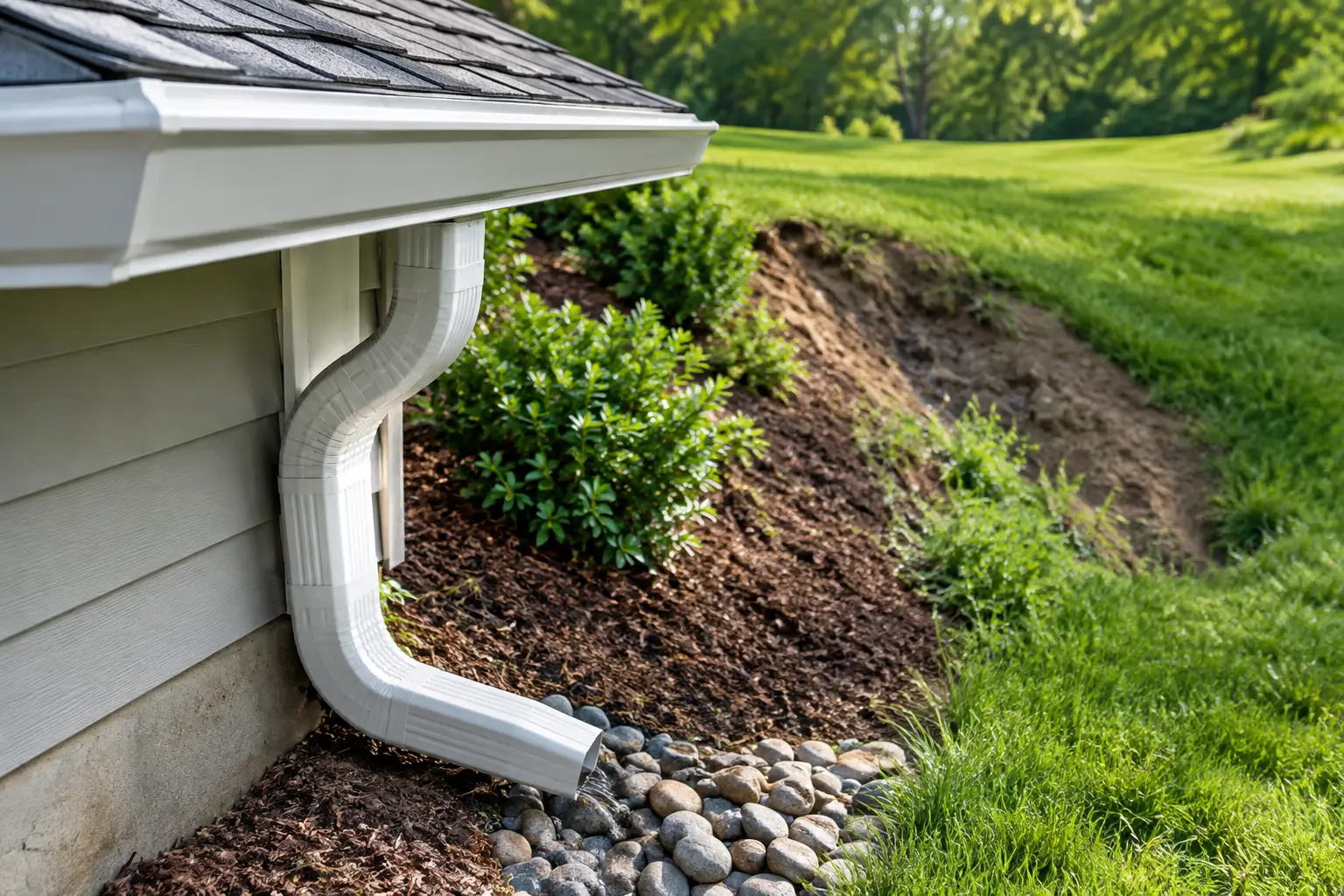
A Central Florida downpour can send a surprising amount of water off one roof in a matter of minutes. So, do gutters help prevent soil erosion? Yes – when they are correctly sized, securely installed, clean, and connected to downspouts that carry water well away from the house. Gutters do not stop rain from falling, but they prevent roof runoff from repeatedly hammering the same strip of soil beside your foundation.
Without a controlled path, roof water lands in concentrated sheets. It can wash away mulch, carve channels through flower beds, expose tree roots, and create low spots where water continues to collect. Over time, that erosion can affect more than curb appeal. It may leave water sitting near the foundation, splash dirt onto siding, and contribute to moisture problems around the home.
How Gutters Help Prevent Soil Erosion
A gutter system catches runoff at the roof edge and moves it into downspouts instead of allowing it to fall directly onto the ground. The key benefit is control. Rather than dispersing unpredictably along the entire roofline, water is routed to specific discharge points where it can be carried away safely.
This matters especially in Orlando, where heavy afternoon storms can quickly overwhelm bare soil and shallow landscaping beds. A roof without gutters may shed water in a continuous curtain. Even a small section of roof can direct enough water to move mulch and soil during repeated storms.
Proper gutters reduce that impact in three practical ways. First, they keep roof runoff from striking the soil at full force. Second, they move water away from the foundation perimeter. Third, they help preserve the grade around the home by reducing washouts and ruts.
Gutters are most effective when the whole drainage path works. A clean gutter that drains into a downspout ending beside the slab still leaves a water-management problem. The system needs to collect, carry, and discharge water in a location that will not create erosion or pooling.
Gutters Alone Cannot Solve Every Erosion Problem
Gutters are a strong first line of defense, but they are not a complete solution for every property. Soil erosion can also result from poor grading, compacted ground, damaged drainage swales, bare slopes, or downspouts that empty into an already saturated area.
The goal is to direct water away from the home without simply moving the problem to another part of the yard. In many cases, a downspout extension, splash block, buried drain line, or a carefully placed drainage area can help disperse water more gradually. The right option depends on the layout of the property, soil conditions, landscaping, and where water can safely go.
For example, sending water toward a neighbor’s property or directly onto a driveway may create a new issue. Water should discharge where it can flow away from the structure and soak into the ground without washing out soil or creating standing water.
Why Downspout Placement Matters as Much as Gutters
A gutter system is only as effective as its downspouts. Downspouts should be positioned to carry water away from vulnerable areas, including foundation walls, entryways, patios, air conditioning pads, and landscaped beds that have a history of washing out.
As a general rule, water should be discharged several feet away from the foundation. The exact distance depends on the grade and how water moves across the property. A downspout extension may be enough on a lot with good natural slope. On a flat lot, more deliberate drainage planning may be needed.
A short downspout that ends at the corner of the home can create a concentrated stream during a storm. That stream may dig a trench at the outlet, undermine mulch, and keep the soil beside the foundation wet. Adding an extension or adjusting the direction of the discharge can often make a meaningful difference.
The outlet should also be protected. A splash block can help spread water over a wider area, while a longer extension directs water beyond the bed or foundation zone. Neither option replaces proper grading, but both can reduce the force of water hitting one small area.
Common Gutter Problems That Lead to Erosion
Even homes with gutters can experience erosion when the system is clogged, damaged, undersized, or poorly pitched. Overflowing gutters are especially common during storms when leaves, pine needles, roof grit, and other debris restrict the flow to the downspouts.
When water spills over the front or back edge of a gutter, it lands in a concentrated line below the roof. That can cause the same erosion issues as having no gutter at all. Overflow also leaves water against fascia boards and siding, creating additional maintenance concerns.
Watch for these signs that gutter performance may be contributing to soil loss:
- Mulch or soil repeatedly washing away below a roof edge or downspout
- Small trenches, exposed roots, or bare patches beside the home
- Water pooling near the foundation after rain
- Gutters that overflow, sag, drip at seams, or spill from one end
- Downspouts that are disconnected, crushed, or aimed toward the house
These issues are worth addressing early. A small washout is usually easier to correct than a recurring drainage problem that damages landscaping and leaves the foundation area wet through every storm season.
Choosing the Right Gutter Setup for Florida Rain
For most homes, seamless K-style gutters provide an effective way to manage roof runoff with fewer joints along the gutter run. Fewer seams can mean fewer common leak points, while custom on-site measurements help create a cleaner fit along the roofline.
Size matters, too. A system that is too small for the roof area or local rainfall intensity can overflow even when it is clean. Larger roof sections, steep pitches, and areas that receive heavy sheets of runoff may need additional downspouts or larger gutter capacity. This is not a one-size-fits-all decision. The roof design and drainage layout should guide the installation.
Proper pitch is another detail that makes a difference. Gutters need a gradual slope toward the downspouts so water keeps moving instead of sitting in the channel. Too little pitch can leave standing water and debris. Too much pitch can look uneven and may reduce how well the gutter catches runoff along part of the roofline.
Professional installation helps ensure the gutters are securely fastened, properly aligned, and matched to the home’s drainage needs. Just as important, the job should account for where each downspout will send water after it leaves the roof.
Maintenance Keeps Erosion Protection Working
Gutters cannot direct water effectively when they are full of debris. Regular cleaning is one of the simplest ways to reduce overflow and protect the soil below the roofline. Homes under trees may need service more often, but any home can collect leaves, seed pods, shingle grit, and wind-blown debris.
During cleaning, it is also smart to check for loose hangers, leaking corners, separated downspouts, and sections that hold water. Small repairs can prevent a larger overflow problem during the next major storm.
Leaf guards can reduce the amount of debris entering the gutter, but they are not maintenance-free. The right guard can make cleaning less frequent and help water move more reliably, especially on homes with nearby trees. However, guards should be selected and installed with the roof type, gutter size, and local rainfall in mind.
If you are seeing washouts near the house, do not focus only on replacing mulch. First, identify where the water is coming from and whether the gutter and downspout system is controlling it properly. A clean, correctly installed system with well-placed downspouts can protect both the appearance of your yard and the areas of the home that depend on good drainage.
For Orlando homeowners and property managers, the practical next step is simple: inspect the ground around the home after a hard rain. Where water is overflowing, pooling, or cutting through soil, that is where a gutter adjustment, repair, cleaning, or drainage improvement can make the biggest difference.