
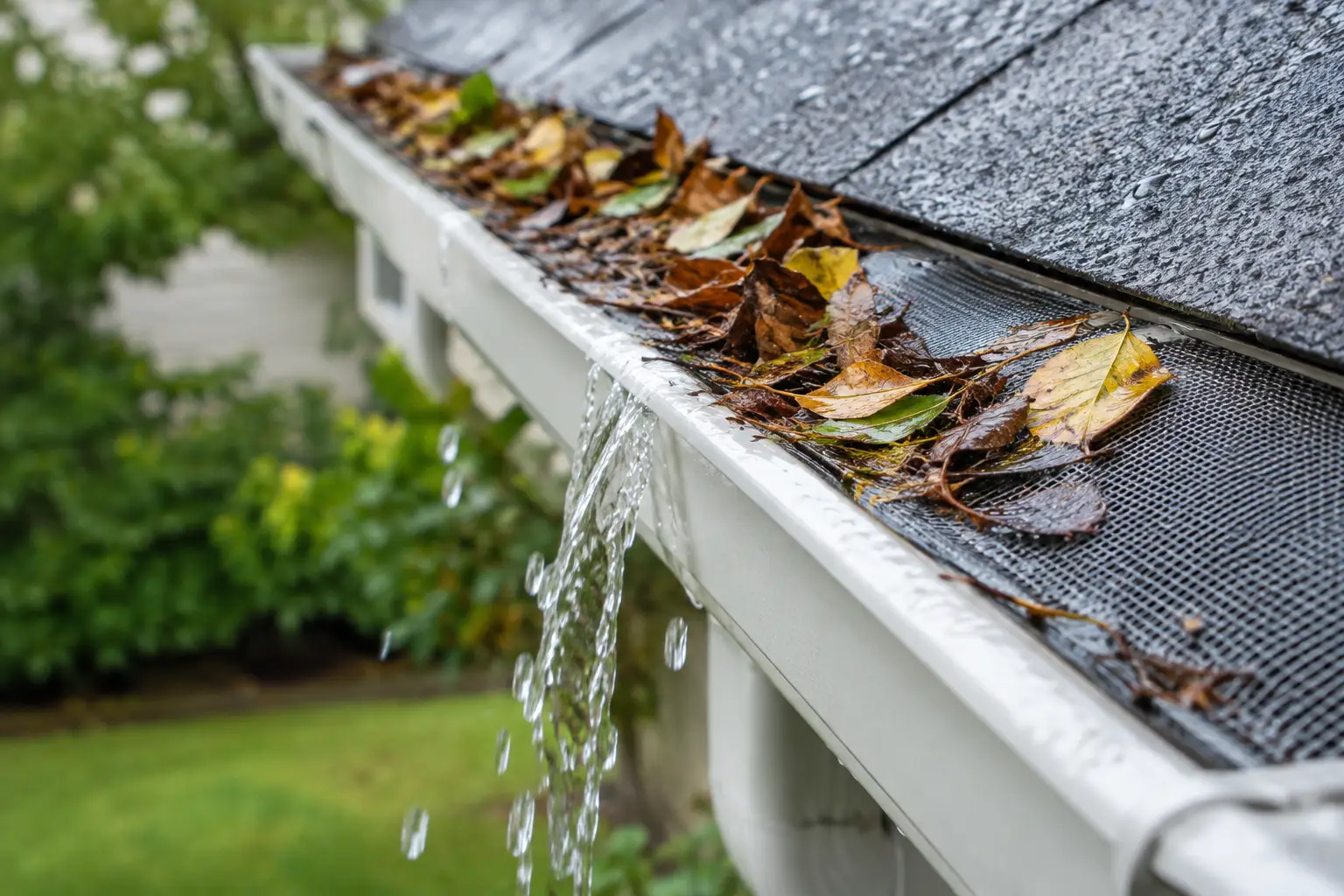
A gutter guard can reduce the amount of debris entering your gutters, but it does not make the system maintenance-free. Leaf guard clogging is a common reason homeowners still see water spilling over the edge of the gutter during a Central Florida downpour. When that happens, the issue is often not the guard itself. It may be debris collecting on top, a blocked downspout, improper gutter pitch, or a guard that is not a good fit for the roof.
For Orlando homeowners and property managers, the goal is simple: keep rainwater moving away from the roofline, siding, fascia, and foundation. A properly installed guard can help. It just needs the right design, installation, and occasional attention.
What Leaf Guard Clogging Looks Like
Clogging does not always mean a gutter is packed full of leaves. With guards in place, buildup can occur in several different ways. Leaves, oak tassels, pine needles, seed pods, roof grit, and pollen can collect across the top of the guard. During light rain, water may pass through slowly. During a heavy storm, that layer can act like a filter and send water over the front edge instead.
Some debris makes it through the guard and settles inside the gutter. Fine material is especially likely to do this, including shingle granules, sand-like roof debris, and decaying organic matter. Over time, it can form a dense sludge along the gutter bottom and restrict the path to the downspout.
The most noticeable signs are water pouring over the gutter, streaks on the fascia, dripping behind the gutter, or water pooling near the home after rain. You may also see plants or dark staining near gutter seams. These are signals to inspect the full drainage system rather than assuming the guard has failed.
Why Gutter Guards Clog in Central Florida
Orlando does not have a single leaf season. Trees shed at different times of year, and summer storms can move a large amount of debris onto a roof in minutes. Live oak leaves, pine needles, palm debris, blossoms, and airborne pollen can all create buildup, especially on homes with mature landscaping.
Heavy rainfall changes the equation. A guard that handles a normal shower may struggle when water is rushing down a steep roof during a thunderstorm. If the guard surface is partially covered, water can overshoot the opening rather than flow into the gutter. This is more likely when gutters are undersized, the guard is installed at the wrong angle, or the system does not have enough downspout capacity.
Roof conditions matter too. Older shingles can release more granules, while low-slope roofs may allow debris to sit longer before wind or rain moves it. Nearby trees add another variable. A screen that works well against broad leaves may not perform as well around pine needles or fine flower debris.
That is why no single gutter guard is right for every home. The roof pitch, gutter size, tree coverage, drainage layout, and type of debris all affect the best solution.
The Most Common Causes of Leaf Guard Clogging
A blocked guard surface is only one possibility. A professional inspection should look at the entire system, from the roof edge to the point where the downspout releases water.
Debris sitting on top of the guard
Fine mesh and screen-style guards are designed to keep larger debris out. They can still collect small leaves, pollen clumps, roof granules, and pine needles on top. Wind may clear some material, but damp debris can cling to the surface and build up over time.
Clogged downspouts
Water can reach the gutter perfectly and still overflow if it cannot exit through the downspout. Elbows, underground drain connections, and the lower section of a downspout are common choke points. If only one area of the gutter overflows, a restricted downspout is often worth checking first.
Incorrect gutter slope or loose sections
Gutters need a controlled slope toward the downspouts. If a section is sagging, pulling away from the fascia, or pitched incorrectly, water can stand in the gutter and debris will settle there. Guards cannot correct a structural gutter problem.
Poor fit at the roof edge
A guard needs to meet the roof and gutter correctly. A gap, an awkward angle, or an installation that interferes with water flow can cause runoff to skip past the gutter. This is especially noticeable during hard rain and is sometimes mistaken for an ordinary clog.
Too little drainage capacity
Long gutter runs, large roof sections, and fast-moving rainwater may require additional or larger downspouts. In Florida, a system that seems adequate most of the year can be overwhelmed during a short, intense storm. The answer may be a drainage adjustment, not simply more cleaning.
How to Check a Guarded Gutter Safely
Avoid climbing a ladder during or immediately after a storm. Wet roofs, slippery ladders, and saturated ground create unnecessary risk. Start with a visual check from the ground once conditions are dry.
Look for water marks below the gutter line, damp spots behind the gutter, soil erosion below downspouts, and sections where the gutter appears uneven. If you can safely see the guard from a stable position, look for debris mats, plants, or obvious buildup along the edge.
You can also test drainage from the ground by running a hose into the gutter only if you can do so safely without leaning from a ladder. Watch the downspout outlet. A strong, steady discharge usually indicates water is moving through the system. Slow flow, backup, or water spilling over elsewhere points to a restriction or drainage issue that needs closer attention.
For multi-story homes, steep roofs, or gutters near power lines, leave the inspection to a trained gutter professional. A clean job is not worth a fall or property damage.
Maintenance That Keeps Guards Working
Gutter guards reduce cleaning frequency, but they do not eliminate maintenance. The right schedule depends on tree coverage and the type of guard installed. Homes under heavy tree canopy may need service more often than homes with open rooflines.
As a practical baseline, inspect guarded gutters at least twice a year and after major storms. In the Orlando area, it is smart to check before the wet summer season and again after periods of heavy leaf or seed drop. Property managers should also include gutter checks in seasonal exterior maintenance, particularly for vacant homes where an overflow can go unnoticed.
Maintenance should address more than visible debris. It should include clearing the guard surface, removing buildup from inside the gutters when needed, flushing downspouts, checking fasteners and seams, and confirming that water discharges away from the foundation. If extensions are loose or missing, water can still collect too close to the home even when the gutter is clean.
When Cleaning Is Enough and When Repairs Are Needed
If debris is limited to the top of the guard and water resumes normal flow after cleaning, routine maintenance may be all that is needed. This is common after storms or seasonal shedding.
Repeated overflow in the same location calls for a closer look. A sagging gutter, damaged fascia, leaking seam, inadequate downspout, or incorrectly fitted guard will not be solved by cleaning alone. Continuing to clear the same spot without correcting the cause can lead to recurring overflow and avoidable exterior damage.
For homes with older sectional gutters, frequent seam leaks or poor drainage can also be a reason to consider a custom-fit seamless K-gutter system. Fewer seams can reduce common leak points, while proper sizing and pitch improve how the system handles Florida rainfall. Precision K-Gutters can assess whether a simple cleaning, guard adjustment, repair, or system upgrade is the most practical next step.
A leaf guard should make gutter care easier, not leave you guessing why water is spilling over the edge. When runoff does not move where it should, address it before the next heavy rain turns a small buildup into damage around the home.
Leave a Reply