
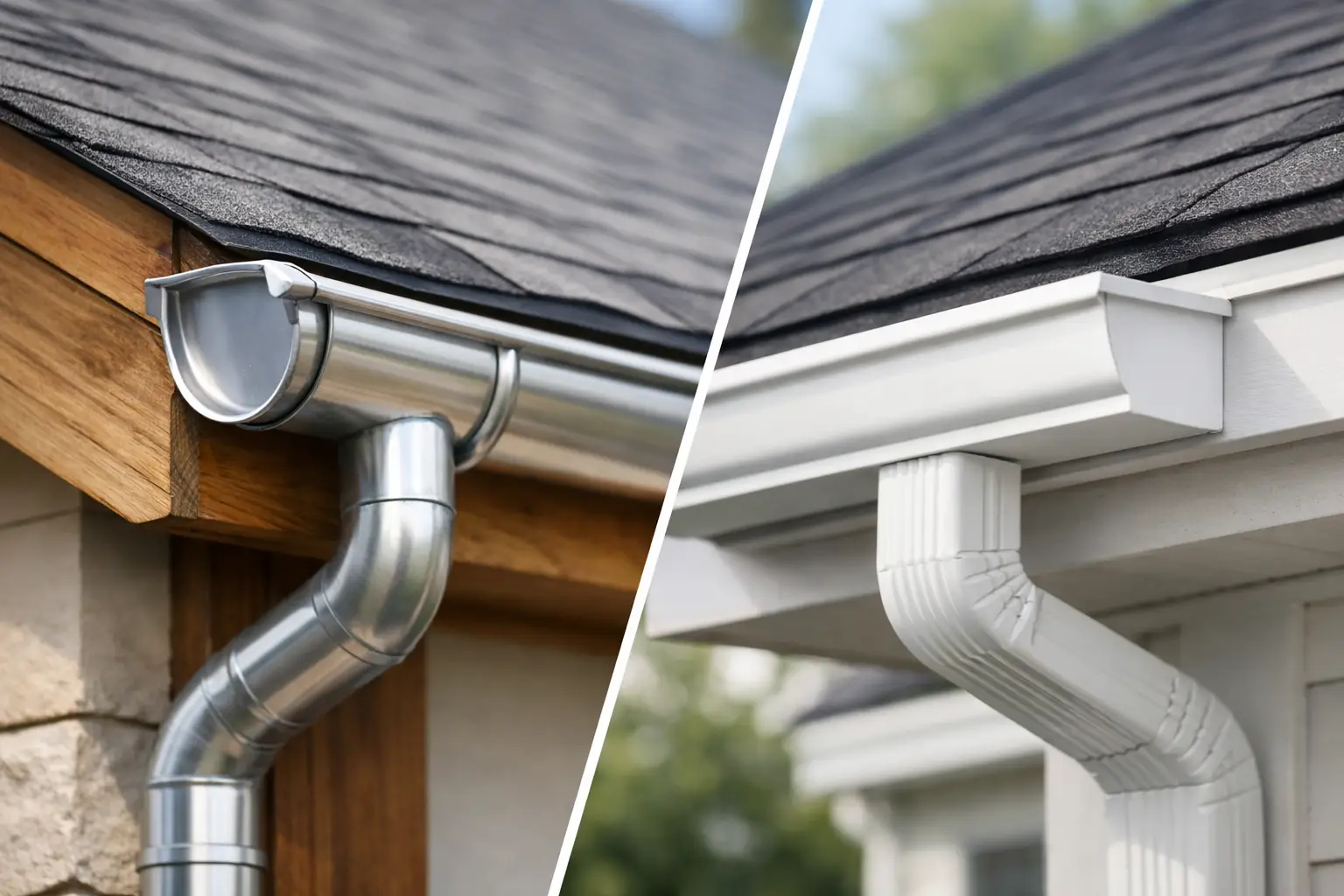
A gutter can look like a small detail until a Central Florida downpour sends water over the edge, against the fascia, and toward the foundation. When comparing half round vs k style gutters, the right choice comes down to more than appearance. It affects how much rainwater your system can handle, how it fits your roofline, and how much upkeep it may need over time.
For most Orlando-area homes, K-style gutters are the practical choice because they carry more water and work well with seamless installation. Half-round gutters still have a place, especially on homes where a traditional exterior style matters. The best system is the one sized, installed, and drained correctly for the property.
Half Round vs K Style Gutters at a Glance
Half-round gutters have a smooth, open shape that looks like a tube cut in half. They are often associated with older homes, historic properties, tile roofs, and custom architectural designs. Their rounded profile gives the roofline a clean, classic look.
K-style gutters have a flat back and bottom with a decorative front edge. From the ground, that front edge can resemble crown molding, which is why K-style gutters fit naturally on many modern and traditional homes. They are the most common gutter profile on residential properties in Central Florida.
The major functional difference is capacity. A K-style gutter typically holds more water than a half-round gutter of the same width. That matters when heavy rain hits quickly, as it often does during Orlando’s summer storm season.
Why K-Style Gutters Work Well in Orlando
A properly sized K-style system offers strong water-handling capacity without taking over the appearance of the home. The flat back mounts securely against the fascia board, and the shaped front gives the system added stiffness. That design is useful on long gutter runs where standing water, debris weight, and frequent rainfall can expose weak installation work.
For many homes, a 5-inch K-style gutter is appropriate. Larger roof areas, steep roof pitches, long runs, or concentrated valleys may need 6-inch gutters and larger downspouts. The answer should come from measuring the roof and identifying where water collects, not from using the same size on every house.
Seamless K-style gutters are also a practical option for homeowners who want fewer potential leak points. Rather than joining short pre-cut sections across the roofline, a professional installer forms each run to the home’s measurements on site. There are still seams at corners, end caps, and outlets, but eliminating unnecessary joints helps reduce future maintenance concerns.
K-style gutters are not automatically maintenance-free. Leaves, oak debris, pine needles, roof grit, and shingle granules can still collect inside. Regular cleaning and properly chosen leaf guards can help keep water moving to the downspouts instead of spilling over the front edge.
Best fit for K-style gutters
K-style gutters are generally a strong fit for standard residential homes, rental properties, and homes with broad roof planes. They make sense when the priority is dependable drainage, efficient water capacity, and a profile that blends with most exterior styles.
They are especially useful when a property has experienced overflowing gutters during hard rain. Of course, overflow can also come from clogged downspouts, poor gutter pitch, undersized outlets, or water dumping from a roof valley in one concentrated spot. Replacing the gutter profile alone will not correct a drainage problem if those issues are not addressed.
When Half-Round Gutters Make Sense
Half-round gutters are chosen more often for appearance than maximum capacity. Their clean curved shape complements homes with historic details, Mediterranean influences, brick exteriors, or custom trim. On the right home, they can look more intentional than a standard K-style system.
Because they have a smoother interior shape, half-round gutters can allow small debris to move through more easily in some situations. But that does not mean they avoid clogs. Leaves can still settle in the channel, and debris can still block outlets and downspouts. Regular cleaning remains part of protecting the system.
Half-round gutters commonly use external brackets that are visible from the ground. Some homeowners like that traditional look, while others prefer the more concealed appearance of K-style hangers. Installation details matter here. Brackets need proper spacing and secure attachment so the gutter does not pull away, sag, or lose its pitch under the weight of water and debris.
Half-round systems may also cost more depending on the material, bracket style, and custom work involved. Copper half-round gutters, for example, offer a distinctive look but are a premium option. Aluminum half-round gutters can provide the same general profile at a more manageable price, though the final cost still depends on the home’s layout and drainage needs.
Best fit for half-round gutters
Half-round gutters are a good choice when preserving the home’s architectural character is a primary concern and the drainage system can be sized appropriately. They can work well on smaller roof sections and homes where the homeowner wants a traditional profile that is visible from the street.
For a large Orlando roof that receives intense, wind-driven rain, careful sizing is critical. A smaller half-round gutter may not provide enough capacity where a 6-inch K-style gutter and larger downspouts would manage the flow more effectively. This is where function should lead the decision, even when appearance matters.
Capacity Is Only Part of the Drainage Plan
Homeowners sometimes focus on the gutter shape while overlooking the rest of the system. Gutters collect water, but downspouts carry it away. If the downspouts are too small, too few, clogged, or discharging too close to the home, water problems can continue regardless of whether the gutters are half-round or K-style.
A complete assessment should look at gutter slope, outlet placement, downspout size, roof valleys, splash areas, and the route water takes once it reaches the ground. Water should move away from the foundation, entryways, walkways, and areas where it can create erosion or standing water.
This is particularly relevant in Central Florida, where a system may appear fine during a light shower but fail during a fast afternoon storm. Water coming off a valley can overwhelm one short section of gutter in minutes. In some cases, the right repair is a larger outlet or an added downspout, not an entirely new gutter system.
Appearance, Cost, and Maintenance Trade-Offs
K-style gutters usually offer the best balance of cost, capacity, and everyday curb appeal. Their familiar profile works on most homes, and seamless aluminum versions are widely used because they are durable, efficient, and available in colors that coordinate with trim.
Half-round gutters tend to make a stronger design statement. That can be a benefit on a character-rich home, but the profile, visible brackets, and material options often increase the project cost. They may also be less convenient to match if part of an older system needs repair later.
Neither style should be selected based on price alone. A lower-cost gutter that is undersized, poorly pitched, or loosely fastened can lead to fascia damage, peeling paint, wood rot, and recurring overflow. A clean install with secure hangers, correct slope, sealed connections, and properly adjusted downspouts protects the investment.
Maintenance is also a factor. Both styles need periodic inspection, particularly after storm season. Look for drips at corners, sagging sections, loose spikes or hangers, stains on the fascia, standing water in the gutter, and soil erosion below downspouts. Catching those signs early is usually simpler than waiting for water damage to spread.
How to Choose the Right Gutter Style
Start with the home, not the gutter catalog. Consider the roof size, roof pitch, valleys, existing drainage trouble spots, and how much rainwater the system must move. Then consider the exterior style and your budget.
Choose K-style gutters when you need higher capacity, a clean standard appearance, and a practical seamless option for a typical residential roofline. Choose half-round gutters when the home’s architecture calls for a traditional curved profile and the system can be sized to handle the expected water flow.
For homeowners unsure which direction makes sense, an on-site measurement provides better answers than a quick visual estimate. Precision K-Gutters can evaluate the roofline, existing gutter condition, and downspout layout to recommend a direct solution without pressure.
The goal is not simply to install a gutter that looks good on day one. It is to put rainwater where it belongs during the next hard storm: safely away from the home.
Leave a Reply