
If your gutters overflow every time Orlando gets a hard afternoon storm, the problem is usually not just debris. It is often the gutter profile, the sizing, the pitch, or the way the system was put together in the first place. That is why many homeowners end up looking at k style gutters for homes when they want better water control without giving the house a bulky or overly commercial look.
K-style gutters are the most common choice on residential properties for a reason. They move a strong volume of water, they match a wide range of home styles, and they give the roofline a cleaner finished edge than many older gutter shapes. For homeowners in Central Florida, where heavy rainfall can test every weak point around a home, those practical advantages matter.
Why k style gutters for homes are so common
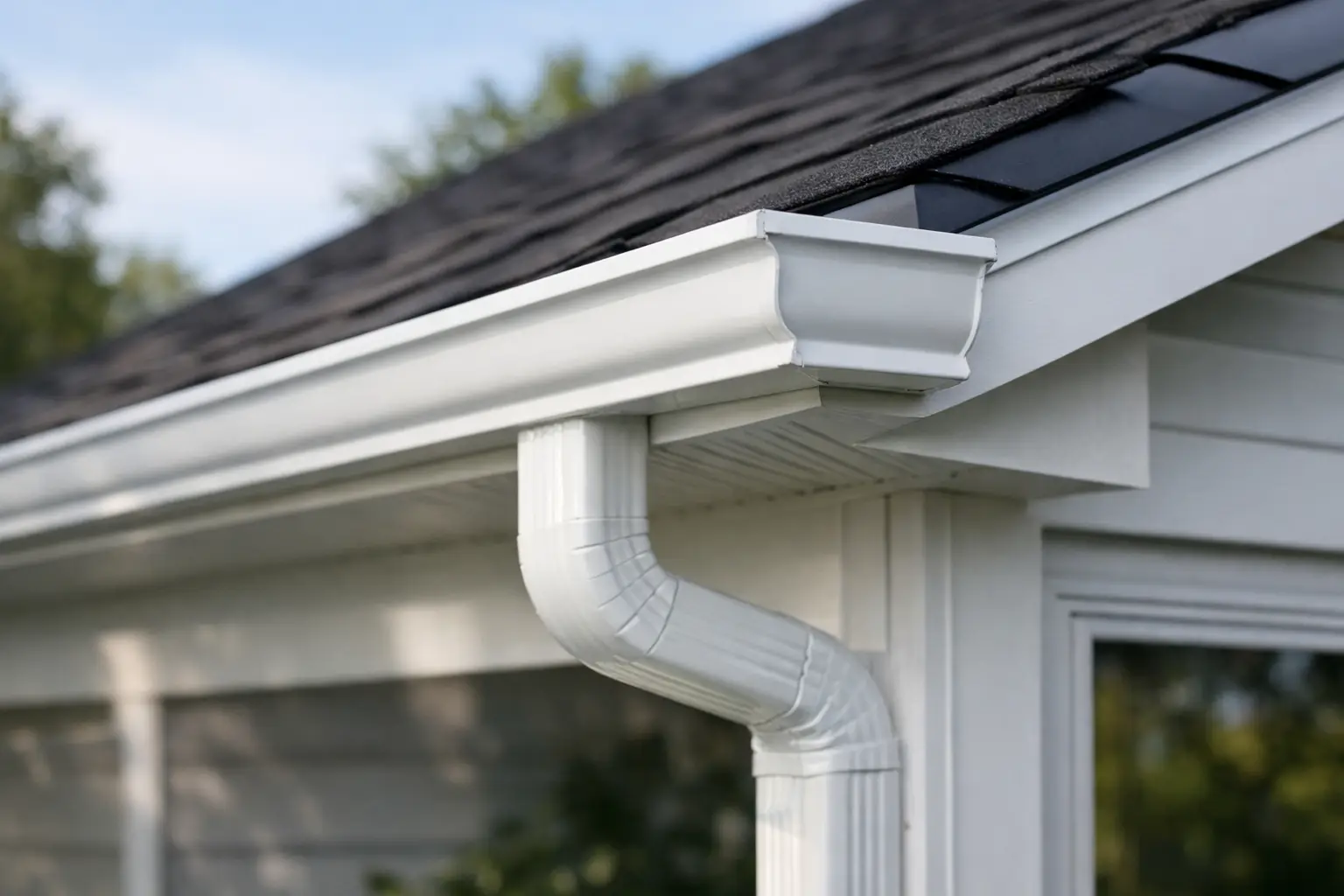
The name comes from the side profile. When you look at a K-style gutter from the end, the shape has decorative angles that resemble crown molding. That gives it a more finished appearance than a rounded half-round gutter, which is one reason builders and homeowners use it so often.
Looks are only part of the story. K-style gutters also have a flat back and bottom, which helps with installation and allows them to sit tightly against the fascia. That shape makes them efficient at carrying water, and in many homes they handle runoff better than older rounded systems of the same width.
For most residential properties, the appeal is simple. You get a gutter that looks clean, performs well, and works with modern roofing and trim details. It is a practical fit for homes where appearance matters, but protection matters more.
What makes K-style gutters a good fit in Florida
In Orlando, gutters do not get a light workload. Sudden downpours can fill a gutter system quickly, and if the water cannot move fast enough to the downspouts, you start seeing overflow, splashback, and pooling near the foundation. Over time, that can lead to wood rot, stained soffits, eroded landscaping, and moisture issues around the base of the home.
K-style gutters are popular in this climate because they offer solid water-handling capacity without making the house look oversized. When they are properly sized and pitched, they help move runoff away from the roof edge and out through the downspouts before it has a chance to spill over.
That said, the gutter shape alone does not solve everything. A home with too few downspouts, long runs without proper slope, or repeated clogging from leaf buildup can still have drainage problems. The gutter profile helps, but the full system design is what determines whether the home stays protected during heavy rain.
Seamless vs. sectional K-style gutters
When homeowners compare options, this is usually where the real decision happens. Sectional gutters come in pieces joined together during installation. They cost less up front in some cases, but every seam creates another potential leak point.
Seamless K-style gutters are custom measured and formed to fit the home on site. That means fewer joints across the main runs, a cleaner appearance, and less opportunity for leaks to develop over time. For most homeowners, especially in a rainy market, seamless systems make more sense because they reduce one of the most common failure points.
There is also a maintenance advantage. Debris tends to catch more easily at seams and uneven connections. A smoother run does not eliminate cleaning needs, but it can help the system drain more consistently. That is one reason service-focused installers often recommend seamless systems over sectional ones for long-term performance.
Where K-style gutters perform well – and where it depends
K-style gutters work well on most single-family homes, rental properties, and residential buildings with standard sloped rooflines. They are especially useful when homeowners want strong performance and a look that blends into the trim.
Still, there are trade-offs. If a home has a historic design and the owner wants a more traditional architectural look, half-round gutters may fit the style better. Some homeowners also prefer half-round systems because they are easier to clean in certain conditions. On the other hand, K-style gutters usually offer better capacity for the same nominal size, which is a practical advantage when storms are intense.
Material matters too. Aluminum K-style gutters are common because they resist rust, keep costs reasonable, and work well for seamless fabrication. Steel can be stronger, but it is heavier and may require more upkeep. Copper has a premium look, but it is not the right choice for every budget. The best option depends on the home, the exposure to weather, and how long the owner plans to stay in the property.
Signs your current gutter system may need an upgrade
Sometimes homeowners think they only need a cleaning when the bigger issue is that the gutter system is undersized, aging, or pulling away from the house. If you notice water spilling over the front edge during rain, that is a warning sign. So are seams that drip, corners that leak, visible sagging, or water collecting near the base of the home after storms.
Peeling paint, dark streaks on fascia boards, and soft or rotting wood near the roofline can also point to gutter failure. On some homes, the damage shows up first in the landscaping. Mulch gets displaced, planting beds wash out, and soil begins to erode where downspouts are not directing water far enough away.
If the same section keeps clogging or overflowing even after it has been cleaned, the issue may be the layout rather than the maintenance. That is when a repair, downspout adjustment, or full replacement starts to make more sense than repeated short-term fixes.
Installation details that matter more than homeowners think
A gutter can be made from quality material and still perform poorly if the installation is rushed. Pitch is one of the biggest factors. If the gutter is too flat, water sits in the trough instead of moving to the downspout. If the pitch is too aggressive, the gutter can look uneven and still fail to collect runoff properly.
Fastening matters too. Gutters need secure attachment points that hold their position through repeated storms, not just a quick install that looks fine on day one. Downspout placement also has a direct effect on performance. Even a good gutter run can struggle if the system does not have enough outlets to move water efficiently.
This is why custom measurement and on-site fabrication make a difference. A system built to the actual dimensions of the home usually fits better, looks cleaner, and gives fewer opportunities for leaks or weak spots. For Orlando-area homeowners, that precision is not a luxury. It is part of keeping up with the weather.
Maintenance still matters with K-style gutters
Even the best gutter system needs upkeep. K-style gutters can still collect leaves, seed pods, roof grit, and shingle debris. When that buildup blocks water flow, the gutter can overflow no matter how well it was designed.
Regular cleaning is the basic step, especially before and during the rainy season. Some homes also benefit from leaf guard solutions, particularly if nearby trees drop debris year-round. Guards can reduce how often gutters need to be cleaned, but they are not a set-it-and-forget-it product in every situation. The right guard depends on the roofline, the type of debris, and how the existing system drains.
For property managers and busy homeowners, scheduled maintenance often costs less than waiting for a problem to show up as fascia damage, soil washout, or interior moisture issues. A clean, functioning gutter system is one of those parts of the home that is easy to ignore until it fails.
Choosing the right contractor for K-style gutter work
If you are comparing estimates, look beyond the price alone. Ask whether the gutters will be seamless, how the measurements are taken, whether downspout placement is included in the planning, and what happens if problem drainage areas are found during the job.
Clear communication matters just as much as material quality. Homeowners should know what is being installed, what is being repaired, and whether the recommendation is based on appearance, performance, or both. A dependable contractor should be able to explain the reason behind the work in plain terms.
For local homeowners, working with a company that understands Central Florida rainfall patterns is a real advantage. Precision K-Gutters focuses on practical solutions for residential drainage problems, from seamless installations to repairs, cleanings, and leaf protection, with service built around straightforward recommendations and clean workmanship.
If your current gutters are leaking, sagging, or struggling in heavy rain, replacing them is not just about making the house look better. It is about getting water under control before it starts costing you more somewhere else.