
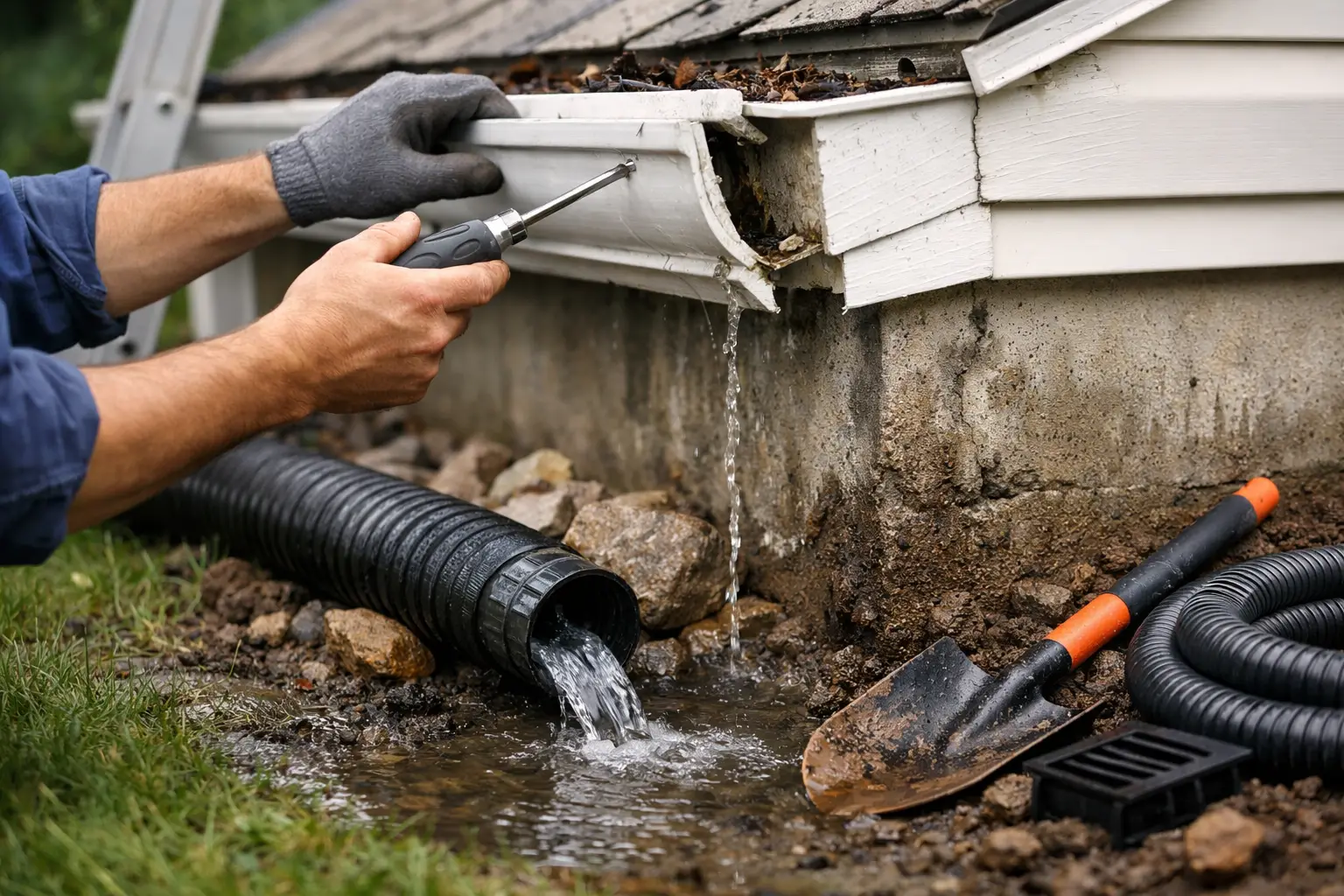
A hard Florida rain can tell you a lot about your gutter system in a matter of minutes. If water is spilling over the edge, shooting out at a corner, or collecting near the base of the house, gutter repair near foundation drainage problems should move up your list quickly. What looks like a small gutter issue often turns into a drainage problem first, then a foundation concern not long after.
For homeowners in Orlando, this usually shows up as standing water near the slab, mulch washing away, damp areas by the wall, or muddy spots that keep coming back after a storm. The gutter system may still be attached to the house, but that does not mean it is working the way it should. Gutters are supposed to move roof runoff away from the structure in a controlled way. When they fail, the ground around your home takes the hit.
Why gutter problems often become foundation drainage problems
Your roof collects a large amount of water during a storm. The job of the gutters and downspouts is simple – catch it, channel it, and send it away from the home. When any part of that path breaks down, water starts falling where it should not.
Sometimes the cause is obvious. A section is sagging, a seam is leaking, or a downspout has separated. Other times the problem is more gradual. Gutters may be undersized, slightly out of pitch, clogged with debris, or draining too close to the house. Even a clean gutter can cause trouble if the downspout discharge point is poor.
That is why gutter repair near foundation drainage concerns is not just about patching a hole. The real question is whether the whole system is directing water far enough away to keep the soil around the home stable and dry.
Signs you may need gutter repair near foundation drainage work
Most homeowners do not inspect gutters during every storm, but the warning signs tend to show up around the property. Water stains on the fascia, overflowing corners, and loose gutter spikes are common clues. So are trenches in flower beds, soil erosion under drip lines, and puddles that form next to the exterior wall.
Inside the home, you might notice musty smells, damp garage edges, or minor cracking that seems to be getting worse over time. None of those signs automatically means foundation damage, but they do suggest water is not being controlled well outside.
In Central Florida, heavy rain can expose these issues fast. A system that handles a light shower may fail during a summer downpour. That is often when homeowners finally see where the water is really going.
The most common trouble spots
The usual problem areas are corners, seams, end caps, and downspout connections. These spots take a lot of water pressure and tend to wear out first. Sagging runs are another common issue, especially when old fasteners loosen or debris adds extra weight.
Downspouts also matter more than many people expect. If they are too short, clogged, crushed, or pointed toward a low area, they can dump large amounts of water right next to the foundation. The gutter itself may not be the only part that needs correction.
Repair or replace – what makes sense?
It depends on the age of the system, the number of failure points, and how water is behaving around the house. A targeted repair makes sense when the gutters are mostly in good shape and the issue is limited to a leak, loose section, pitch correction, or downspout adjustment. This is common when damage is isolated and the metal is still sound.
Replacement becomes the better value when the system has recurring leaks, widespread sagging, rust, separated joints, or poor design from the start. Sectional gutters with multiple seams often develop repeated leak points over time. In those cases, repairing one area may only delay the next problem.
For many homes, seamless K-gutters are a practical upgrade because they reduce seams and improve overall water control. Custom-measured sections also tend to look cleaner and perform better than pieced-together runs. If the goal is long-term drainage improvement, not just a quick patch, the layout matters as much as the material.
What a proper repair should actually address
A real fix starts with where the water is ending up, not just where it is leaking out. That means checking slope, attachment points, outlet flow, downspout placement, and the grade around the home. If one part gets repaired but the water still discharges at the foundation, the main problem remains.
A good service call should identify whether the gutters are holding water, whether the downspouts are carrying enough volume, and whether extensions or adjustments are needed. In some cases, cleaning is part of the repair because packed debris changes how the system flows. In others, the gutter itself needs resecuring or resealing to restore proper performance.
This is also where honest recommendations matter. Not every drainage issue means full replacement, and not every visible leak is the main cause. The best gutter work is direct and specific. Fix what is failing, improve the water path, and avoid selling more than the property actually needs.
Why Orlando homes need extra attention
Florida weather is hard on drainage systems. Sudden downpours, wind-driven rain, and frequent storms put gutters under pressure. Add tree debris, roof runoff, and shifting ground conditions, and small issues can escalate quickly.
Many Orlando-area homes also deal with landscaping beds, flat lot conditions, and splash zones that keep water close to the slab if the drainage path is not planned well. When gutters overflow into mulch or dump at the base of the wall, that moisture tends to linger. Over time, that can affect siding, soffits, fascia, and the soil around the home.
This is why routine maintenance has real value here. Keeping gutters clear and correctly aligned is not cosmetic. It is part of protecting the structure from repeated water exposure.
The role of downspouts and drainage direction
Gutters get most of the attention, but downspouts often determine whether the system succeeds or fails. You can have well-installed gutters and still have drainage problems if the downspouts discharge too close to the home. Water needs enough distance and the right direction to move away safely.
Sometimes the fix is simple – reconnect a loose downspout, add an extension, or change the outlet position. Sometimes the solution involves adjusting multiple points so one side of the house does not take the full load during a storm. That is especially true on rooflines with concentrated runoff.
If water is pooling at one corner after every heavy rain, that corner should not just be patched and ignored. It should be evaluated as part of the full drainage pattern.
When to call a professional
If you can see overflowing water, separated joints, sagging sections, or repeated pooling near the foundation, it is time to have the system checked. Waiting usually makes the repair broader, not easier. Water damage tends to spread from the original weak point.
Professional gutter service is especially helpful when the cause is not obvious from the ground. Pitch problems, undersized runs, and bad discharge points are easy to miss without a closer look. A qualified local company can tell you whether the issue is repairable, whether maintenance will solve it, or whether the system needs a more permanent upgrade.
For homeowners who want a direct answer without pressure, that matters. Precision K-Gutters serves Orlando-area properties with clean workmanship, clear communication, and practical solutions built around how the water is actually moving on-site.
Preventing the next drainage problem
The best time to deal with gutter and drainage issues is before the next major storm finds them for you. Regular cleaning, fast repair of loose or leaking sections, and downspout adjustments can prevent a minor issue from becoming a foundation concern. Leaf protection can also help in the right setting, especially where debris causes frequent clogs.
No gutter system is maintenance-free, and no repair solves everything if the discharge path is still wrong. But when the gutters are sized correctly, securely attached, and draining away from the home, you reduce a lot of avoidable risk.
If water keeps showing up near your foundation, trust what the property is telling you. The fix may start at the roofline, but the goal is simple – keep rainwater moving away from your home before it becomes a much bigger problem.