
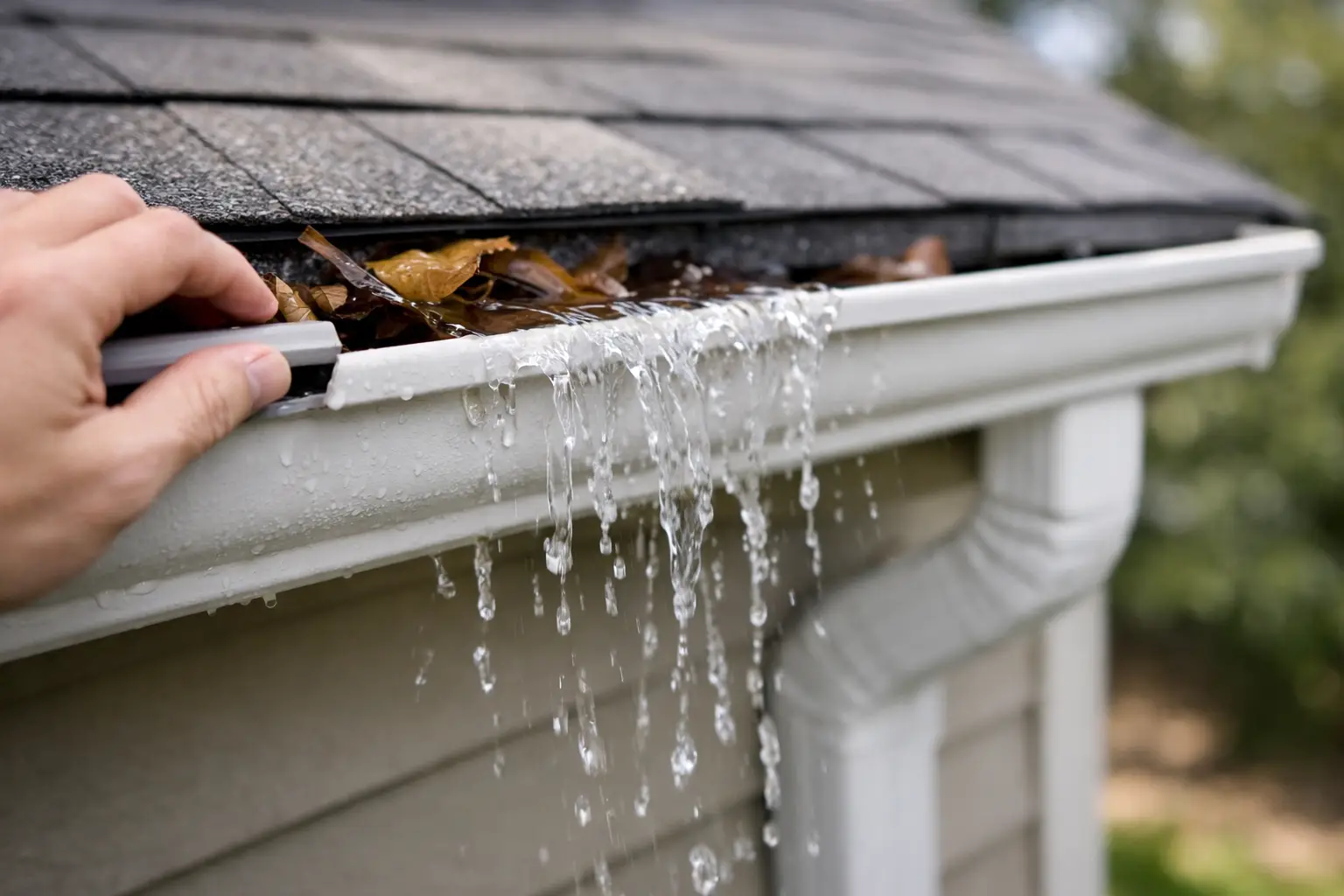
A gutter system can look perfectly fine on a dry afternoon and still fail when Central Florida rain starts coming down hard. If you are wondering how to tell gutters are undersized, pay attention to what happens during and immediately after a heavy storm. Overflow, water near the foundation, and repeated washout around landscaping are not always cleaning problems. They can be signs that the system simply cannot move enough water fast enough.
Undersized gutters are especially common on homes with large or steep roof sections, long roof runs, or areas where several slopes drain toward the same valley. The right fix depends on the roof layout, the amount of rainfall the home receives, and the condition of the existing gutters and downspouts. A professional evaluation can separate a capacity issue from a clog, a poor slope, or a damaged section.
How to Tell Gutters Are Undersized During a Storm
The clearest warning sign is water spilling over the front edge of the gutter while the system is clean and the downspouts are open. A small amount of splash during a severe wind-driven storm can happen, but steady overflow in normal heavy rain is not something to ignore.
Watch where the water comes from. If it pours over the gutter in one concentrated area, the issue may be a roof valley sending too much water into a short section of gutter. If it spills along a long stretch, the gutter may be too shallow, too narrow, or unable to reach the downspout quickly enough.
Water running behind the gutter is another concern. This can indicate a drip-edge problem, improper installation, or a gutter that is not positioned correctly under the roof edge. It does not automatically mean the gutter is undersized, but it can create the same damage risks: wet fascia boards, rotted wood, stained soffits, and water where it does not belong.
After a storm, look for overflowing water marks on the outside of the gutter, mud splashed onto siding, or mulch and soil pushed away from planting beds. These clues show that water is regularly bypassing the drainage system, even if you did not see it happen in real time.
Signs Around the Home That Point to a Capacity Problem
A gutter system does more than keep water off the roofline. It directs roof runoff away from the walls, entryways, landscaping, and foundation. When capacity is too limited, the effects often show up at ground level first.
Puddles near the foundation are a major warning sign, particularly if they appear beside downspout exits or below areas where gutters overflow. In Orlando, frequent storms can keep this soil saturated. Over time, that moisture can contribute to erosion, settle around the slab, damage landscaping, and create conditions that allow water to work into vulnerable areas of the home.
Look closely at the fascia and siding as well. Peeling paint, dark staining, soft wood, or mildew near the roofline may mean water has been overflowing or running behind the gutters for some time. These symptoms can also come from roof leaks, so it is worth having the source checked rather than assuming.
You may also notice that one side of the home has far more drainage trouble than the others. This is common when a large roof plane drains into one gutter run but has only one small downspout. The gutter may fill faster than the downspout can release water, causing it to back up and spill over before the storm is over.
A Clean Gutter Can Still Be Too Small
Clogs are a common cause of overflow, and cleaning should always be considered first. Leaves, roof grit, seed pods, and debris at the downspout opening reduce water flow quickly. However, a gutter that overflows shortly after cleaning deserves a closer look.
The same is true if the downspout is clear but water still stands in the gutter long after rainfall stops. A low spot, incorrect pitch, or sagging hanger can slow drainage and make an otherwise adequate gutter perform poorly. Repairing the slope or replacing damaged sections may solve the issue without changing the gutter size.
Capacity becomes the more likely issue when the system is clean, properly secured, and pitched toward the downspouts, yet it still cannot handle regular heavy rain. This is why a visual inspection alone is not always enough. The roof area feeding each gutter section matters just as much as the gutter itself.
Roof Design Changes the Size You Need
Not every home needs the same gutter size. A smaller gutter may work well on a modest roof with short runs and straightforward drainage. That same size can be overwhelmed on a home with broad roof surfaces, steep slopes, or multiple sections draining into one location.
Roof valleys deserve special attention. They concentrate runoff from two roof planes into a narrow channel, creating a fast, heavy stream of water. If that stream lands near the middle of a gutter run, it can shoot over the edge before it has time to spread toward the downspouts. A larger gutter, a different downspout layout, or a valley splash guard may be appropriate depending on the setup.
Long gutter runs can create another bottleneck. Water has farther to travel before it reaches an outlet, and a single downspout at one end may not be enough. Adding or relocating downspouts can improve performance without replacing every gutter. In other cases, a wider seamless K-gutter system provides the capacity needed across the entire run.
Central Florida rainfall also changes the calculation. Orlando homes regularly experience intense afternoon downpours that can overwhelm a marginal system in minutes. Gutters should be planned for the roof and the weather they actually face, not just installed in the most common size by default.
Check the Downspouts Before Replacing Gutters
Downspouts are part of the system, not an afterthought. Even large gutters will overflow if their outlets are too small, clogged, poorly placed, or disconnected. A downspout extension that dumps water directly beside the home can also create drainage problems even when the gutter itself is working properly.
Start by confirming that water exits freely from each downspout during rain. If water is backing up at the top, there may be a blockage or an underground drain issue. If it exits but collects near the foundation, the discharge point may need adjustment or an extension.
The number of downspouts matters as much as their condition. A long gutter run with only one outlet may be undersized in practical terms, even if the gutter profile itself is adequate. Adding another downspout often gives rainwater a faster route out of the system and reduces the chance of overflow.
When Larger Gutters Are the Right Fix
Replacing gutters with a larger profile can make sense when overflow is persistent and the roof delivers more water than the existing system can carry. This is often a smart investment for homes with large roof planes, steep pitches, valleys, or recurring overflow in the same locations.
Larger gutters are not automatically better for every property. They cost more, and installing them without addressing poor pitch, loose hangers, inadequate downspouts, or drainage at the ground may leave the original problem partly unresolved. The goal is not simply a bigger gutter. It is a properly sized system that collects water, moves it efficiently, and sends it away from the home.
Custom-measured seamless K-gutters can be especially helpful because they are made for the home’s specific roofline. Fewer seams mean fewer potential leak points, while correct sizing and placement improve water management where it matters most. For property managers, this can also reduce repeat maintenance calls tied to the same overflowing areas.
Do Not Wait for Visible Damage
Gutter overflow is easy to dismiss until it damages fascia boards, undermines a landscaped area, or leaves water pooling against the home. By then, the repair may involve more than gutters. A quick inspection after the next hard rain can reveal whether the issue is debris, damage, drainage layout, or inadequate capacity.
If clean gutters still overflow, or if one part of the roofline repeatedly sends water where it should not go, it is time for a direct assessment. Precision K-Gutters can evaluate the gutter runs, downspouts, roof drainage patterns, and problem areas to recommend a practical fix without pressure. The right system should do its job quietly, even when an Orlando storm does not.