
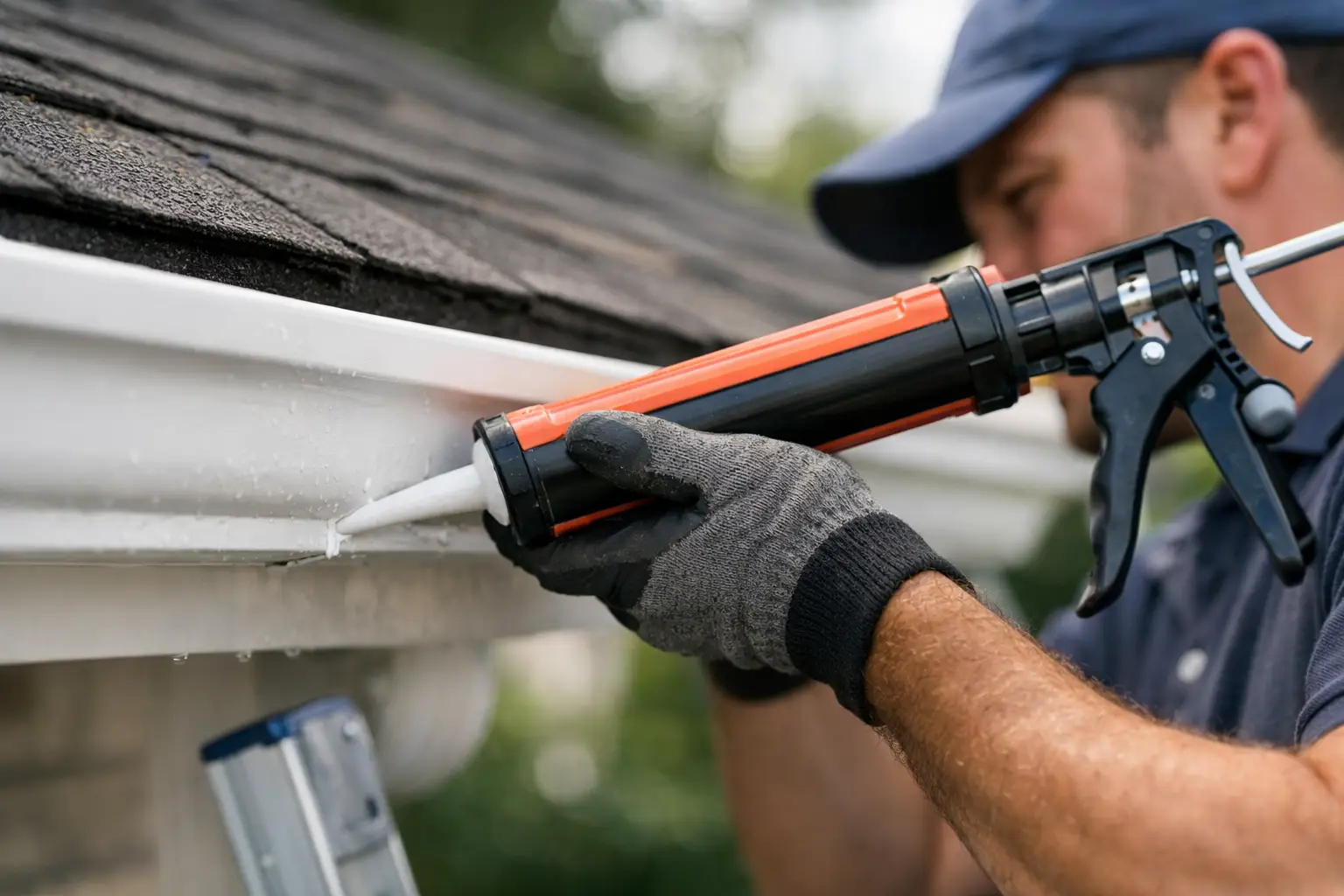
A small gutter leak usually shows up at the worst time – during a hard Florida rain, when water starts dripping from a seam, running behind the gutter, or pooling too close to the house. That is when many homeowners start looking for a gutter resealing service. In some cases, resealing is the right fix. In others, it is only a temporary patch, and knowing the difference can save you time, money, and repeat problems.
In Orlando, gutters take a beating. Heavy downpours, heat, humidity, and debris buildup can all wear down seals faster than homeowners expect. If a gutter system has started leaking at the joints or corners, the sealant may have failed. But a leak is not always just a sealant issue. Loose hangers, standing debris, bad pitch, or aging metal can all contribute to the same symptom.
What a gutter resealing service actually does
A gutter resealing service focuses on stopping leaks at vulnerable connection points. That usually means end caps, miters at corners, outlets where water drops into the downspout, and any seams or joints that were previously sealed. The work involves cleaning the affected area, removing failed or brittle sealant, preparing the surface, and applying new gutter-grade sealant where it will bond properly.
This sounds simple, but the result depends on the condition of the gutter itself. If the metal is still sound and the issue is isolated to a failing seam, resealing can be a smart repair. If the section is warped, rusted, pulling away from the fascia, or installed with poor slope, new sealant alone will not solve the underlying problem.
That is why a good service call should begin with inspection, not guesswork. Homeowners often notice the drip, but the source is not always obvious from the ground.
Common signs your gutters may need resealing
The clearest sign is visible dripping from a corner or seam while it is raining. You may also notice staining on fascia boards, damp spots near the foundation, or water marks on siding below a gutter joint. Sometimes the leak appears after a gutter cleaning because debris had been masking the problem.
Another common sign is peeling or cracked sealant at corners and end caps. If the old sealant looks dry, separated, or brittle, water can work through those gaps quickly during a storm. In Central Florida, that kind of wear can happen sooner than homeowners expect because heat and frequent rain cycles are hard on exposed materials.
Not every overflow issue means resealing is needed. If water is spilling over the front edge of the gutter, the problem may be a clog, a capacity issue, or a pitch problem instead of a failed seal. That distinction matters, because applying fresh sealant to an overflowing gutter will not change how the water is moving.
When resealing is the right repair
Resealing makes sense when the gutter system is still in otherwise good condition and the leaks are limited to specific joints or corners. This is often the case with sectional gutters or with older systems that have a few problem spots but are still securely fastened and draining correctly.
It can also be a practical option for homeowners who want to extend the life of an existing system without replacing large sections. If the metal is solid and the leak is localized, resealing may provide a clean, cost-effective repair.
For property managers, this can be especially useful between larger maintenance cycles. A targeted repair can stop active leaks and protect soffits, fascia, and landscaping while you plan for any future upgrades.
When a gutter resealing service is not enough
This is where honest service matters. If a gutter has multiple leaks across the run, visible rust, sagging sections, or repeated seal failures, resealing may only buy a little time. The same is true if water is backing up because the downspouts are undersized, clogged, or poorly placed.
Seamless K-gutters often reduce leak points because they have fewer joints to begin with. If an older sectional system keeps leaking at multiple seams, replacement may be the better long-term move. You spend less time chasing the next failure, and you improve drainage at the same time.
There is also the issue of hidden damage. If leaking gutters have already caused wood rot behind the fascia, the repair may need to go beyond the gutter line. A proper assessment should look at the whole drainage path, not just the drip itself.
Why Florida weather speeds up gutter problems
In Orlando, storms are intense and frequent. Gutters do not just need to carry water – they need to move a lot of water quickly and direct it away from the home. When seals are weak, those heavy rains expose the problem fast.
Heat is another factor. Sealants expand and contract with temperature swings, and over time that movement can weaken the bond. Add moisture, leaves, granules from shingles, and occasional standing water, and small failures become larger leaks.
That is why waiting too long rarely helps. A minor seam leak can turn into fascia staining, soft wood, mulch washout, or water collecting near the slab. The earlier the issue is identified, the more likely it can be handled as a straightforward repair.
What to expect from a professional gutter resealing service
A reliable service should start with a close look at the leaking area and the surrounding gutter run. The goal is to confirm whether the leak is truly from a failed seal, or whether another issue is causing water to escape.
If resealing is appropriate, the area should be cleaned and prepped carefully. New sealant bonds best to a dry, stable surface, so preparation is a big part of the repair. A rushed patch over wet debris or old failing material usually does not last.
You should also expect clear communication about limits. Good contractors do not promise that resealing will solve problems caused by sagging gutters, poor installation, or neglected cleaning. They explain what the repair can do, what it cannot do, and whether a larger fix would be more practical.
That direct approach is especially important for homeowners trying to avoid repeat service calls. At https://precisionk-gutters.com, the focus is on straightforward recommendations that match the actual condition of the system.
Resealing vs. replacing: what makes more sense?
The answer depends on age, material condition, and how many problem areas exist. If one corner is leaking and the rest of the system is secure, resealing is often the sensible option. If the gutter is leaking in several places, pulling loose, or draining poorly even when clean, replacement may offer better value.
There is also a timing question. If you are planning exterior painting, fascia repair, or roof work soon, it may make sense to address the gutter system more broadly instead of paying for separate short-term fixes. On the other hand, if the system is in good shape overall, there is no need to replace it just because one seal has failed.
This is where a local, service-based company adds value. A technician familiar with Central Florida conditions can tell the difference between a repairable leak and a system that is nearing the end of its useful life.
How to reduce future sealing problems
Routine gutter cleaning helps more than many homeowners realize. When debris traps moisture and slows water flow, seals stay wet longer and wear out faster. Clean gutters also make it easier to spot early leaks before they cause visible damage.
Proper downspout performance matters too. If water is not moving out efficiently, pressure builds at joints and corners. In some homes, downspout adjustments or added protection against clogging can reduce stress on the whole system.
Leaf guard solutions can help in the right setting, but they are not a cure-all. They work best when matched to the home, roofline, and debris type. The point is not to oversell accessories. It is to keep water moving where it should and reduce the conditions that lead to leaks.
A gutter leak rarely fixes itself, and temporary patches usually show their limits during the next strong storm. If you are seeing drips at seams, corners, or end caps, the best next step is to have the system looked at before a small leak turns into a larger repair around the house.