
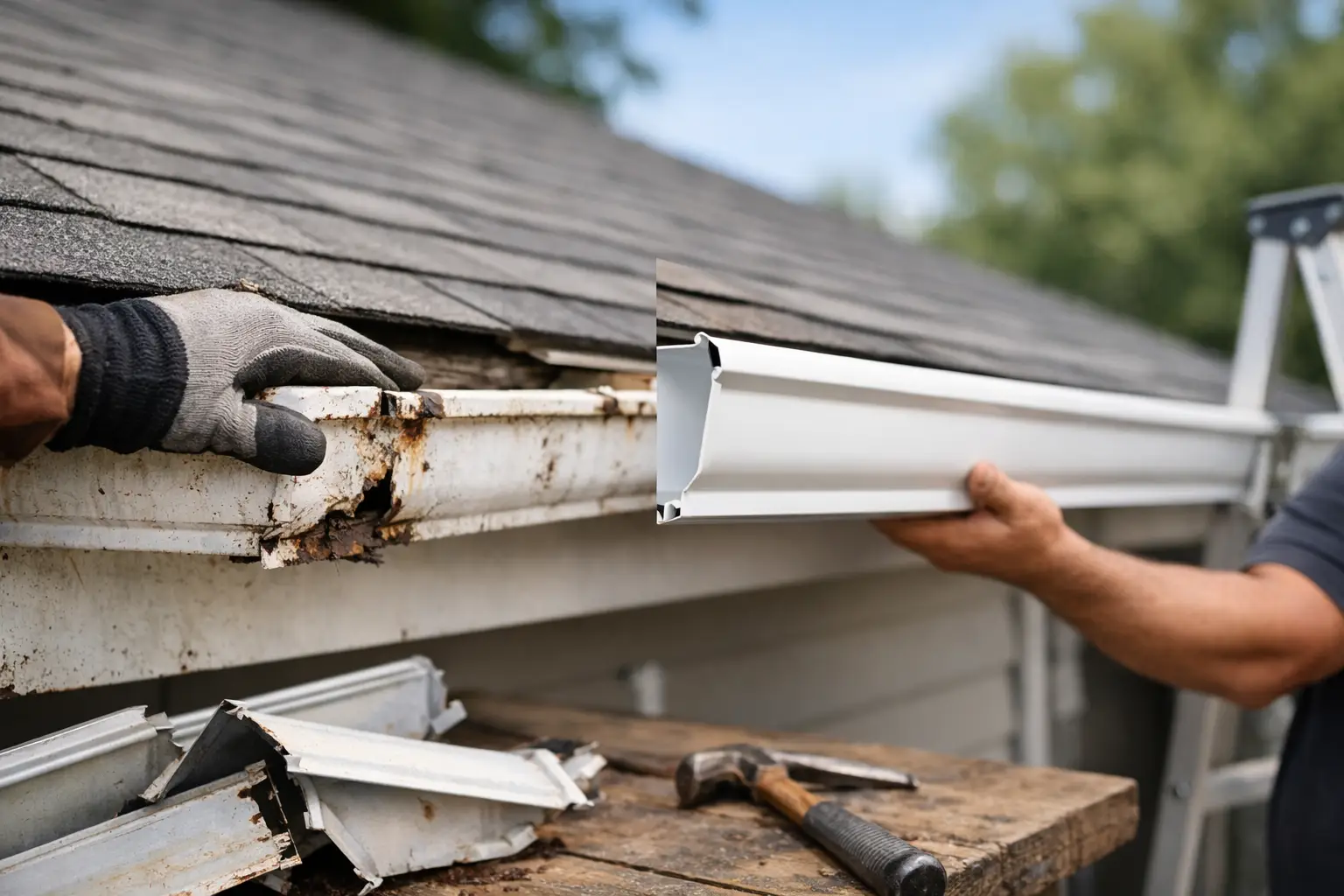
A gutter system usually does not fail all at once. It starts with a seam that drips during a hard rain, a section that pulls away from the fascia, or water that lands too close to the foundation. If you are wondering when to replace gutters on a house, the answer often comes down to how widespread the problem is, how the system handles Florida rain, and whether repairs are still buying you real protection.
For homeowners in Orlando, that question matters more than it does in milder climates. Gutters here deal with heavy downpours, wind-driven storms, debris buildup, and long periods of heat and humidity. A gutter system that looks acceptable on a dry day can still be underperforming when the weather turns. That is why it helps to look beyond surface appearance and focus on function.
When to replace gutters on a house instead of repairing them
Repairs make sense when the issue is isolated. A loose hanger, a minor leak, or a short section with damage can often be fixed without replacing the whole system. But replacement becomes the better choice when the problems are repeated, spread across multiple areas, or point to a system that was never draining correctly in the first place.
One of the clearest signs is frequent leaking at seams or joints. Traditional sectional gutters have more connection points, and every connection is a potential failure point over time. If you are sealing the same leaks again and again, patching stops being cost-effective. At that stage, replacing older gutters with a custom-fit seamless system can reduce future maintenance and improve overall water control.
Sagging is another signal to take seriously. Gutters can sag because the fasteners are failing, the fascia has softened from moisture, or the gutter itself has become too warped to hold its shape. If a section is pulling away from the home, water is no longer being guided where it needs to go. You are not just dealing with a cosmetic issue. You are risking overflow against the siding, roof edge, and foundation.
Rust, cracks, and holes also tell you a lot. Small cracks can sometimes be sealed, but multiple cracks usually mean the material is aging out. With rust, the concern is less about the spot you can see and more about what is happening around it. Once corrosion is present in several places, the gutter is usually losing strength as well as watertight performance.
The signs your gutter system is past its useful life
A gutter system does not need to be falling off the house to justify replacement. In many cases, the warning signs show up in the areas around the gutter first.
Water where it should not be
If you see water spilling over the front edge during rain, do not assume it is just a cleaning issue. Clogs are one cause, but overflow can also point to undersized gutters, poor pitch, too few downspouts, or sections that have settled out of alignment. If the system has already been cleaned and the problem continues, replacement may be the smarter fix.
Water marks on siding, peeling exterior paint, mildew near the roofline, and erosion below the gutter run all suggest the same thing – water is escaping instead of draining. In Central Florida, that can turn into wood rot and staining faster than many homeowners expect.
Damage to fascia or soffit
When gutters fail, the trim behind them often suffers next. Soft wood, staining, or visible rot along the fascia board usually means the gutter has been leaking or backing up for a while. At that point, replacing the gutter alone may not be enough. You may need both the damaged trim addressed and a better-performing gutter system installed so the problem does not come right back.
Pooling near the foundation
A lot of homeowners focus on the roof edge and miss what is happening below. If water is collecting around the base of the home after rain, the gutter system may be dropping water too close to the structure or not moving enough of it through the downspouts. This is one of the biggest reasons to stop putting off replacement. Poor drainage does not stay a gutter issue for long.
How long gutters usually last
There is no single expiration date, because material, installation quality, maintenance, and weather all affect lifespan. Aluminum gutters, which are common on residential homes, can last for many years when they are installed correctly and kept clear. But age alone should not make the decision. Performance should.
A newer system that was poorly pitched or undersized may need replacement sooner than an older one that was designed well. On the other hand, an aging gutter system that still drains properly and has only minor wear may only need repairs and maintenance. This is where a practical inspection matters more than a rule of thumb.
For Florida homes, storm exposure changes the equation. Even if the metal itself is still serviceable, repeated wind, debris impact, and heavy runoff can loosen hangers, stress seams, and reveal weaknesses in layout. A system that was good enough years ago may not be giving your home the level of protection it needs now.
Repair or replace? It depends on the pattern
This is where many homeowners spend more money than they need to. They either replace too soon, or they keep paying for small repairs on a system that is clearly declining.
If the problem is limited to one area, the gutter material is still solid, and the rest of the system drains well, a repair is usually the right call. The same goes for a loose downspout, a localized dent, or a single damaged corner.
Replacement makes more sense when you are dealing with repeated service calls, multiple leaking sections, standing water in the troughs, chronic overflow, or visible wear across the system. It also makes sense when the gutter design is part of the problem. If the runs are too short on downspouts, the pitch is inconsistent, or the system was pieced together over time, repairs may only be treating symptoms.
That is one reason many homeowners upgrade to seamless K-style gutters. Custom-measured seamless systems have fewer joints, a cleaner appearance, and fewer common leak points. For a home that sees frequent rain and storm activity, that is a practical improvement, not just a visual one.
Why replacement timing matters in Orlando
Putting off gutter replacement usually feels like a way to save money. In reality, delay can make the final bill larger if water starts affecting nearby materials.
In the Orlando area, summer storms are intense and often sudden. A weak gutter system may look manageable until the next heavy rain exposes everything at once. Overflow can soak landscaping beds, wash out soil, stain stucco, and dump water next to the slab. If tree debris is also part of the problem, clogs and overflow can become a repeating cycle.
This is why timing matters. Replacing a failing system before peak storm season is usually easier than reacting after water has already caused secondary damage. It also gives you the chance to correct layout issues, add proper downspout placement, and consider leaf protection where it makes sense.
What a professional looks for before recommending replacement
A good recommendation should be based on condition and performance, not pressure. When evaluating whether to replace gutters on a house, a professional should look at more than the visible gutter channel.
They should check attachment points, pitch, seam condition, downspout function, signs of overflow, fascia condition, and where water is ending up on the ground. They should also ask whether the system has a history of clogs, leaks, or repeat repairs. In other words, the right answer comes from how the whole drainage setup is working together.
If replacement is needed, the goal is not simply to put new metal in the same place. It is to improve water management. That may mean adjusting downspout locations, replacing damaged sections with seamless runs, or adding guards in problem areas with heavy debris. Companies like Precision K-Gutters focus on that practical side of the job – clean installs, custom fit, and clear recommendations based on what the home actually needs.
A simple way to decide
If you are still unsure, ask yourself a direct question: is this gutter system still protecting the home consistently during heavy rain? If the answer is no, and the issues keep returning after cleaning or repair, replacement is probably the better investment.
The right time to replace gutters is usually before failure becomes obvious to everyone else. Once water damage shows up on siding, trim, or around the foundation, the gutter problem has already spread. A solid system should move water away cleanly, hold its shape, and perform without constant attention.
If yours is no longer doing that, it may be time to stop patching and install something built to handle the weather your home actually sees.