
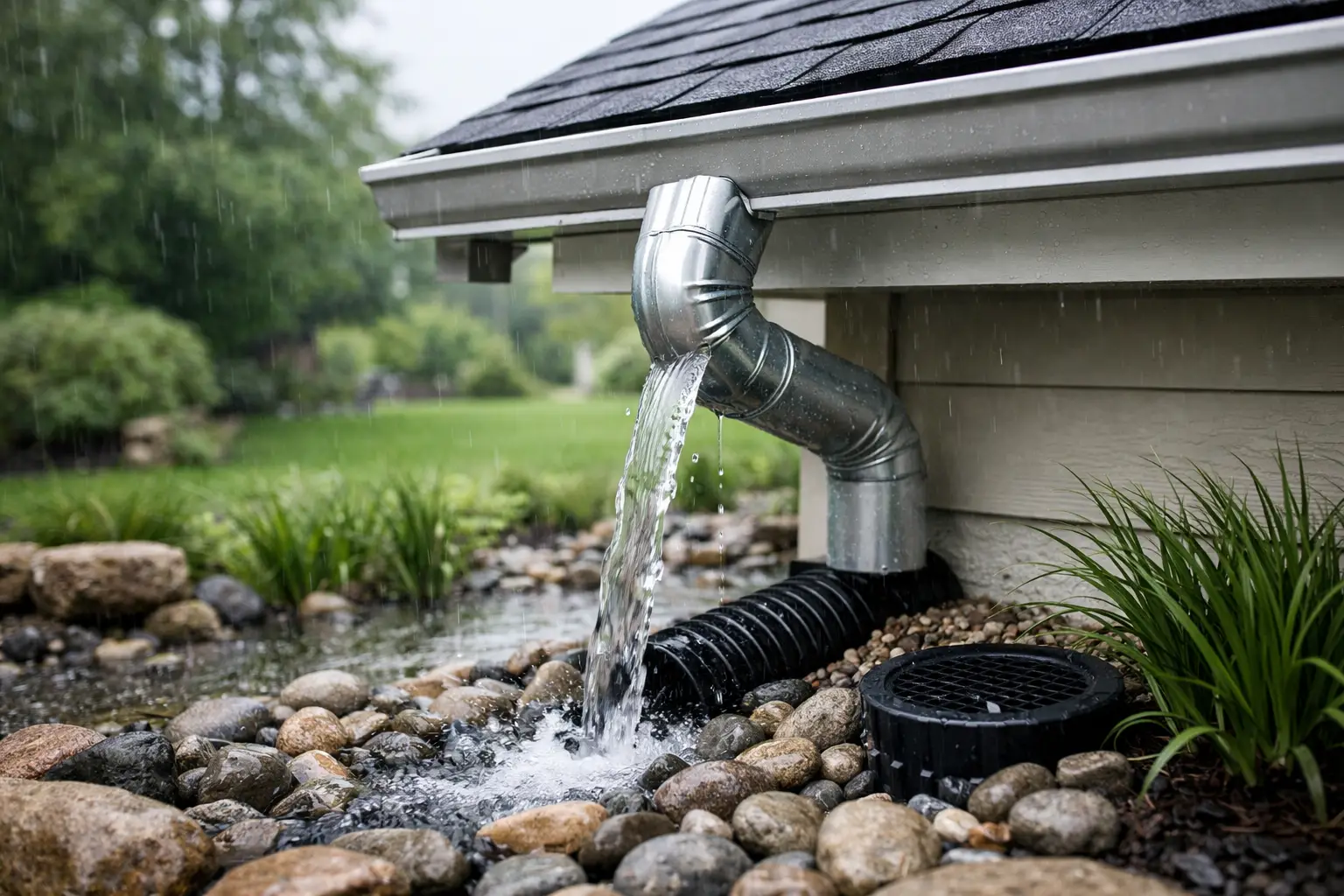
A hard Florida rain can dump a lot of water off your roof in a matter of minutes. If your roof runoff water control is weak, that water does not just disappear. It spills over gutter edges, washes out mulch, soaks fascia boards, and starts pooling near the foundation where bigger problems begin.
For homeowners in Orlando, this is not a small maintenance detail. Between frequent storms, wind-blown debris, and long rainy stretches, even a decent-looking gutter system can underperform when you need it most. Good water control comes down to one simple goal: move roof water away from the house quickly and cleanly, without leaks, clogs, or overflow.
Why roof runoff water control matters
Most people notice gutter problems only after they see water pouring over the sides. By that point, the system is already failing in one or more areas. The overflow may be caused by clogs, improper pitch, undersized downspouts, loose fasteners, or sections that have started to separate and leak.
The damage does not always stay at the gutter line. Water that falls too close to the house can soften soil around the foundation, stain siding, rot trim, and damage landscaping. On homes with repeated overflow, you may also see mildew, erosion, and puddling that lingers long after the storm passes.
That is why roof runoff water control should be viewed as part of overall home protection, not just a cleanup issue. When the system is working correctly, it helps reduce wear on the exterior and lowers the chance of expensive repairs later.
What a good runoff control system includes
A strong system is more than just gutters attached to the roofline. Each part has a job, and if one part is off, the whole system can struggle.
Seamless gutters are often the starting point because they reduce the number of joints where leaks tend to develop. On a residential home, custom-measured seamless K-gutters also tend to look cleaner and perform better than pieced-together sections. Fewer seams generally means fewer weak points.
Downspouts matter just as much. A gutter can collect water well, but if the downspouts are too few, clogged, poorly placed, or not draining far enough away, water still ends up where you do not want it. In many cases, the fix is not replacing the entire system. It may be as simple as adjusting downspout placement, correcting slope, or adding capacity where runoff is heaviest.
Gutter guards can also help, especially under tree cover or in areas where leaves, pine needles, and roof grit build up fast. They are not a cure-all, and they do not eliminate maintenance completely, but they can reduce the rate of buildup and help water move more consistently through the system.
Signs your current setup is not controlling roof runoff
Some warning signs are obvious, and some are easy to miss until the damage spreads. Overflow during heavy rain is the clearest signal. So are drips from gutter seams, sagging sections, and downspouts that spill water right at the base of the home.
There are quieter signs too. You might notice trenches forming in flower beds, mulch pushed out of place, peeling paint near the roofline, or dark streaks on siding. Inside, chronic moisture issues can sometimes trace back to drainage problems outside.
If the same area floods or stays wet after every storm, it is worth checking whether the issue starts at the roof edge. A drainage problem in the yard often begins as a gutter or downspout problem above it.
Common causes of poor roof runoff water control
Clogging is the most common issue, especially in storm-prone areas where leaves and small debris collect quickly. Once flow slows down, water backs up and spills over the front or rear edge of the gutter.
Pitch problems are another frequent cause. Gutters need a slight slope so water naturally moves toward the downspouts. If sections settle, pull away, or were installed without the right angle, standing water develops. That standing water adds weight, which can make sagging worse over time.
Capacity can also be the issue. Some homes have roof lines or valleys that dump a heavy volume of water into one section. In a light rain, the system seems fine. In a Florida downpour, it cannot keep up. That is where larger gutters, additional downspouts, or better placement can make a real difference.
Then there is discharge. Even when gutters and downspouts are technically working, the water still has to end up in the right place. If a downspout releases water too close to the home, you have only moved the problem from the roof edge to the foundation line.
The Orlando factor: heavy rain changes the standard
In Central Florida, drainage systems need to handle more than occasional showers. Sudden, intense rainfall puts pressure on every part of the gutter system. A setup that might be acceptable in a drier region can fail here simply because the water volume is higher and more frequent.
That is why local conditions matter. Homes with steep roof sections, large surface areas, screened enclosures, or concentrated runoff points may need more than a basic gutter layout. It depends on the roof design, the landscaping below, and how water currently moves around the property.
For homeowners and property managers, that means the best solution is rarely one-size-fits-all. Practical water control starts with looking at where the roof sheds water now, where it overflows, and where it lands after it leaves the downspout.
Repair or replace?
Not every drainage issue calls for a full replacement. If the gutters are structurally sound and the problem is isolated, targeted repairs may be enough. Refastening loose sections, resealing leaks, correcting pitch, clearing clogs, or adjusting downspouts can restore performance quickly.
Replacement makes more sense when the system has multiple failure points, recurring leaks, widespread sagging, or visible wear that keeps returning after repairs. Older sectional gutters often reach a point where patching them becomes less cost-effective than installing seamless gutters built to fit the home correctly.
The trade-off usually comes down to long-term value. A repair may solve the immediate issue at a lower cost. A replacement may reduce maintenance, improve appearance, and lower the risk of repeated overflow. The right choice depends on the age of the system, the extent of the problem, and how often you have been dealing with the same trouble spots.
Maintenance is part of water control
Even a well-installed system needs upkeep. Debris buildup, storm damage, and gradual shifting can all affect performance. That is why routine gutter cleaning is not just cosmetic. It is part of keeping water moving the way it should.
For homes surrounded by trees, more frequent service may be necessary. For others, seasonal cleaning and inspection may be enough. The important part is consistency. Waiting until water is pouring over the side usually means the system has been struggling for a while.
A professional inspection can catch smaller issues before they turn into repairs involving wood rot, fascia replacement, or drainage damage below. In many cases, a quick adjustment or cleaning is enough to prevent a much larger problem.
What homeowners should look for in a solution
The best roof runoff solution is practical, not complicated. You want gutters sized and pitched correctly, downspouts that move water away from the house, and components that can handle local rain conditions without constant trouble.
You also want clear recommendations. If a contractor jumps straight to full replacement without explaining the actual cause of overflow, that is not helpful. Good service starts with identifying whether the issue is clogging, poor slope, weak fastening, bad drainage layout, or system capacity.
For Orlando-area homes, that often means looking at the full picture instead of one symptom. Precision K-Gutters approaches that work the same way most homeowners want it handled – directly, cleanly, and with solutions that make sense for the property.
If rainwater is running over the edge, collecting at the base of the house, or cutting through your landscaping, it is worth addressing now rather than after the next storm. Water always follows the easiest path. The goal is to make sure that path leads away from your home, not into it.