
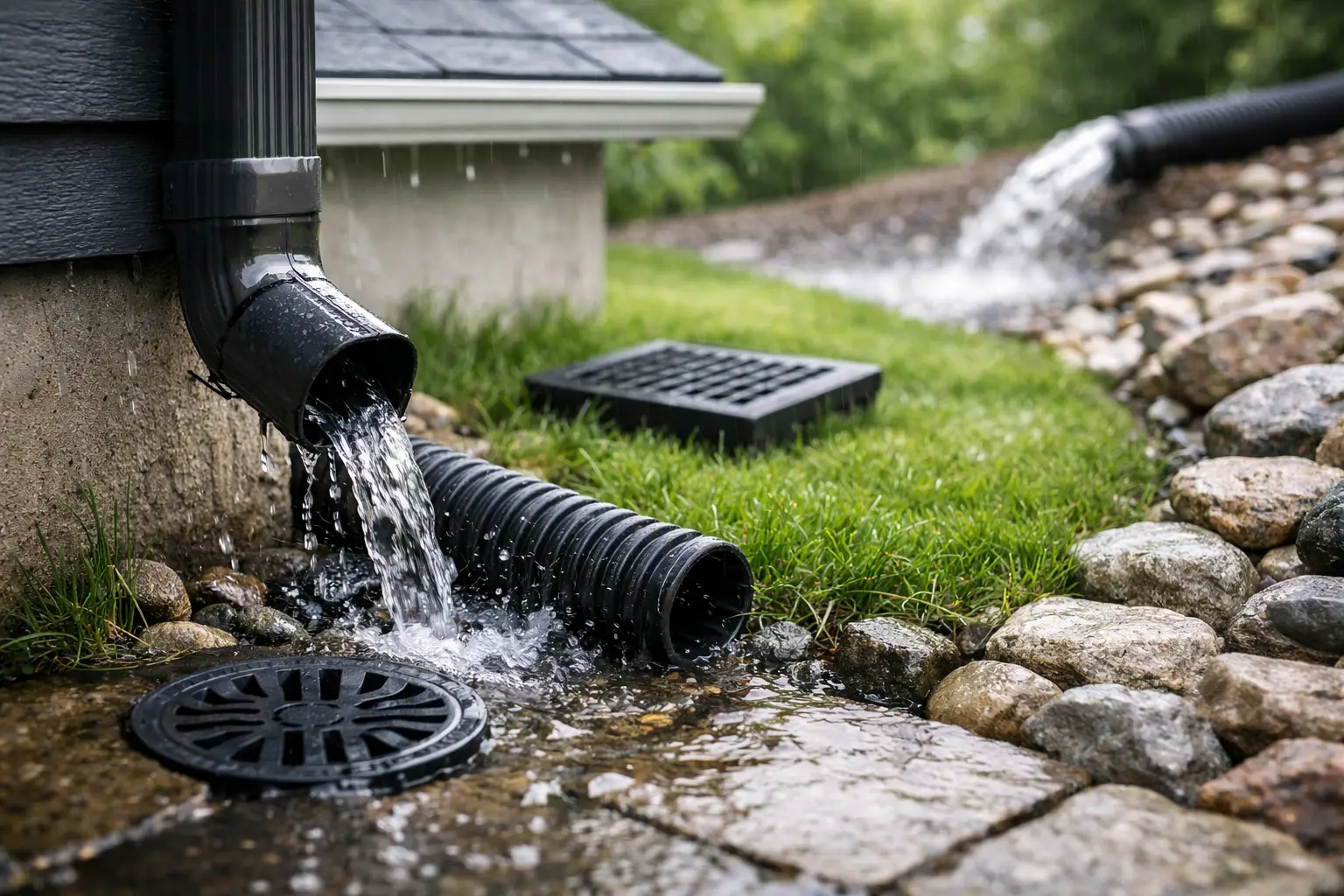
A hard Florida rain can show you exactly where your home drainage system is falling short. Water spilling over the front gutter, puddles near the slab, and mulch washed out of beds are not small annoyances. They are early signs that your setup needs attention. This rainwater drainage guide for homes explains what to look for, what matters most, and where simple corrections can make a big difference.
Why rainwater drainage matters around a home
Most homeowners notice drainage problems at the roofline first, but the bigger risk is what happens after water hits the ground. If runoff is not collected and moved away properly, it can soak fascia boards, stain siding, erode landscaping, and collect near the foundation. Over time, that leads to wood rot, mildew, settlement concerns, and avoidable repair costs.
In Central Florida, drainage problems tend to show up fast. Heavy seasonal rain, frequent storms, and leaf buildup can overwhelm a system that is undersized, clogged, or poorly pitched. A home does not need a major defect to have a drainage problem. Sometimes one loose gutter section or one short downspout is enough to send water where it should not go.
The main parts of a home drainage system
A good drainage system is simple in theory. It catches roof runoff, carries it through gutters, moves it down through downspouts, and sends it away from the house. In practice, each part has to do its job.
Gutters
Gutters collect water along the roof edge before it can pour straight to the ground. If they are too small, sagging, or pulling away from the fascia, water can overflow even when they are clean. Seamless K-gutters are a common choice because they provide a clean look and reduce the number of joints where leaks can develop.
Downspouts
Downspouts are what turn collection into control. A gutter can catch a lot of water, but if the downspouts are undersized, clogged, or badly placed, water backs up quickly. That is when you see overshooting at corners, spillover at seams, or water dropping right at the base of the home.
Extensions and discharge points
Where the downspout ends matters. If water empties too close to the house, the system is only doing half the job. Extensions, splash blocks, and properly planned discharge areas help carry runoff farther out so it does not settle around the foundation or low spots in the yard.
Grading
Even a solid gutter system can struggle if the ground slopes toward the house. The soil around the perimeter should direct water away, not invite it back. In some cases, drainage issues that look like gutter failures are really grading problems.
A practical rainwater drainage guide for homes
If you are trying to figure out whether your drainage setup is working, start with what you can see during or right after a storm. Overflow at the gutter edge usually points to clogs, undersized gutters, or poor pitch. Water marks on fascia or soffit often suggest ongoing overflow or leaks at seams. Pooling near the foundation is usually a sign that downspouts are discharging too close to the house, or that the yard is not draining well.
Take a look at the corners and end caps too. Those areas handle a lot of flow and often show wear first. If a section is separating, rusting, or leaking at a joint, water will escape before it reaches the downspout. Small leaks may not seem urgent, but repeated exposure in the same area can cause trim damage and staining.
Then check whether the gutters are actually pitched correctly. Gutters are not meant to sit perfectly level. They need a slight slope so water moves toward the downspouts. If standing water stays in the trough long after rain has stopped, the pitch may be off, or the gutter may be sagging.
Common drainage problems and what causes them
Clogging is the most obvious problem, but it is not the only one. Leaves, pine needles, seed pods, and roof grit build up over time, especially in valleys and around downspout openings. Once water flow slows down, even a normal storm can push water over the edge.
Another common issue is poor downspout placement. If one side of the house has a long gutter run with too few outlets, that section may struggle during heavy rain. The result is not always a full blockage. Sometimes the gutter simply cannot drain fast enough.
Improper repairs can also create drainage trouble. A patched seam, mismatched section, or loosely secured hanger may hold for a while, but if the alignment is off, water will find the weak point. This is especially common on older systems with multiple repairs over the years.
There is also the question of capacity. Not every home needs a full replacement, but some systems were never a great match for the roofline to begin with. Large roof planes, steep slopes, and concentrated runoff areas may need better planning than a basic one-size-fits-all setup.
When cleaning helps and when it is not enough
Cleaning solves a lot of problems, but not all of them. If your gutters are full of debris, cleaning is the first step because it restores flow and lets you see the condition of the system. Many homeowners are surprised how much better drainage gets after a proper cleaning and flush.
That said, clean gutters can still overflow. If they are loose, undersized, incorrectly sloped, or paired with poorly placed downspouts, the issue is structural, not just maintenance-related. This is where a professional inspection helps separate a simple service need from a repair need.
Leaf guards can be a good option, especially in areas with recurring debris. They reduce how much material gets into the gutter, which helps maintain flow and cuts down on cleaning frequency. They are not a complete substitute for maintenance, though. Fine particles can still build up, and not every guard performs the same way on every roof or tree canopy.
Repairs vs. replacement
A lot depends on the age and condition of the system. If you have isolated leaks, one sagging section, or a loose downspout, repair may be the most sensible move. It is cost-effective and can restore proper drainage without replacing parts that are still doing their job.
Replacement makes more sense when problems are widespread. If the system has repeated seam leaks, visible warping, poor alignment, and chronic overflow, patching one area at a time usually turns into a cycle of short-term fixes. A custom-measured seamless system can reduce leak points and improve the way water moves off the roof.
For Orlando-area homes, that can matter more than people think. Fast-moving stormwater exposes every weak point. A cleaner install with fewer joints often means less maintenance and better long-term performance.
What homeowners should watch after a storm
The best time to evaluate drainage is during a strong rain, but right after the storm works too. Walk the perimeter and look for drips from joints, washout in beds, mud splash on walls, and water collecting near corners. Check whether downspouts are pushing water out properly or just dumping it at the base.
Also pay attention to recurring interior clues. Peeling paint near roof edges, damp smells near exterior walls, or unexplained staining can point back to outdoor water management. Drainage problems do not always stay outside.
If you manage a rental property, these checks matter even more. Tenants often notice symptoms, not causes. By the time someone reports standing water or a leak, the issue may have been building for a while.
The value of a professional drainage assessment
A good assessment is not just about finding clogs. It should look at gutter condition, pitch, downspout performance, discharge direction, and the areas where water is affecting the property. The goal is simple – move rainwater off the roof and away from the structure as efficiently as possible.
That is where local experience helps. Homes in this area deal with intense rainfall, seasonal debris, and drainage patterns that can change from one lot to the next. Precision K-Gutters works with those conditions every day, which makes it easier to recommend practical fixes instead of generic ones.
The best drainage setup is not always the most complicated one. Often, it comes down to a properly fitted gutter system, clear downspouts, smart water discharge, and regular upkeep. When those basics are handled well, your home has a much better chance of staying dry where it counts.
If your gutters only get your attention when water starts pouring over the edge, that is usually your sign to act sooner next time. Rain has a way of exposing small problems before they become expensive ones.