
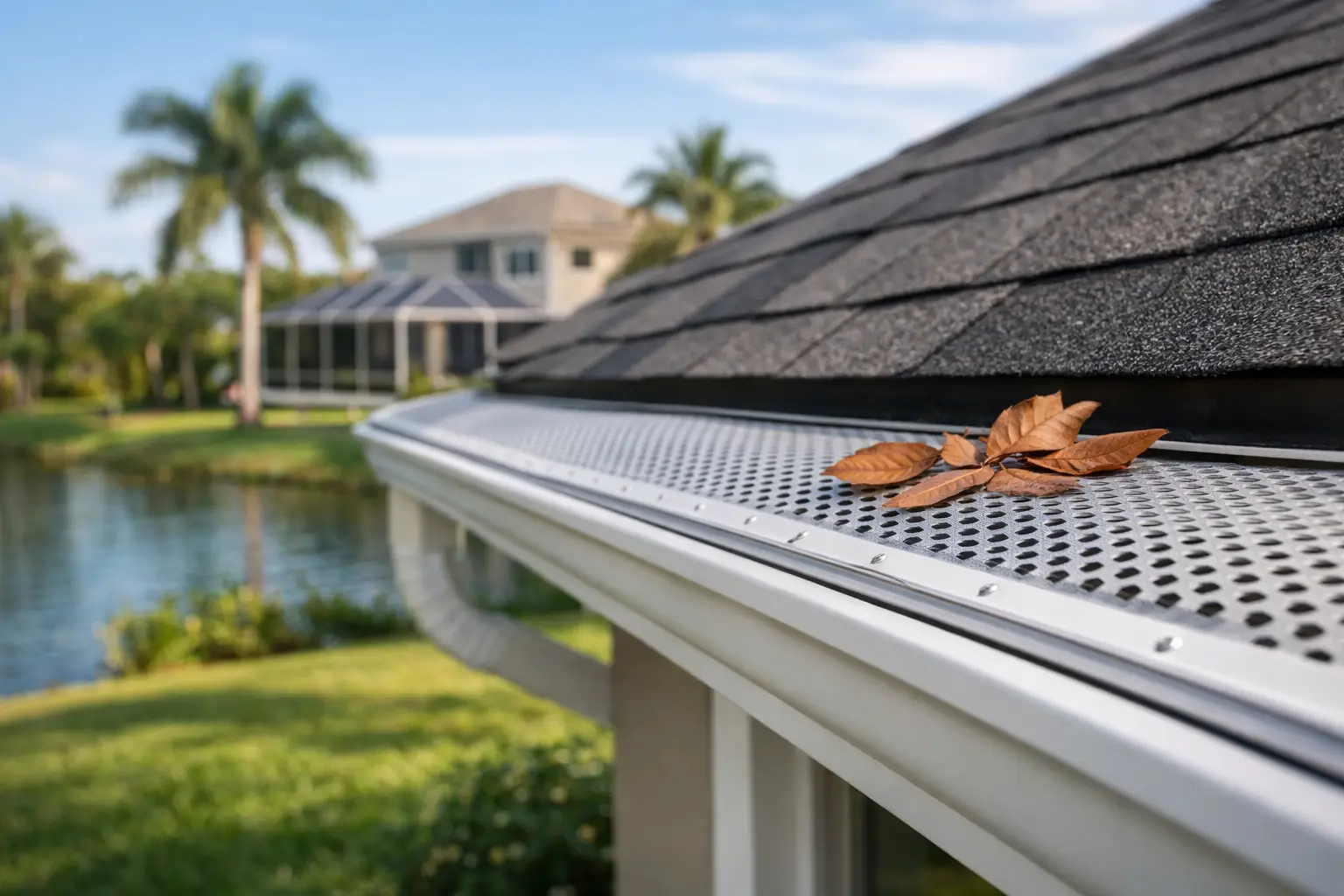
A leaf guard usually gets attention after the problem has already shown up – overflowing gutters in a hard rain, water spilling near the foundation, or a cleanup that turns into a full afternoon on a ladder. This leaf guard buying guide is built for homeowners and property managers who want to make a smart decision before gutter problems get expensive.
In Central Florida, that decision is not just about leaves. Pine needles, seed pods, oak debris, roof grit, and sudden heavy rain all put stress on a gutter system. A product that looks good in a brochure may still perform poorly if it cannot handle the kind of downpours Orlando homes regularly see.
What a leaf guard should actually do
The main job is simple: keep enough debris out of the gutter so water can keep moving to the downspouts. That sounds obvious, but many buyers get pulled toward products that promise “maintenance-free” performance. In real conditions, that claim rarely holds up exactly as advertised.
A good leaf guard reduces cleaning frequency, lowers the chance of clogs, and helps protect the gutter system from standing debris and overflow. It does not mean you will never need service again. Small particles can still collect over time, and any guard system can struggle if the gutters are undersized, pitched incorrectly, or already damaged.
That is why the best buying decision starts with the condition of the full system, not just the cover placed on top of it.
Leaf guard buying guide: know the main types
Not all leaf guards work the same way, and the differences matter.
Screen guards
Screen guards use a perforated surface to block larger debris while allowing water through. These are common because they are relatively affordable and can work well in many situations. The trade-off is that finer debris can still build up on top or work through the openings over time.
For homes surrounded by larger leaves, a screen may be enough. For homes under pines or trees that drop smaller debris, performance can be mixed.
Mesh and micro-mesh guards
Mesh systems use smaller openings than standard screens, and micro-mesh takes that even further. These are often the better fit when fine debris is a problem. They can do a stronger job of blocking shingle grit, seed pods, and small leaves.
The catch is water flow. A well-made micro-mesh guard can handle heavy rain, but a lower-quality product or poor installation may cause water to sheet over the edge during a storm. In Florida, where rain can come down fast, that detail matters.
Reverse curve or surface tension guards
These systems are designed so rainwater follows the curve into the gutter while leaves fall off the edge. On paper, it is a clean idea. In practice, results depend heavily on roof slope, rainfall intensity, and installation quality.
Some homeowners like these because they keep out larger debris well. Others find that during intense storms, water can overshoot the opening. They also tend to be more visible from the ground, which can be a drawback if appearance matters.
Foam inserts and brush systems
These sit inside the gutter rather than covering it from above. They are usually less expensive upfront, but they are rarely the first choice for long-term performance in wet, debris-heavy climates. Foam can trap moisture and break down. Brush-style inserts can collect debris within the bristles.
For temporary improvement, they may help. For a lasting solution, most homeowners are better served by a more durable guard system.
Why your roof and gutters matter as much as the guard
A leaf guard is only one part of water management. If the gutter is loose, sagging, undersized, or improperly pitched, the guard will not fix that. In some cases, adding a guard to a weak system just hides the problem until the next major storm.
Roof type also affects performance. The angle of the roof, the amount of runoff, and the condition of the shingles all influence how water reaches the gutter. A product that works well on one home may not work the same way on another across the street.
This is especially true with seamless K-style gutters, which are common because they move water efficiently and give a cleaner look along the roofline. The guard should fit the gutter profile correctly and not interfere with drainage at the front edge or into the downspouts.
What Orlando-area homeowners should pay attention to
In Central Florida, a leaf guard has to manage two problems at once: frequent debris and sudden high-volume rain. If you only shop for debris blocking, you may end up with a product that struggles in summer storms. If you only shop for high water intake, you may get a guard that still lets too much material into the gutter.
Tree coverage matters too. Homes with live oaks, palms, and pines do not produce the same debris. Pine needles and smaller particles often expose weak points in cheaper systems. If your property has mixed tree cover, ask specifically how the product handles both broad leaves and fine debris.
Salt air and humidity can also affect longevity in some parts of the greater Orlando region. Materials should be corrosion-resistant, and the installation should not create weak points that loosen over time.
Cost: what you are really paying for
Leaf guard pricing can vary a lot, and the lowest quote is not always the best value. Part of the cost is the material itself, but a large part is fit, compatibility, and installation quality.
A properly installed system should match the gutter, sit securely, and allow for cleaning and service when needed. A cheaper add-on that gets fastened poorly or bends under debris can lead to overflow, repairs, and repeat labor. That is when a “budget” option stops being budget-friendly.
When comparing quotes, look beyond the price per foot. Ask what prep work is included. If the gutters need resecuring, resealing, slope correction, or downspout adjustment first, that should be addressed before the guard goes on.
Questions worth asking before you buy
The right contractor should be able to answer practical questions clearly. Ask how the recommended guard performs in heavy Florida rain, what kind of debris it handles best, and whether your existing gutters are in good enough condition to support it.
Ask whether the estimate includes cleaning the gutters first, making repairs if needed, and checking downspout flow. Ask how visible the product will be from the ground. And ask what kind of ongoing maintenance is still expected, because honest answers are usually more useful than big promises.
It also helps to ask who will install it and whether the system is being custom-fit or cut in a way that leaves gaps. Precision matters here. Even a quality product can underperform when the install is rushed.
Signs a leaf guard may not be your first step
Sometimes the best recommendation is to hold off. If the gutters are pulling away from the fascia, leaking at joints, or draining too slowly because of downspout issues, those problems should come first.
The same goes for homes where the current gutter system is simply too small for the roof area. In that case, a new guard may reduce debris entry but still leave you with overflow in heavy rain. The better investment may be gutter replacement or reconfiguration before adding protection.
A trustworthy contractor will say that when it applies. That kind of advice may reduce the immediate sale, but it protects the property owner from spending money in the wrong order.
How to make the right choice
The best leaf guard buying guide advice is not to chase the product with the biggest claims. Instead, match the guard to the home, the tree cover, the roofline, and the gutter system already in place.
For many Florida homes, a well-installed mesh or micro-mesh option on a properly functioning seamless gutter system strikes the best balance between debris control and water flow. But that is not universal. Some homes need repairs first. Others need a different style because of roof design or runoff volume.
A useful estimate should feel specific to your property, not copied from a sales script. If someone looks at your roofline, checks pitch and drainage, explains trade-offs, and talks plainly about maintenance, you are probably getting closer to the right answer.
A leaf guard should make home maintenance easier, not more complicated. If the choice fits your house and your rain patterns, you will notice the difference where it matters most – cleaner gutters, fewer clogs, and better water control when the next storm rolls through.