
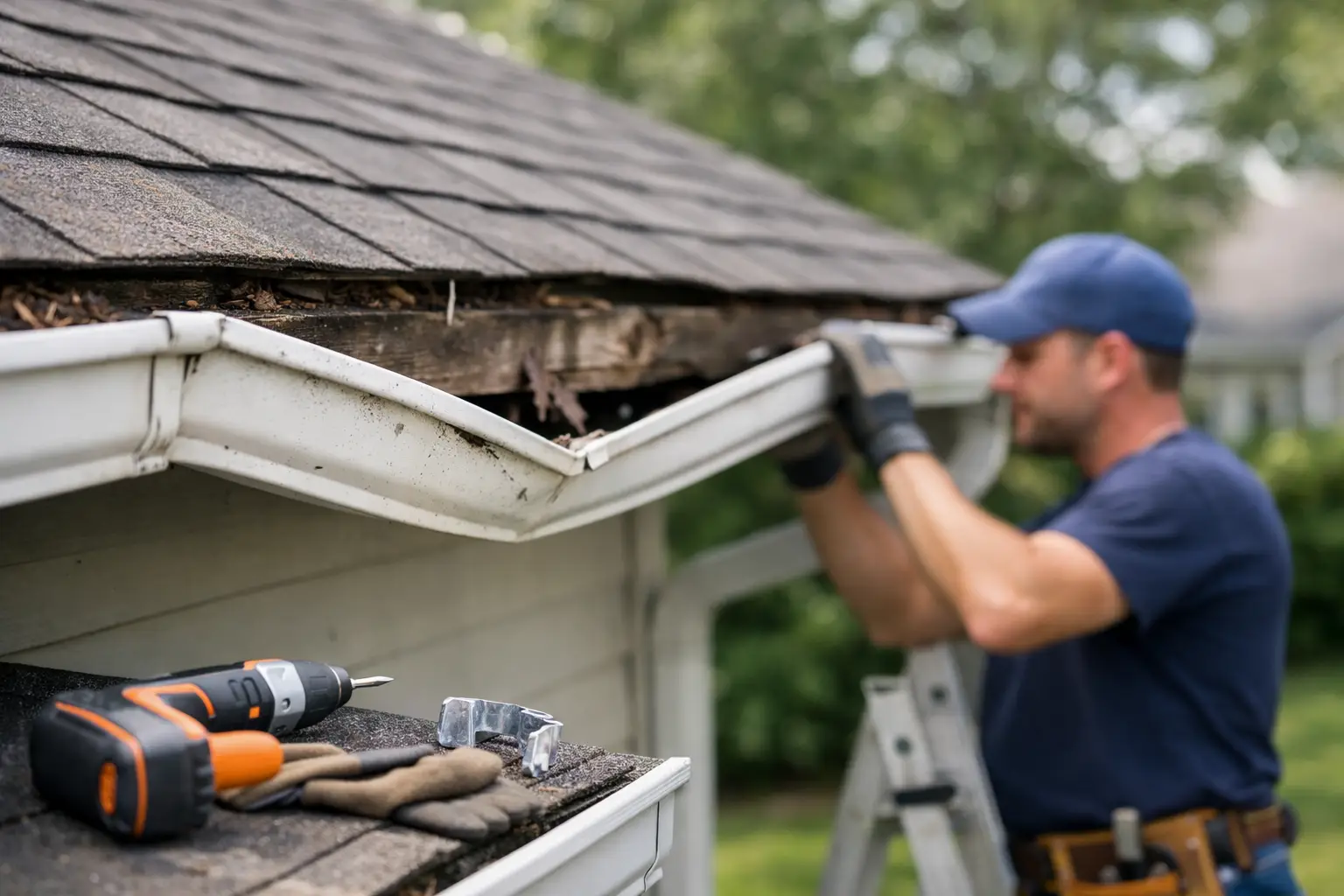
A sagging gutter usually shows up after a hard rain. You notice a low spot, water spilling over the edge, or a section pulling away from the fascia. At that point, most homeowners want the same answer fast – what is the sagging gutter repair cost, and is this a small fix or a sign of a bigger problem?
What affects sagging gutter repair cost?
The price depends on why the gutter is sagging in the first place. In some cases, the section only needs new hidden hangers or spikes resecured. In others, the gutter has started to twist, separate at a joint, or pull on rotted fascia board behind it. Those are very different repairs, and the cost reflects that.
For a minor repair, homeowners often see costs in the lower range when the issue is limited to one short section and the gutter itself is still in usable shape. That might mean reattaching fasteners, correcting the pitch, or adding support where the run has started to dip. A more involved repair can cost more when multiple sections are loose, the system is holding debris and standing water, or the fascia has been damaged by long-term moisture.
Material matters too. Aluminum K-style gutters are common on homes in Orlando and are often repairable if caught early. Older systems, heavily bent sections, or gutters with repeated leak points may not be worth patching. Labor access also plays a role. A one-story front elevation is simpler than a two-story rear section over landscaping, a screen enclosure, or a steep roofline.
Typical price ranges homeowners can expect
There is no one-size-fits-all number, but most sagging gutter repairs fall into a few broad categories.
A small repair on a short section may run around $150 to $300 if the issue is mainly loose hangers, basic repositioning, or a simple resecure. If the gutter needs more extensive realignment, multiple new supports, or sealing around problem joints, the cost may land closer to $300 to $600.
When sagging has gone on long enough to damage the fascia, soffit edge, or mounting surface, pricing can move beyond standard gutter repair. At that point, the gutter issue is tied to exterior wood repair or partial replacement work. In those cases, the final total can rise significantly depending on how much material has to be removed and rebuilt before the gutter can be mounted correctly.
If a long run is warped or the system is older and failing in several places, replacement may be the better value. That is especially true when a homeowner is paying for repeated service calls on a gutter that still does not drain correctly.
Why gutters sag in the first place
Most sagging starts with weight. Gutters are built to carry rainwater, not pounds of packed debris, shingle grit, and soaked leaves. Once buildup collects, especially near corners and downspouts, the gutter starts pulling away from the home. One low spot becomes two, and then water starts sitting where it should be flowing.
In Central Florida, storm cycles can make this worse. Heavy rainfall quickly exposes any weak point in the system. If the gutter already has improper slope, clogged downspouts, or fasteners that have loosened over time, one strong storm can turn a manageable repair into a larger issue.
Poor installation also causes sagging. If hangers were spaced too far apart, if the pitch was off from the start, or if the gutter was attached to compromised wood, the system may begin failing sooner than expected. That is why the cheapest repair is not always the best repair. A quick reattachment without fixing the root cause can leave you with the same problem after the next storm.
When a repair is enough and when it is not
A repair makes sense when the gutter is structurally sound and the problem is localized. If one area has loosened, the metal is not badly bent, and the fascia behind it is still solid, a professional can often reset the section and restore proper drainage without replacing the full run.
It gets less practical when the gutter is pulling apart at seams, showing widespread deformation, or sagging in multiple areas. Sectional systems can be especially prone to recurring issues because each joint is another place for leaks and movement. If the system is older and already patched several times, replacement often provides a cleaner and more reliable result.
For homeowners comparing estimates, this is where a clear inspection matters. You want to know whether you are paying for a true fix or just buying time. Sometimes buying time is fine, especially if you plan a larger exterior project later. But if water is running behind the gutter, soaking fascia, or collecting near the foundation, delaying a real solution can cost more than addressing it now.
The hidden costs of waiting too long
Sagging gutters are easy to put off because they do not always look urgent from the ground. The risk is not just the gutter itself. Overflowing water can stain siding, damage landscaping, erode soil, and create pooling near the home. Over time, it can also contribute to wood rot, mildew, and problems around windows, trim, or entry areas.
For property managers, one sagging section can also become a tenant complaint after the next heavy rain. Water spilling near walkways, patios, or front entries is not just messy. It can affect the condition of the property and create avoidable maintenance issues that spread beyond the gutter line.
That is why the lowest sagging gutter repair cost is usually the cost of addressing it early. Once the mounting surface fails or water starts damaging adjacent materials, the scope changes.
What a professional quote should include
A useful quote should do more than name a price. It should explain what caused the sagging, what parts of the system are affected, and whether the repair will restore proper drainage or simply stabilize the section for now.
Homeowners should expect details on the condition of the gutter run, the fasteners, the slope, the downspout connection, and the fascia where the gutter attaches. If debris buildup contributed to the problem, cleaning may need to happen before the repair can even be evaluated properly. If the estimate skips those details, it is harder to compare value from one contractor to another.
This is also where local experience matters. In the Orlando area, gutters need to handle fast, heavy rain and frequent debris buildup. A repair approach that might hold up in a drier climate may not perform the same way here.
How to keep repair costs lower over time
Regular cleaning is the most direct way to reduce sagging risk. When debris is allowed to sit season after season, the extra weight stresses the gutter and the hardware holding it in place. Keeping downspouts clear matters just as much, because trapped water adds weight and slows drainage.
It also helps to pay attention after storms. If you see standing water, drips behind the gutter, or sections that look uneven, it is worth having them checked before the next stretch of rain. Small adjustments are generally far less expensive than structural repairs.
For some homes, leaf guard options can reduce buildup and cut down on recurring strain, though they are not a cure-all. They work best when paired with a properly pitched, professionally installed gutter system that is already in good condition.
A practical way to think about sagging gutter repair cost
The real question is not just what the repair costs today. It is whether the repair solves the drainage problem and protects the home from the next storm. A low quote can look attractive, but if it leaves the gutter under-supported or ignores damaged fascia, it may not save money at all.
A straightforward inspection and an honest recommendation usually tell the story. Sometimes that means a quick fix. Sometimes it means replacing a failing section before it creates more exterior damage. For Orlando homeowners and property managers, the best next step is usually the simple one – address the sagging early, fix the cause, and keep the water moving where it should.