
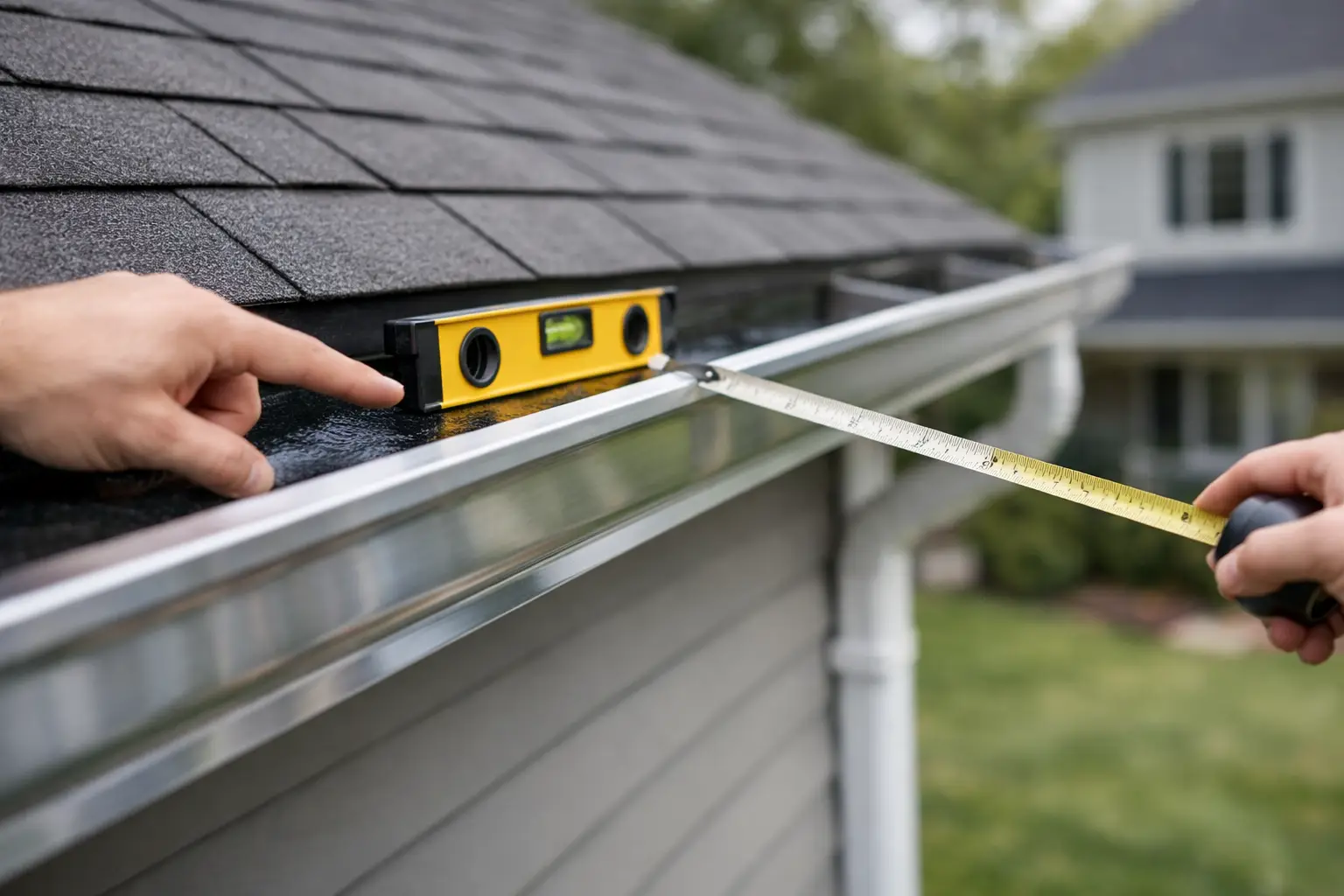
If water is spilling over the front of your gutters during a Florida downpour, the problem is not always a clog. Sometimes the gutter is simply not pitched correctly. This homeowner guide to gutter pitch explains what slope does, how to spot trouble, and when a repair is enough versus when it makes more sense to replace the system.
Gutter pitch is the slight angle built into a gutter run so rainwater moves toward the downspout instead of sitting in the trough. It is not something most homeowners notice from the ground, and that is the point. A properly pitched gutter should look straight while still guiding water where it needs to go.
That small detail matters more than people think. When pitch is off, water can pool, overflow, leak at seams, pull on hangers, and dump too much runoff near the house. In Central Florida, where heavy rain can hit fast and hard, even a minor slope issue can turn into fascia damage, soil washout, mildew, and foundation concerns over time.
What gutter pitch actually means
Pitch is the amount a gutter drops as it runs toward a downspout. In simple terms, one end is set slightly higher and the outlet end is set slightly lower. The difference is usually subtle, but it gives gravity enough help to keep water moving.
Most residential gutters are pitched about a quarter inch for every 10 feet of gutter. That is a common rule of thumb, but not every house is exactly the same. The right pitch can vary based on the length of the run, the number of downspouts, roof area, and how intense local rainfall tends to be.
Too little pitch allows water to sit in the gutter. Too much pitch creates its own problem because the gutter may look crooked, and water can rush too aggressively to one end. The goal is controlled drainage, not a steep channel.
A homeowner guide to gutter pitch and why it affects your home
When gutters are draining properly, they do one job very well: they move roof runoff away from vulnerable parts of the home. That includes the roof edge, soffit, fascia, siding, landscaping, and the area around the foundation.
When pitch is wrong, the gutter may still catch some water, but not consistently enough during a strong storm. You may see water sloshing over one side, dripping from joints, or standing in sections long after rain stops. That standing water adds weight, and over time that extra load can loosen fasteners and cause sagging.
For homeowners and property managers, the issue is practical. Bad pitch can mean more frequent cleanings, more repairs, and more water ending up where it should not be. It is one of those small installation details that has a big impact on maintenance costs later.
Signs your gutter pitch may be off
The clearest sign is water that does not move toward the downspout during rain. If you can safely observe the system during a storm, look for sections where water pools or spills over before reaching the outlet.
After the rain, check whether water is still sitting in the gutter. A little residual moisture is normal. An obvious puddle is not. Standing water often means the gutter has settled, the slope was never right to begin with, or a blockage is slowing flow enough to expose a pitch issue.
You may also notice gutters that appear to sag in the middle, stains on the fascia, erosion beneath one section, or mildew marks on siding. In some cases, the problem looks like a leak when it is really water backing up because the gutter is not draining efficiently.
Clogs can mimic bad pitch, and bad pitch can make clogs worse. That is why a proper inspection matters. Cleaning a gutter helps, but if the run is sloped incorrectly, the same overflow issue can come back with the next heavy storm.
How pros check gutter pitch
A professional will usually inspect the entire run, not just the area where overflow is visible. That matters because the trouble spot is not always where the real problem starts.
Pitch is checked by measuring the high point, the outlet point, and the total run length. Installers also look at hanger spacing, fascia condition, seams, and whether the downspout location makes sense for the roofline. On longer runs, one downspout may not be enough even if the pitch is technically correct.
This is where experience matters. A gutter can be level enough to look acceptable but still fail during a strong Florida storm because the drainage design is undersized or poorly laid out. Good water management is about the whole system working together.
Can you fix gutter pitch without replacing the gutters?
Sometimes yes. Sometimes no. It depends on what caused the problem.
If the gutter itself is in decent shape and the issue is limited to loose hangers, minor settling, or a section that was installed slightly off, a re-pitch may solve it. That usually involves adjusting the hangers, resetting the slope, and checking that water moves cleanly to the downspout.
If the system has multiple leaks, separated seams, rust, bent sections, or widespread sagging, a pitch adjustment may only be a short-term fix. Older sectional gutters are especially prone to this. You can improve the angle, but if the material is already failing, the better investment may be replacement.
Seamless systems often give homeowners a cleaner and more reliable result because they reduce leak points across the run. If a home already needs major correction, upgrading instead of patching can make sense from both a performance and maintenance standpoint.
Common causes of bad gutter pitch
Poor original installation is one cause, especially when the gutter was mounted to look straight without enough functional slope. Another common issue is fasteners pulling loose over time, which lets the gutter dip away from its intended angle.
Debris buildup also plays a role. Wet leaves and roof grit add weight, and repeated loading can stress brackets and distort sections. On homes with long runs, undersized drainage design can create chronic overflow even when the pitch is close to right.
Wood rot along the fascia can be part of the problem too. If the mounting surface weakens, the gutter may shift or sag. In those cases, simply adjusting the gutter is not enough. The underlying structure needs attention or the problem will return.
Why Orlando-area homes need extra attention
In Central Florida, gutters do not get much forgiveness. Sudden high-volume rain exposes any weakness quickly. A gutter that seems fine during a light shower may overflow badly during a summer storm.
Tree debris, roof runoff volume, and fast-changing weather all increase the importance of proper pitch. Homes with screened enclosures, tight side yards, or landscaping close to the foundation also have less room for drainage mistakes. When runoff is not directed well, the effects show up faster.
That is why a system should not just be installed to fit the house. It should be set up to handle local rainfall realistically.
What homeowners can do before calling for service
A visual check from the ground is useful. Look for standing water, sagging sections, water marks, and overflow areas. If you can do so safely, note whether the downspouts are discharging where they should and whether splash blocks or drainage paths are still working.
If the gutters are full of debris, cleaning may resolve some symptoms. But if water still sits in the gutter after cleaning, pitch becomes a likely issue. That is a good time to have the system inspected instead of guessing.
The goal is not to turn a homeowner into a gutter installer. It is to catch warning signs early, before a drainage issue turns into wood rot or repeated water intrusion.
When to repair and when to replace
Repair makes sense when the gutter is structurally sound, the problem is localized, and the system can still be brought back to proper drainage with adjustments. Replacement makes more sense when the run is aging, leaking in several places, sagging across multiple sections, or simply not designed well for the roof it serves.
For many homes, especially those dealing with recurring overflow, it is worth looking beyond the immediate symptom. A quote should answer whether the real issue is pitch, clogging, undersized gutters, poor downspout placement, or a combination of those factors. Clear communication matters here because the right fix is not always the biggest one.
Precision K-Gutters approaches this the practical way: inspect the drainage path, identify what is causing the failure, and recommend the cleanest solution for the property.
A properly pitched gutter will never be the most noticeable part of your home, and that is exactly how it should be. When rain hits hard, the best system is the one you do not have to think about.