
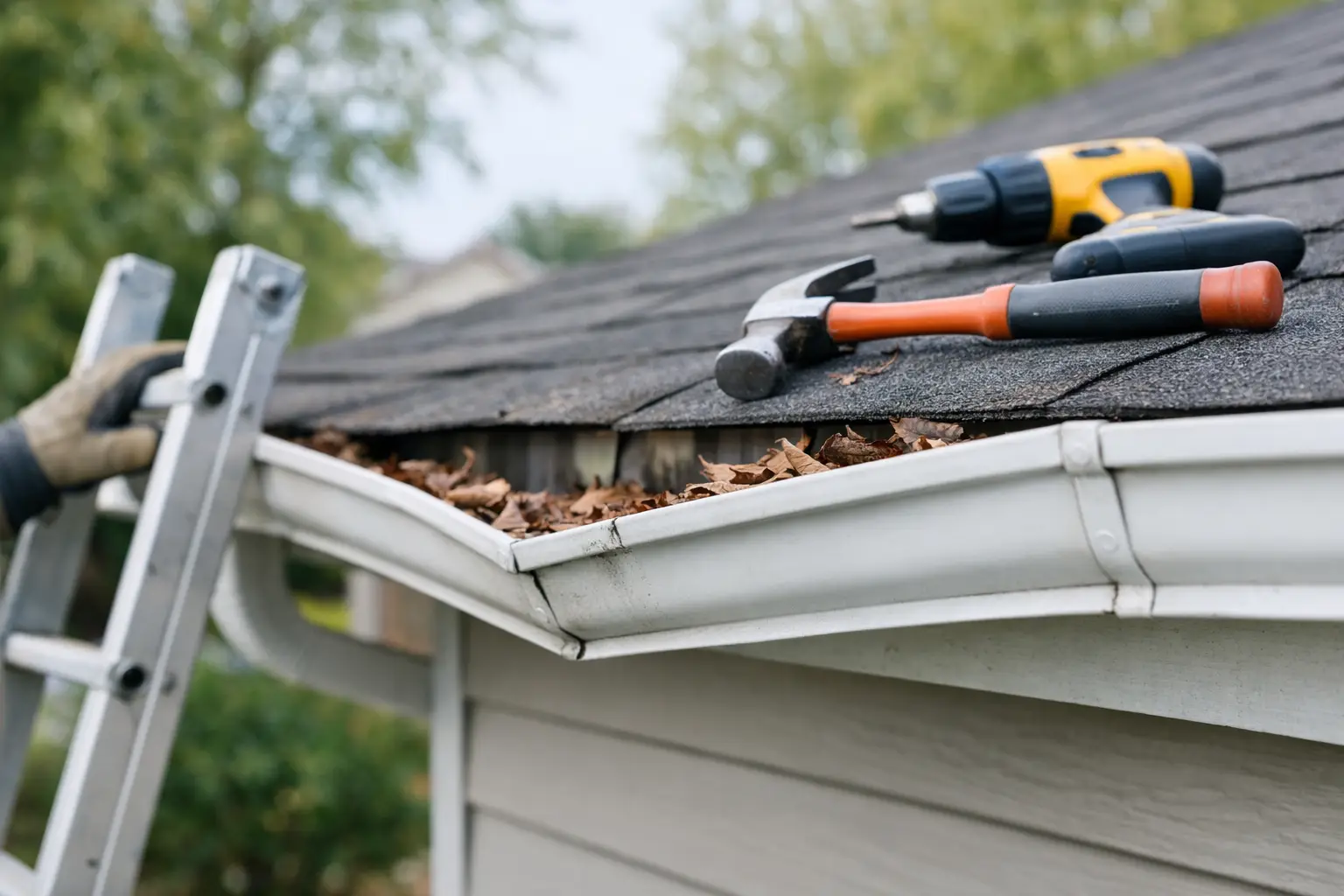
A sagging gutter usually shows up right after a hard rain. You notice water spilling over one section, a dip forming along the roofline, or fasteners pulling away from the fascia. When that happens, most homeowners want the same thing – a clear answer on sagging gutter repair options and whether the problem needs a quick fix or a full replacement.
The right solution depends on why the gutter is sagging in the first place. In some cases, a section just needs to be resecured and properly pitched. In others, the weight of standing water, debris buildup, hidden rot, or damaged hangers means the system is already failing. Fixing the symptom without correcting the cause usually leads to more overflow, more fascia damage, and more water around the home.
What causes a gutter to sag?
Most sagging starts with weight or loss of support. Gutters are designed to carry water toward the downspouts, but they are not built to hold heavy debris, standing water, or fasteners that have worked loose over time. Once one point starts to pull away, the rest of the run can begin to dip.
In Central Florida, this can happen faster than many homeowners expect. Frequent storms, sudden downpours, and clogged sections put extra strain on the system. If the gutter is already older or was not installed with the right spacing and slope, sagging tends to show up sooner.
The most common causes include loose gutter hangers, nails or spikes backing out, fascia board damage, debris buildup, poor pitch, and sections that were bent or undersized. Sometimes the issue is isolated to one area. Sometimes it is a sign the whole run needs attention.
Sagging gutter repair options homeowners should know
Not every sagging section needs to be replaced. The best repair starts with a close look at the supports, the fascia, and how water is moving through the line.
Refastening loose sections
If the gutter itself is still in good shape, one of the simplest sagging gutter repair options is to remove failed fasteners and secure the system again with stronger hangers or screws. This works best when the gutter metal has not warped and the fascia is still solid.
A proper refastening job is more than pushing the gutter back into place. The section needs to be reset at the correct pitch so water drains instead of pooling. If the alignment is off, the sag may look better for a short time but still hold water after every storm.
Replacing damaged hangers or spikes
Older systems often rely on spike-and-ferrule fasteners, which can loosen over time. Modern hidden hangers generally provide better support and a cleaner hold. If the main issue is failing hardware, replacing those components can restore the run without replacing the full gutter.
This is often a cost-effective repair, but only when the surrounding material is still sound. If the fasteners pulled out because the wood behind them is soft or rotted, new hangers alone will not solve it.
Correcting improper pitch
A gutter can sag visually, but sometimes the bigger problem is poor slope. If water sits in the channel instead of flowing to the downspout, even a secure gutter can begin to dip under repeated weight. In that case, the repair involves rehanging the section at the proper angle.
This matters more than many people realize. A gutter that looks mostly straight can still perform badly if it is pitched wrong by even a small amount over a long run. Correct pitch helps prevent overflow, standing water, and recurring sag.
Replacing a damaged section
If one section is bent, twisted, cracked, or pulling away beyond repair, sectional replacement may be the smarter option. This is common when a ladder impact, storm damage, or long-term water load has distorted the metal.
Section replacement can work well if the rest of the system is in good condition. The challenge is matching the existing profile, color, and alignment so the repair performs properly and does not stand out visually.
Repairing or replacing fascia boards
Sometimes the gutter is not the main failure point. The fascia board behind it may be soft from long-term moisture exposure. If the wood is compromised, any new fastener will have a weak hold.
In that situation, the sagging gutter repair option has to include wood repair. Once the fascia is solid again, the gutter can be reinstalled correctly. Skipping this step usually means the gutter pulls loose again.
Full gutter replacement
When sagging shows up in multiple areas, the system may be at the end of its service life. If there are recurring leaks, loose connections, poor drainage, rust, separated joints, and visible dips along several runs, replacement often makes more sense than piecing together repeated repairs.
For many homes, seamless K-style gutters are the cleaner long-term answer. With fewer joints and custom on-site measurements, they reduce common leak points and give more consistent support across the run. That can be especially valuable in an area like Orlando, where stormwater management is not something to leave half-fixed.
When a repair is enough and when replacement makes more sense
This is where honesty matters. A lot of gutter problems can be repaired, but not every repair is worth doing.
If the sagging is isolated, the metal is still solid, and the fascia is in good shape, repair is often the right move. It is practical, less disruptive, and can extend the life of the system. Property managers often prefer this route when the issue is limited and the rest of the gutter line is still performing well.
Replacement makes more sense when the sagging is part of a bigger pattern. If one repair leads to another, if multiple areas are pulling away, or if the gutter never drained correctly to begin with, a new system can save money and frustration over time. Paying for repeated patchwork on a failing gutter usually costs more than addressing the full problem properly.
Why sagging gutters should not be ignored
A sagging gutter is not just a cosmetic issue. Once water stops moving the way it should, it starts finding other places to go.
Overflow can soak fascia boards, stain soffits, damage landscaping, and dump water too close to the foundation. On homes with concentrated runoff, that can lead to erosion, muddy areas near the structure, and moisture issues around entryways or corners of the house. If the sag is near a roof edge valley, the volume of water can be even heavier during a storm.
There is also a safety side to it. A loose section can eventually detach, especially when full of debris and rainwater. What starts as a visible dip can become a more expensive exterior repair if it is left through another storm season.
What a professional inspection should check
A good gutter inspection should look beyond the obvious dip. The goal is to identify why the section failed and whether the surrounding system is still doing its job.
That means checking hanger spacing, fastener condition, fascia integrity, pitch, downspout flow, debris buildup, joint condition, and signs of overflow on nearby surfaces. It should also include a realistic recommendation. Some homes need a small repair. Others need a reset of several sections. Others are better served by replacement.
For homeowners in the Orlando area, local weather matters here. Heavy rain exposes drainage problems fast, so a gutter that seems mostly fine during dry periods may still be underperforming when it matters most.
Preventing the next sagging section
Once a repair is made, maintenance plays a big role in keeping the problem from returning. Gutters that stay packed with leaves, roof grit, and debris carry unnecessary weight and drain poorly. Regular cleaning helps protect the pitch and the attachment points.
It also helps to address small issues early. A loose hanger or a minor dip is much easier to correct than a full section that has pulled off the fascia. In some cases, leaf guard solutions can reduce buildup and lower the strain on the system, especially in areas where debris collects quickly.
Precision K-Gutters works with homeowners who need direct answers on whether a sagging section can be repaired or should be replaced. The goal is not to overcomplicate it. It is to fix what is causing the problem, protect the home from water damage, and leave the gutter system working the way it should.
If your gutter line is dipping, overflowing, or pulling away from the house, the best next step is to address it before the next heavy rain tests it for you.