
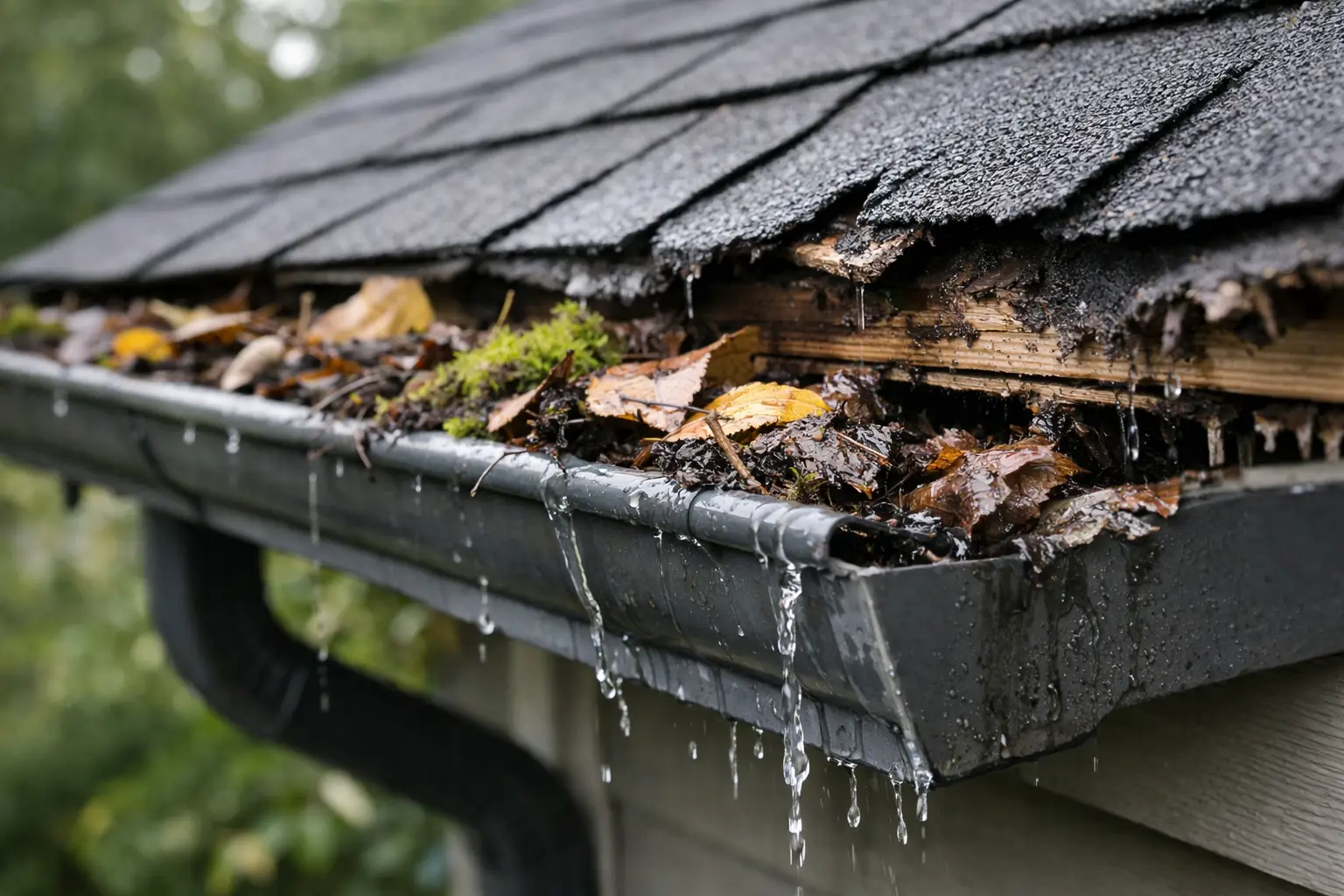
A lot of roof edge damage starts where homeowners are not looking. The roof itself may seem fine from the yard, but if gutters are packed with leaves, grit, and roof runoff, water has nowhere to go. If you have ever asked, can clogged gutters damage roof edges, the short answer is yes – and it can happen faster in Central Florida than many people expect.
Heavy rain is part of life in the Orlando area. When gutters are clear, they move water off the roofline and away from the house. When they are clogged, that same water can back up, spill over, and stay in contact with the fascia, soffit, drip edge, and lower shingles. Over time, those repeated wet conditions can turn a simple maintenance issue into a repair job.
How clogged gutters damage roof edges
Roof edges are designed to shed water, not hold it. A working gutter system supports that by catching runoff and directing it to the downspouts. Once debris blocks that path, water starts behaving differently.
Instead of flowing out, it pools in the gutter trough. During a strong rain, it can rise high enough to soak the fascia board behind the gutter. It can also overflow over the front and sides, sending water back toward the home instead of away from it. If the clog is severe, water may wick under the first row of shingles or sit along the drip edge longer than it should.
That repeated exposure matters. Wood trim along the roof edge can absorb moisture, paint can peel, fasteners can loosen, and gutter sections can begin pulling away under the added weight. On homes with existing weak spots, the damage tends to show up even sooner.
The parts of the roof edge most at risk
Fascia boards
The fascia is one of the first areas to suffer when gutters stay clogged. Since the gutter mounts directly to this board, any standing water in the system puts stress on it. If water spills behind the gutter, the fascia stays damp and can begin to rot.
Once fascia wood softens, the gutter no longer has a solid surface to stay attached to. That is when homeowners start seeing sagging sections, separated seams, and spikes or screws pulling loose.
Soffits
Overflow does not always stop at the fascia. Water can run underneath the roof edge and reach the soffit panels below. If those materials stay wet, staining, swelling, and decay can follow. In some cases, trapped moisture in this area also creates better conditions for mildew or pest activity.
Drip edge and shingle edges
The metal drip edge helps guide water into the gutter. If the gutter is full and water backs up, that transition stops working the way it should. Moisture can linger along the edge of the roof deck and under the lower shingle line.
That does not mean every clogged gutter will automatically cause a roof leak. But it does increase the risk, especially during long storms or when debris has been building up for months.
Can clogged gutters damage roof edges in Florida faster?
Yes, they often can. Central Florida homes deal with a mix of hard rain, heat, humidity, and fast organic growth. Even if a gutter clog starts small, a summer storm can expose the problem quickly.
Leaves are only part of the issue here. Pine needles, seed pods, shingle granules, and roof sediment can build up and create dense blockages. Add frequent afternoon downpours, and a system that looks mostly fine on a dry day can overflow badly when the rain hits.
Humidity also slows drying. When fascia and soffit materials stay damp after repeated storms, deterioration can move faster than it would in a drier climate. That is one reason regular gutter cleaning matters so much for Orlando-area homes.
Warning signs the roof edge may already be affected
Sometimes the gutter clog is obvious. Other times, the first clue is damage along the roofline. If you notice peeling paint on the fascia, dark streaks under the gutter, soft wood near the roof edge, or sections of gutter that look tilted or loose, water may already be doing more than just overflowing.
You may also see water spilling over one area during rain while other sections drain normally. That usually points to a local clog or poor slope. On two-story homes, this can be hard to catch from the ground, which is why many issues go unnoticed until the trim starts showing wear.
Inside the attic or near exterior walls, moisture stains can sometimes trace back to roof edge water problems. It depends on the home and how the water is moving, but clogged gutters should not be ruled out when these signs appear.
It is not always the gutter clog alone
A clogged gutter is a common cause, but not the only one. Roof edge damage can also involve aging materials, poor gutter pitch, undersized downspouts, loose fasteners, or sections that were installed incorrectly. Sometimes a homeowner cleans the gutter, but the overflow continues because the water still cannot move out properly.
That is why it helps to look at the whole drainage path. The gutter trough needs to be clear, the downspouts need to carry water away efficiently, and the system needs enough support to stay aligned during heavy rain. If one part is failing, the roof edge can still take the hit.
What homeowners should do if gutters are clogged
The first step is simple: do not ignore it until the next storm. A gutter packed with debris is not just a cleaning issue. It is a water management problem sitting directly against the roofline.
If the buildup is light and the home is safely accessible, cleaning may solve it. But if gutters are sagging, separating, or overflowing in the same spots repeatedly, the system should be inspected for damage and drainage problems. In many cases, clogged sections have already added weight and strain to hangers, seams, and fascia attachment points.
For property managers and busy homeowners, routine maintenance usually costs far less than replacing rotted trim or repairing water-damaged roof edges. That is especially true on homes surrounded by trees or exposed to frequent storm runoff.
When repair is the better move
Cleaning helps, but it does not fix every problem caused by clogs. If fascia wood is soft, if gutter fasteners are loose, or if sections no longer hold the right pitch, repairs may be necessary to protect the roof edge going forward.
This is also where seamless systems can make a difference. Fewer joints mean fewer places for leaks and weak points to develop. A custom-fit gutter system that is properly sized and supported does a better job handling Florida rain, especially when paired with regular cleaning and, in some homes, leaf guard protection.
A local company like Precision K-Gutters will usually look at the practical question first: is this a maintenance issue, a repair issue, or both? That kind of direct assessment helps homeowners avoid overdoing it, but it also keeps minor trim damage from becoming a much larger exterior repair.
The real cost of waiting
Roof edge damage rarely starts with a dramatic failure. More often, it builds through repeated overflow, trapped water, and overlooked warning signs. A clogged gutter this month can turn into fascia rot, soffit damage, and gutter separation later if the same conditions keep happening.
So, can clogged gutters damage roof edges? Absolutely. The good news is that this is one of the more preventable exterior problems around the home when the gutter system is cleaned, inspected, and repaired before water starts backing up where it should never sit.
If your gutters overflow during rain or your roofline is starting to show signs of wear, treating it early is usually the smartest move. Water problems are easier to manage when they are still small.