
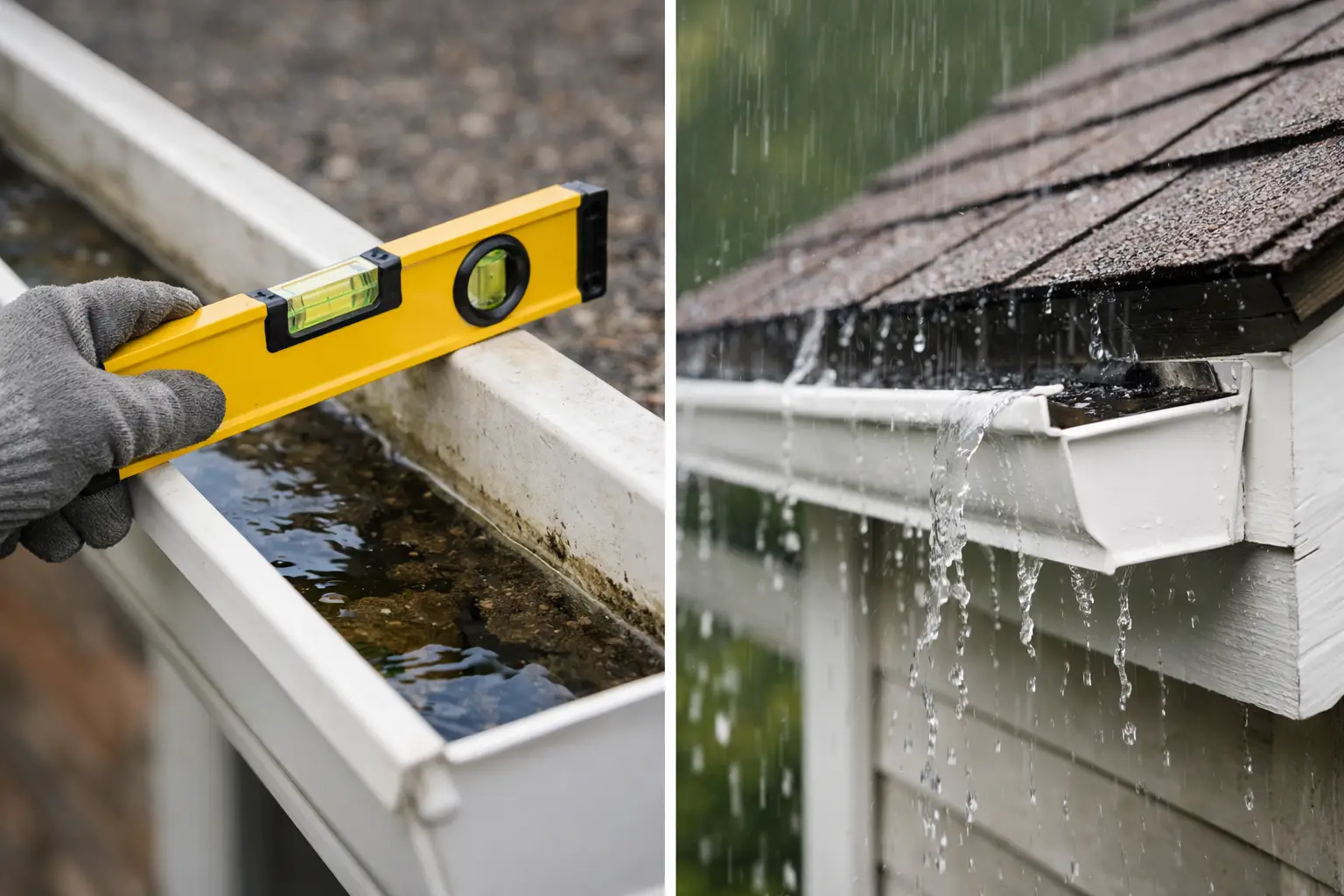
A gutter can look fine from the ground and still fail every time it rains. That is often what makes rain gutter pitch problems so frustrating. Water spills over the front edge, pools in one section, or drains too slowly, and the issue is not always a clog. In many cases, the gutter is simply not sloped the way it should be.
For homeowners in Orlando, that matters more than it might in a milder climate. A small pitch error can turn into major overflow during a fast, heavy storm. When that water ends up against fascia boards, soffits, flower beds, walkways, or the foundation, a minor gutter issue starts affecting the rest of the property.
What gutter pitch actually does
Gutter pitch is the slight angle that guides rainwater toward the downspout. Gutters are not supposed to sit perfectly level. They need a controlled slope so water keeps moving instead of collecting in place.
When the pitch is correct, runoff travels steadily to the downspout and away from the home. When the pitch is off, the system loses that simple path. Water may sit in the gutter, rush past the outlet, or spill over the sides before it ever reaches the downspout.
This is one of those details that seems minor until you see the result during a storm. A gutter system does not need to be falling off the house to have a performance problem. A small section that is too flat or sloped the wrong way can be enough to cause repeat overflow.
Common signs of rain gutter pitch problems
The most obvious sign is standing water in the gutter after the rain has stopped. If water remains in a section for hours or days, that section may not be draining toward the outlet. You might also notice mosquito activity, dirt settled in the bottom of the gutter, or plant growth starting in trapped debris.
Overflow is another common clue, especially if it happens near the middle of a run rather than only at a clogged downspout. When pitch is wrong, water can build up faster than the system can move it. That usually shows up as water pouring over the front lip of the gutter.
You may also see stains on the gutter face, mildew on soffits, or damp soil collecting in the same area below. In more advanced cases, screws pull loose, gutter hangers strain, and sections begin to sag because pooled water adds weight where it should not.
Inside the home, the warning signs are less direct but just as important. If water is repeatedly landing too close to the house, you may start seeing foundation moisture, landscape erosion, or wood trim wear long before anyone checks the gutter slope.
Why gutter pitch goes wrong
Sometimes the problem starts on installation day. If the original system was set too flat, or if the slope was measured inconsistently across a long run, drainage problems can show up almost immediately. This is more common on older homes and on quick replacement jobs where appearance got more attention than water flow.
In other cases, the pitch changes over time. Fasteners loosen. Fascia boards weaken. Heavy debris loads and standing water pull sections downward. One corner settles just enough to create a low spot, and now the water stays there every time it rains.
Central Florida weather adds pressure to the system. Gutters deal with intense rainfall, wind-driven storms, and frequent debris from trees. That combination can expose small alignment issues quickly. A gutter that drains adequately in light rain may fail during a summer downpour.
Downspout placement can also make a pitch issue worse. If a run is too long for the number of outlets, or if the outlet is poorly positioned, the gutter may struggle even when the slope is close. That is why a proper diagnosis matters. What looks like a pitch problem can sometimes be a design problem, and sometimes it is both.
Rain gutter pitch problems vs. clogs
Homeowners often assume overflow means leaves or shingle grit are blocking the system. That is a reasonable first guess, because clogs are common. But cleaning alone will not solve a drainage issue caused by poor slope.
The difference usually shows up after service. If the gutters are cleared and water still pools in the same spot, pitch should be checked next. If the downspout is open and water still runs the wrong direction, slope is likely part of the problem.
This matters because repeating the wrong fix wastes time and money. A gutter that needs re-pitching may keep overflowing no matter how often it is cleaned. On the other hand, a clogged system with proper pitch may perform normally once debris is removed. The right solution depends on what is actually causing the backup.
What a proper fix usually involves
Correcting pitch is not usually about replacing the entire system. In many cases, the fix is more targeted. A contractor may detach part of the run, reset the alignment, secure the hangers properly, and test water flow to confirm the slope works from end to end.
If sagging sections are involved, the repair may also include replacing damaged fasteners or addressing wood behind the gutter. If fascia is soft or rotted, simply adjusting the metal will not hold for long. The support surface has to be sound.
Sometimes the best fix includes changing the layout. Adding a downspout, adjusting outlet placement, or replacing a poorly sized section can improve performance more than forcing extra slope into a long run. There is no single answer for every house, which is why a good service recommendation should be based on how the whole system handles water.
For seamless systems, precision matters even more. These gutters are built to fit the home cleanly and reduce leak points, but they still depend on correct pitch and secure support. A clean appearance is only part of the job. The real measure is whether water moves where it should.
Can you spot the issue yourself?
You can usually spot symptoms from the ground. Look for standing water, repeated overflow areas, stains, sagging lines, and erosion below the same section of gutter. During a rainstorm, pay attention to where water exits and where it spills.
What is harder to judge from the ground is whether the slope is consistently wrong, whether one low spot is creating the problem, or whether the issue is tied to a loose hanger, blocked outlet, or fascia damage. That is where professional inspection helps. It removes the guesswork.
For property managers, this is especially useful when the same tenant complaint keeps coming back after cleaning. If one side of the home still overflows in every storm, the problem may be structural rather than maintenance-related.
When to repair and when to replace
If the gutter is in otherwise solid condition, re-pitching and hardware correction may be all that is needed. That is often the right call when the metal is still sound and the main issue is drainage performance.
Replacement makes more sense when pitch problems come with multiple failures – leaking seams, widespread sagging, corrosion, or repeated repairs across older sections. At that point, repairing one area may not solve the larger problem for long.
For Orlando-area homes, replacement can also be an opportunity to improve the full setup. That may mean custom-measured seamless K-gutters, better downspout placement, or leaf protection that reduces future maintenance. Precision K-Gutters often sees systems that were pieced together over time, and those are the ones that tend to have the most persistent drainage issues.
Why waiting usually costs more
Pitch problems rarely stay isolated. Water that does not drain properly adds weight, and that weight stresses brackets, fascia, and adjoining sections. Overflow stains exterior surfaces. Splashback affects landscaping. Water that lands too close to the home can create bigger repair bills far beyond the gutter itself.
The longer that cycle continues, the less likely it is to remain a simple adjustment. Catching the issue early gives you more repair options and a better chance of avoiding wood rot, soil erosion, and moisture problems around the house.
If your gutters keep overflowing even after they have been cleaned, it is worth looking beyond debris. A properly pitched gutter should move water efficiently, even in a hard Florida rain. When it does not, the fix is usually not complicated, but it does need to be accurate. A straight answer and a well-set gutter can save a home from a lot of avoidable water trouble.