
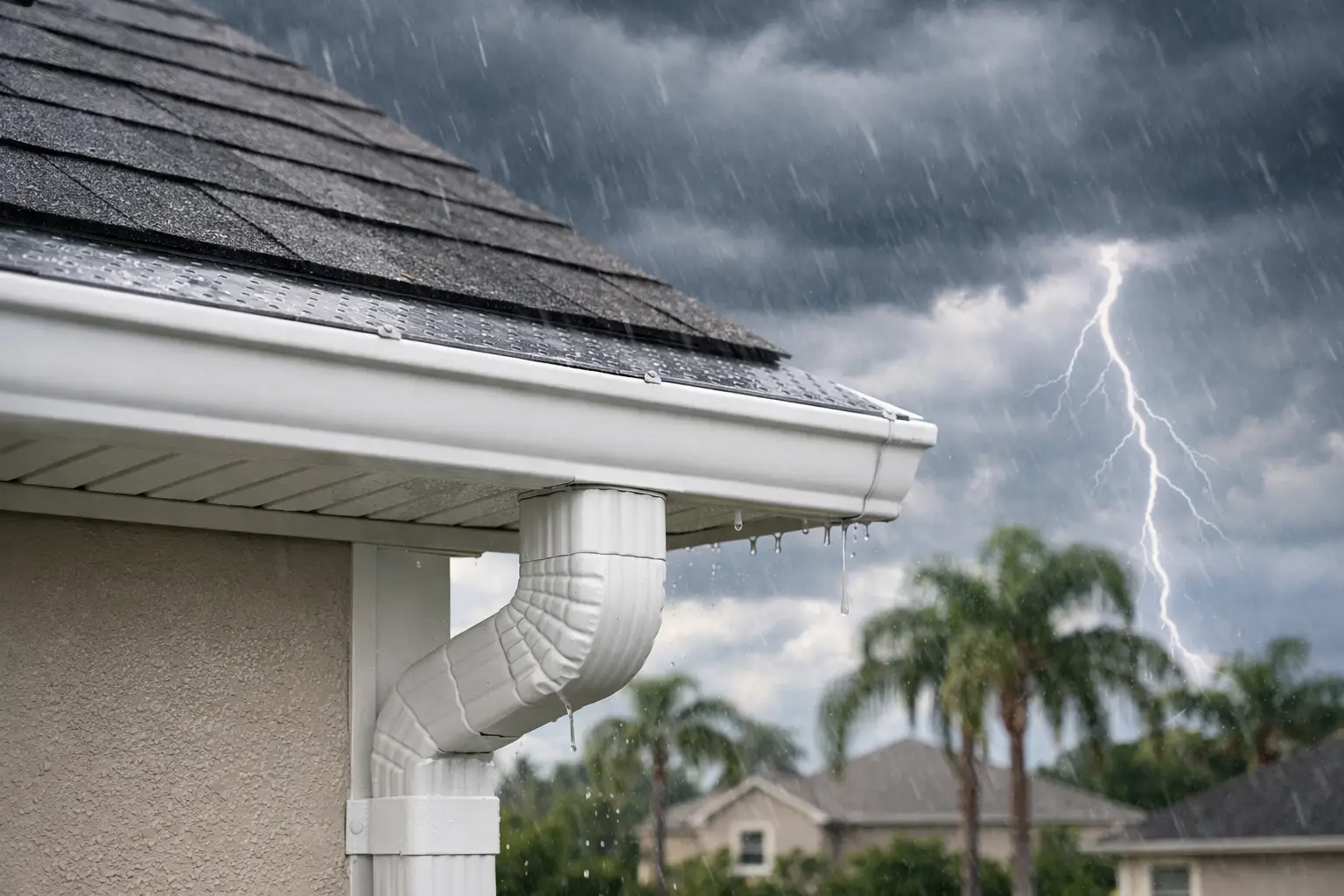
A Central Florida downpour can fill a gutter faster than most homeowners expect. When water spills over the edge, runs behind the fascia, or pools beside the home, the problem is not just the storm. It is usually a gutter system that cannot move water where it needs to go. Storm ready gutter upgrades give Orlando homeowners a practical way to reduce overflow, protect exterior surfaces, and manage heavy rain with more confidence.
The right upgrade depends on the home, roof layout, tree cover, and existing drainage issues. A small repair may be enough for one property. Another may need larger downspouts, better gutter pitch, or a complete seamless gutter replacement. The goal is the same: collect roof runoff and direct it safely away from the house.
Storm Ready Gutter Upgrades That Matter Most
Not every gutter improvement delivers the same result. For homes that regularly deal with intense rain, wind-driven debris, and long wet seasons, the most useful upgrades address capacity, drainage, and weak points in the existing system.
Custom-fit seamless K-gutters
Seamless K-gutters are custom measured and formed to fit the home. Because they have fewer joints along each run, there are fewer places for water to leak over time. They also provide a clean, finished appearance that works well with most residential rooflines.
A seamless system is especially helpful when older sectional gutters have separated at seams or developed recurring leaks. It is not a cure for every drainage problem, however. Even a new gutter can overflow if it is undersized, poorly pitched, or connected to inadequate downspouts. Proper sizing and installation matter as much as the material itself.
Larger or better-placed downspouts
Gutters collect water, but downspouts do the work of moving it off the roofline. During a heavy Orlando storm, a long gutter run with only one undersized downspout can back up quickly. Water may pour over the front edge, wash landscaping, and soak the area near the foundation.
Adding a downspout or upgrading to a larger size can improve flow without replacing the entire system. Placement matters, too. Downspouts should be positioned to drain efficiently and avoid sending large volumes of water toward walkways, entry areas, patios, or low spots beside the home.
If water regularly rushes from one corner during rain, the issue may be more than a clog. It may be a capacity problem. A professional inspection can determine whether the gutter run needs an additional outlet, a different downspout location, or a more complete upgrade.
Correct gutter pitch and secure fastening
Gutters need a slight slope toward the downspouts. If the pitch is too flat, water sits in the trough and debris settles into the bottom. If it is pitched poorly, water may collect at the wrong end or overflow before reaching the outlet.
Sagging sections create similar problems. Loose hangers, damaged fascia boards, and gutters pulling away from the roofline can all change how water moves. These issues often become obvious during a storm, but the damage can build slowly over months.
Rehanging and properly pitching existing gutters may be the most cost-effective upgrade when the gutters are otherwise in good condition. If the metal is badly bent, corroded, or leaking at multiple points, replacement is usually the more dependable long-term choice.
Leaf guards for the right property
Leaf guards can reduce the amount of leaves, pine needles, seed pods, and roof debris that enters the gutter. For homes with heavy tree cover, they can make regular maintenance easier and reduce the chance of a sudden clog during a storm.
They are not maintenance-free, and that distinction matters. Fine debris can still collect on top of some guard styles, while certain roof and tree combinations may need periodic cleaning regardless of the product installed. A leaf guard should be selected based on the type of debris around the home and the condition of the existing gutters.
For many Orlando properties, guards work best as part of a complete plan: properly sized gutters, clear downspouts, solid fastening, and routine visual checks after major weather events.
Look Beyond the Gutter Itself
A gutter system can be clean and still direct water to the wrong place. The final part of storm protection is what happens after water leaves the downspout.
Downspout extensions and adjustments help carry runoff away from the foundation and prevent water from repeatedly dumping into the same bed of mulch or low area. This is particularly useful where soil slopes back toward the house, landscaping is washing out, or water collects near exterior walls.
The best discharge location varies by property. Water should not be redirected toward a neighbor’s yard, a driveway that becomes slippery, or an area where it can enter a garage or patio enclosure. A practical adjustment considers the entire path of the water, not just the downspout outlet.
Pay attention to the fascia and soffits as well. Stains, peeling paint, soft wood, and dark streaks near the roofline can point to water escaping where it should not. Sometimes the fix is a simple gutter repair. In other cases, damaged wood needs attention before a new gutter system can be securely installed.
Signs Your Home May Need an Upgrade Before Storm Season
Waiting for the next major storm to test the gutters can turn a manageable repair into a larger exterior problem. A quick check around the home can reveal whether service should be scheduled soon.
Watch for water spilling over gutter edges during ordinary rain, visible standing water in the gutter after the storm, or downspouts that release only a small trickle while the gutter overflows. Gutters that sag, pull away from the fascia, or show rusty seams also deserve attention. On the ground, look for washed-out mulch, trenches in the soil, splash marks on siding, and water collecting near the foundation.
Inside the home, a ceiling stain does not always mean the roof is leaking. Overflowing gutters can force water behind fascia boards and into vulnerable areas around the roof edge. It takes an inspection to identify the source, but it is worth addressing early.
Property managers should also treat recurring gutter complaints as a maintenance pattern rather than isolated tenant issues. Overflow at the same building corner, repeated landscape erosion, or frequent requests after rain usually indicate a drainage condition that needs a direct solution.
Choose Upgrades Based on the Actual Problem
Homeowners do not always need a full replacement. If gutters are structurally sound but clogged, professional cleaning and downspout clearing may restore proper flow. If a few seams leak or one section has come loose, targeted repairs can be a sensible option.
Replacement becomes more practical when there are repeated leaks, widespread sagging, damaged sections, or an outdated layout that cannot handle the roof’s runoff. New custom-fit seamless gutters can also be a good investment when a homeowner is already repairing fascia, repainting exterior trim, or improving drainage around the property.
The key is avoiding one-size-fits-all recommendations. A clean estimate should explain what is causing the problem, which repair or upgrade addresses it, and what can reasonably wait. Clear communication matters because gutter work is most valuable when it solves the water issue instead of simply covering up the symptom.
Keep a Storm-Ready System Working
Even well-installed gutters need routine attention. Debris builds up gradually, and a downspout can clog where the blockage is not visible from the ground. Checking the system before the wetter months, after significant storms, and when leaves are falling heavily can help prevent surprises.
Homeowners can look for obvious debris, loose sections, and water pooling near the home, but avoid climbing ladders or working near power lines without proper equipment and experience. Professional gutter cleaning and inspection can catch loose hangers, leaking corners, poor pitch, and downspout issues before they lead to damage.
For Orlando homes, storm readiness is less about chasing the biggest possible gutter system and more about getting the details right. A properly fitted gutter, clear downspout, correct slope, and safe drainage path can make a major difference when the rain starts coming down hard. Precision K-Gutters can help homeowners identify the upgrade that fits the property and keeps water moving where it belongs.