
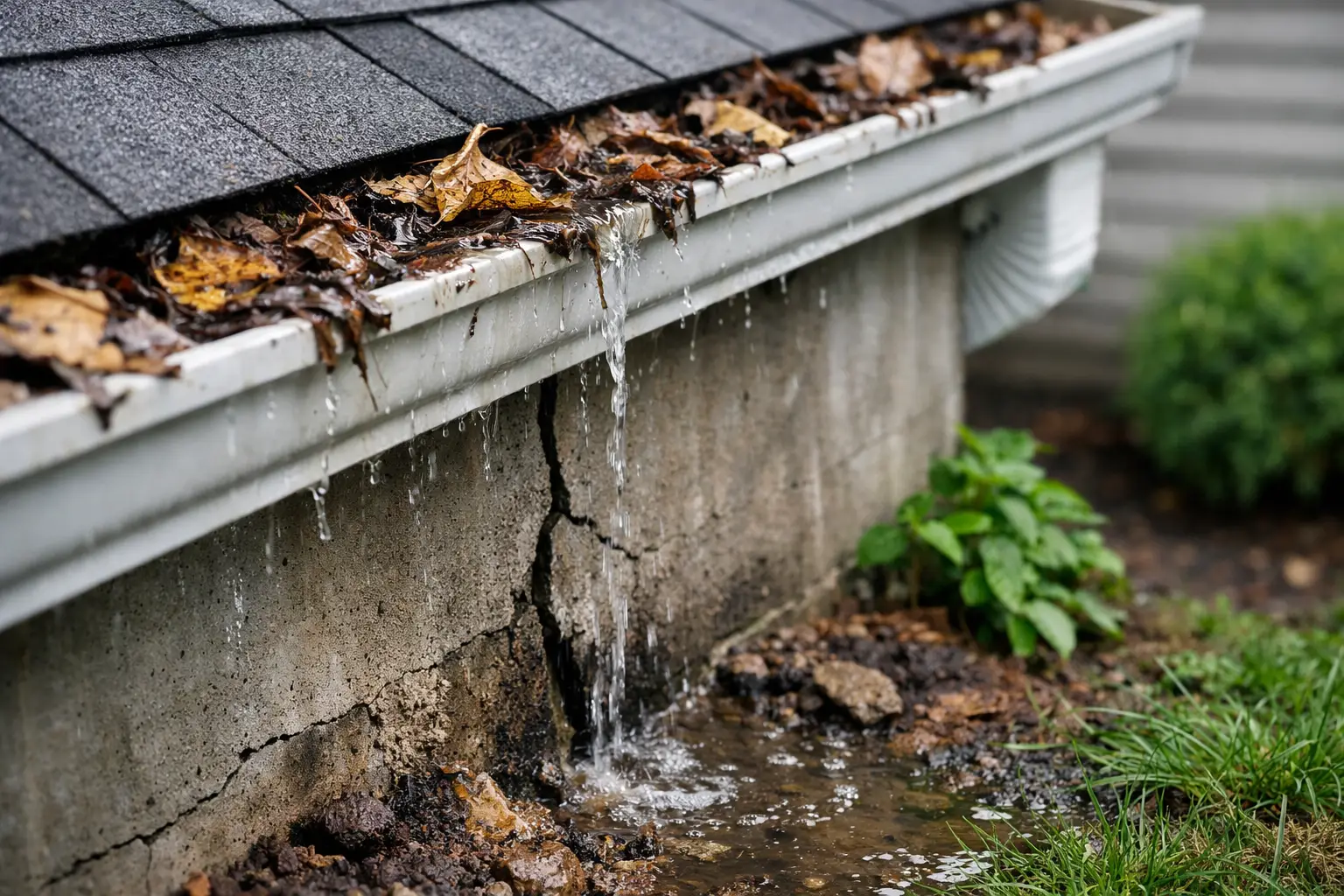
A gutter overflowing during a Central Florida downpour may look like a roofline problem, but the water usually ends up at ground level. Can clogged gutters damage foundations? Yes, especially when repeated overflow leaves large amounts of water pooling beside the house instead of directing it safely away.
For Orlando homeowners and property managers, this risk is worth taking seriously. Heavy seasonal rain can expose drainage problems quickly. One storm may not cause visible damage, but weeks or months of water landing in the same spot can erode soil, oversaturate the ground near the slab, and create conditions that contribute to foundation movement and other exterior damage.
How clogged gutters put water next to the foundation
Gutters are designed to collect water from the roof and send it through downspouts to a controlled discharge point. When leaves, pine needles, roof grit, nesting material, or other debris block that path, water has to go somewhere else. It commonly spills over the front edge, runs behind the gutter, or pours out at the nearest low point.
That overflow can dump a surprising amount of water directly beside the foundation. A roof collects rain across its entire surface, not just along the gutter line. During a hard storm, even a modest roof can send hundreds of gallons of water toward the ground in a short period.
The concern is not simply that the soil gets wet. Soil beside the home needs to drain consistently. When runoff repeatedly strikes the same area, it can wash away mulch and topsoil, create low spots, and change the grade around the structure. Water then has an easier path back toward the house during the next storm.
Foundation damage is usually a gradual problem
A clogged gutter rarely causes a foundation crack overnight. The more common issue is repeated exposure. Water can soften or erode supporting soil, while changing moisture levels may affect how the ground behaves around the home. Over time, that can contribute to settlement, shifting, cracking, or drainage issues around a slab.
Florida homes often sit on concrete slab foundations, and local soil and site drainage vary considerably from one neighborhood to another. Some properties shed water well. Others have flat lots, compacted soil, mature landscaping, or low areas that hold water. A home with poor grading or short downspout discharge points faces more risk than a home where water naturally moves away from the structure.
This is why gutter maintenance should be viewed as part of the home’s overall water-management system. Gutters, downspouts, splash control, landscaping, and grading all need to work together.
Signs gutter overflow may be affecting your property
You do not need to wait for a major structural issue to act. After a storm, take a walk around the house and look for patterns. Mud splashing onto siding, washed-out mulch, trenches beneath gutter sections, and water standing near the exterior wall all point to uncontrolled roof runoff.
Inside, warning signs may include new cracks in drywall or tile, doors that begin sticking, or moisture around exterior walls. These symptoms do not automatically mean the foundation is damaged. They can have several causes. Still, if they appear alongside frequent gutter overflow or ponding water, the drainage issue deserves prompt attention.
Also check the gutters themselves. Water spilling over the edge, plants growing from the channel, sagging sections, dark staining on the fascia, and downspouts that barely discharge during rain are clear signs that the system is not performing as intended.
Overflow can cause more than foundation concerns
Foundation risk is one reason to keep gutters clear, but it is not the only one. Water that backs up behind a clogged gutter can reach fascia boards and roof edges, increasing the chance of wood rot and hidden moisture damage. Persistent overflow can also stain siding, damage landscaping, encourage mosquitoes in standing water, and leave walkways slick.
In other words, a clogged gutter can turn a manageable cleaning job into several separate repair needs. Addressing the blockage early is usually the simpler and less expensive choice.
What to do when gutters are clogged
Start by confirming where the water is going. On a dry day, look for debris in the gutter channel and check whether downspout openings are blocked. If it is safe to do so, a controlled hose test can help identify whether water flows through the system and exits where it should.
For many homeowners, professional cleaning is the safer option. Working from a ladder near a roofline carries real risks, particularly when gutters are wet or the ground is soft after rain. A proper service should remove debris, clear downspouts, check for loose or sagging sections, and identify leaks or poor drainage that cleaning alone will not solve.
If the gutter is clear but water still collects next to the home, the downspout may be the issue. A downspout that empties too close to the foundation can create the same problem as an overflowing gutter. Adjusting the outlet, adding an appropriate extension, or correcting the surrounding drainage may be needed to move water farther from the structure.
Prevention matters during Orlando’s rainy season
In Central Florida, gutters can clog faster than homeowners expect. Wind-driven rain, oak leaves, palm debris, pine needles, and roof shingle granules all add up. Properties with large trees nearby may need more frequent attention than homes with open rooflines.
A good maintenance schedule depends on the property, but cleaning before the heaviest rainy periods and checking again after major storms is a practical baseline. Rental property managers should also include gutter checks in regular exterior inspections, particularly on homes with known drainage concerns.
Leaf guards can reduce the amount of debris entering the gutter, but they are not a maintenance-free solution. The right guard can make cleaning easier and help keep larger debris out. However, fine material can still collect on top of guards or inside the system, and downspouts still need to be checked. The best option depends on the roof, nearby trees, gutter condition, and how water flows across the property.
When repair or replacement makes more sense
Cleaning a damaged gutter will not correct a system that is pulling away from the fascia, leaking at multiple seams, or pitched incorrectly. If water sits in the gutter after rain, spills at the same location despite being clear, or bypasses the downspout, a repair may be needed.
For older sectional systems with recurring seam leaks, custom-measured seamless K-gutters can reduce leak points and improve the clean appearance of the roofline. Proper sizing, secure installation, and correctly placed downspouts matter just as much as the gutter material. The goal is simple: collect roof runoff and direct it away from the house without allowing it to overflow, back up, or pool at the foundation.
Precision K-Gutters helps Orlando-area homeowners identify whether they need cleaning, a downspout adjustment, gutter repair, or a more complete replacement. Clear recommendations matter because not every water problem requires a new gutter system. Sometimes a thorough cleaning and better discharge point solve the issue. Other times, ongoing overflow signals that the existing system is undersized, damaged, or poorly configured.
The next time rain is in the forecast, do not just watch for water spilling over the gutter edge. Check where that water lands. Keeping runoff moving away from the home is one of the most practical ways to protect the foundation, landscaping, and exterior from avoidable water damage.