
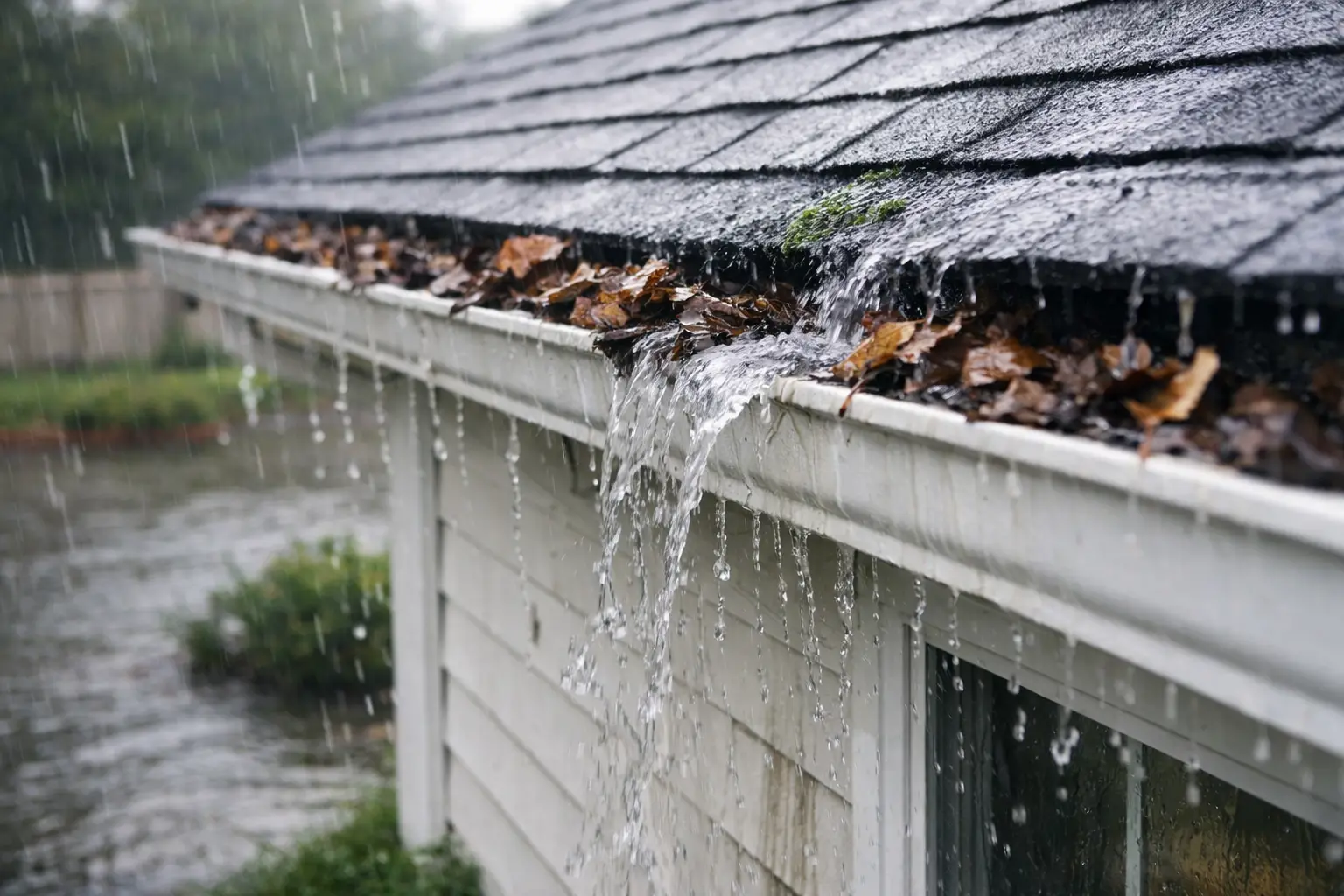
A Central Florida downpour can send hundreds of gallons of water off a residential roof in a short time. What happens without roof drainage is not always obvious after the first storm, but repeated runoff can create costly problems around the roofline, walls, foundation, and yard.
A properly designed drainage system does more than keep rain from pouring over the edge of the roof. Gutters collect runoff, downspouts carry it down safely, and properly directed discharge moves water away from the home. Without that control, water takes the easiest path – often the path that causes damage.
What Happens Without Roof Drainage?
Without gutters, functional downspouts, or another effective drainage plan, roof runoff falls directly beside the house. A small amount of rain may not seem concerning. During Florida’s heavy summer storms, however, that concentrated water can hit the same areas again and again.
Over time, it can wash away soil, saturate the ground near the foundation, splash mud onto siding, and force moisture into areas that should stay dry. The risk is not limited to older homes. Even a newer home can develop drainage-related issues when water is consistently dumped too close to its exterior walls.
Roof drainage is not one-size-fits-all. Some homes have roof designs, overhangs, ground slopes, or hardscape layouts that handle runoff better than others. Still, most homes benefit from a system that collects water and directs it to a controlled discharge point rather than allowing it to fall wherever it lands.
Water Can Damage Fascia, Soffit, and Roof Edges
The first signs of poor drainage often appear near the roofline. Rainwater that repeatedly spills over an unprotected edge can soak fascia boards, trim, soffits, and exterior paint. If water reaches the back of the fascia or gets into small gaps around the roof edge, wood rot can develop out of sight.
This is also why a damaged gutter system can be nearly as problematic as no system at all. Loose sections, separated seams, and clogged outlets can cause water to overflow behind the gutter or concentrate in one area. The water may then reach the very materials the gutter was meant to protect.
Once wood starts to soften or rot, repairs can extend beyond the gutter itself. Fascia replacement, soffit work, repainting, and roofing repairs can all become part of the job. Addressing drainage early is generally simpler than waiting for visible exterior damage.
Siding, Stucco, and Exterior Walls Take the Splash Zone
When rain pours off a roof edge, it does not simply disappear into the ground. It splashes upward onto the walls of the home. That repeated splashback can stain siding, leave dirt marks on stucco, wear down paint, and keep lower wall areas damp for longer than they should be.
In Orlando’s humid climate, persistent moisture can encourage mildew growth on exterior surfaces. It can also expose small cracks, failed caulk lines, and openings around windows or doors. Water does not need a large opening to become a problem. Repeated exposure gives it plenty of opportunities to find one.
A gutter system helps reduce this direct wall exposure by catching runoff before it reaches the ground. Downspouts then need to be positioned and extended correctly. A downspout that ends beside the wall can still create splashback and saturated soil, even if the gutters themselves are working properly.
Soil Erosion Can Change the Grade Around Your Home
Fast-moving roof runoff can carve channels into mulch, wash away topsoil, and scatter decorative rock or pine bark. Homeowners often notice this as bare spots under the roofline, exposed plant roots, or holes that return after every hard rain.
Erosion is more than a landscaping concern. Soil around a house should generally slope away from the foundation so water naturally drains outward. When runoff repeatedly washes soil away or creates low spots near the home, it can change that slope over time. Instead of encouraging water to move away, the yard may begin holding it against the structure.
This is especially common where a roof valley sends a large volume of water to one location. Roof valleys need extra attention because they collect runoff from multiple roof planes. A gutter section may need the right size, proper slope, secure fastening, and a correctly placed downspout to manage that higher volume.
Foundation Moisture Can Lead to Bigger Repairs
Water collecting near the foundation is one of the most serious effects of poor roof drainage. Saturated soil places ongoing moisture pressure against the foundation and can contribute to settlement concerns, cracks, moisture intrusion, and pest activity. The exact risk depends on the home’s foundation type, lot grading, soil conditions, and how long water remains in the area.
Not every foundation crack is caused by gutters, and installing gutters will not correct structural damage that already exists. But directing roof runoff away from the home is a practical preventive step. It helps reduce one avoidable source of moisture near the foundation.
Pay close attention after a storm. If water puddles beside the house for hours, mulch stays soaked near the walls, or a downspout creates a trench beside the foundation, the drainage path likely needs adjustment. Sometimes the answer is a downspout extension or redirection. In other cases, the gutter layout, capacity, or surrounding grade needs to be evaluated.
Standing Water Creates Pest and Landscape Problems
Poor drainage can also affect the areas homeowners use every day. Water that collects near patios, walkways, entry points, and landscape beds can create muddy conditions and make exterior surfaces slippery. Standing water can also attract mosquitoes, which is a familiar concern during warm, wet Florida months.
Plant beds are not always designed to receive heavy roof runoff. A constant rush of water can compact soil, damage smaller plants, and carry mulch into drains or across walkways. If a downspout releases too much water into one bed, redirecting it to a better discharge location can protect both the home and the landscaping.
Warning Signs Your Roof Drainage Needs Attention
Homeowners do not need to wait for interior leaks or major rot to check their drainage. These signs often point to a gutter, downspout, or runoff problem:
- Water pouring over gutter edges during normal rain
- Sagging gutters, loose fasteners, or visible gaps at seams
- Dark stains, peeling paint, or soft wood near the roofline
- Washed-out mulch, soil trenches, or bare ground below the eaves
- Puddles that form beside the home after rainfall
- Downspouts discharging directly against the foundation or walkway
A quick look during or shortly after a rainstorm can reveal a lot. Watch where water leaves the roof, where it lands, and whether it continues away from the house. If the system overflows, leaks, or dumps water into the wrong area, it is time for a direct fix.
A Good Drainage System Needs Maintenance
Gutters only work when they remain clear and securely attached. Leaves, pine needles, roof grit, and shingle debris can collect in troughs and downspouts, slowing the flow of water or causing a complete blockage. When a gutter clogs, rainwater can overflow over the front, behind the gutter, or at weak seams.
Regular cleaning helps, especially around tree-covered properties. Leaf guard solutions can also reduce the amount of debris entering the gutter system, though they do not eliminate the need for occasional inspection. Guards should be selected and installed based on the roof, surrounding trees, and the amount of rainfall the system must handle.
For homes with recurring overflow, the solution may be more than cleaning. The gutter may be undersized, improperly pitched, missing downspouts, or pulling away from the fascia. Seamless K-gutters custom measured for the home reduce unnecessary joints and provide a cleaner, more dependable drainage path when installed correctly.
A well-maintained roof drainage system gives rainwater a planned route instead of leaving it to find one. If runoff is reaching your walls, foundation, or landscaping, a professional inspection can identify the source and provide a clear solution before the next heavy storm.
Leave a Reply