
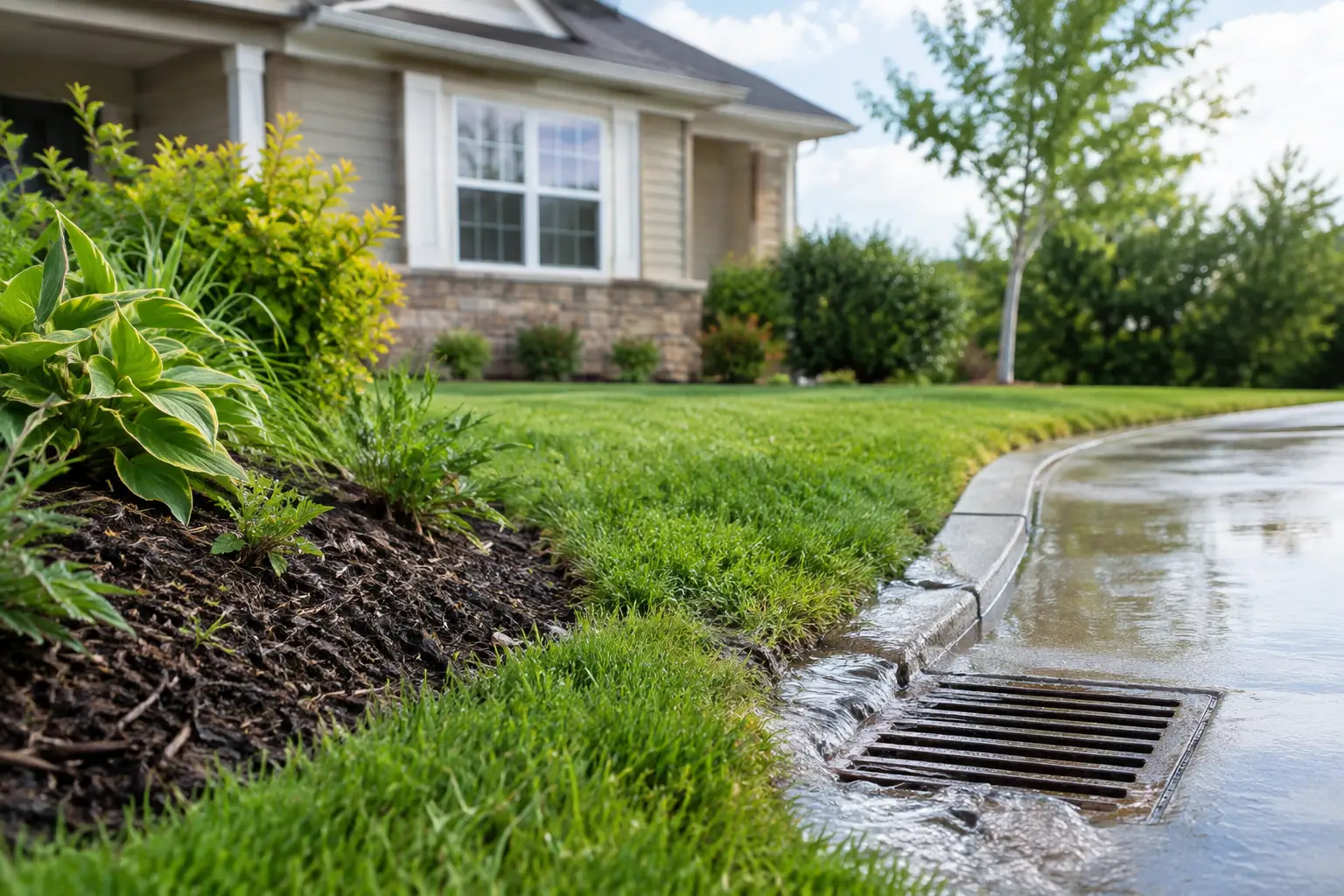
A fast Central Florida downpour can send hundreds of gallons of water off a roof in minutes. Without a clear path away from the house, that water can overflow gutters, soak flower beds, erode soil, stain walls, and collect near the foundation. This guide to stormwater runoff prevention focuses on the practical steps Orlando homeowners and property managers can take to control rainwater before it becomes a repair problem.
Start With the Roofline
Stormwater management begins at the roof. Your roof is the largest hard surface on the property, and every section directs water toward an edge. Gutters and downspouts are meant to catch that flow and carry it to a safe discharge point.
When gutters are undersized, loose, clogged, or improperly pitched, water does not stay in the system. It spills over the front or back edge, often in the same areas during every storm. Over time, repeated overflow can damage fascia boards, soffits, siding, landscaping, and the soil around the home.
A properly installed seamless K-gutter system creates a continuous channel customized to the roofline. Fewer joints mean fewer common leak points, while a clean, correctly sloped installation helps water move toward the downspouts instead of pooling in the gutter. The right gutter size depends on the roof area, roof pitch, and the volume of rain the home receives. In Orlando, where hard rain can arrive quickly, capacity matters.
Keep Gutters Clear Before Heavy Rain Finds the Clog
A gutter can look fine from the ground and still hold leaves, roof grit, seed pods, and standing water. Debris tends to collect near downspout openings, where even a small blockage can slow drainage enough to cause an overflow.
For many homes, gutter cleaning should be part of regular exterior maintenance, especially after leaf drop, major storms, or nearby tree trimming. Rental property managers should also schedule inspections between tenants rather than waiting for a complaint during the next storm.
Look for warning signs such as water pouring over one section, vegetation growing from the gutter, dark streaks beneath the roofline, sagging sections, or downspouts that barely drain. These issues are easier and less expensive to correct before water reaches wood components or the foundation area.
Leaf guards can reduce the amount of debris entering the gutter, but they are not a substitute for a correctly sized, well-maintained system. The best option depends on the trees around the home, roof type, and how much debris the property receives. Guards help most when they are paired with secure gutters and open downspouts.
Make Sure Downspouts Discharge Far Enough Away
Gutters collect water, but downspouts do the work of moving it away from the house. A downspout that releases water directly beside the foundation simply transfers the problem from the roofline to the ground.
Water should discharge onto a surface that slopes away from the home and does not direct flow toward a neighbor’s property, walkway, garage, or patio. Downspout extensions are a straightforward solution when the outlet is too close to the house. They can carry water farther into a suitable part of the yard, provided the discharge point will not create a muddy low spot or erosion channel.
Pay close attention to corners where multiple roof planes meet. These areas often handle more water than a standard section of gutter. A larger downspout, an additional downspout, or a revised drainage path may be needed if water regularly backs up there. Adding an extension will not solve a clogged or undersized gutter, so the entire system should be evaluated together.
Avoid These Common Downspout Mistakes
A downspout should not end above a paved walkway, near an entry door, or where runoff can undermine a driveway edge. It should also not be buried without a proper outlet and cleanout plan. Underground drainage can work well, but a pipe that fills with sediment or roots is difficult to spot until water starts backing up.
For a simple above-ground setup, check that extensions are secure, pointed away from the home, and not crushed by lawn equipment. If the yard is small or mostly paved, a drainage professional may need to assess more permanent options.
Use Grading to Move Water Away From the Foundation
Even the best gutter system cannot compensate for soil that slopes toward the home. After a storm, walk the property and watch where water stands. Puddles near exterior walls, wet mulch that never dries, and soil washed away beneath a downspout are signs that grading needs attention.
The ground immediately around the foundation should slope away from the house. This does not require turning the yard into a steep hill. It means avoiding low areas that trap water against the building and making sure mulch, landscaping borders, and decorative rock do not create a dam near the wall.
Be careful when adding soil or mulch. Raising the grade too high can cover weep holes, siding clearance, or other areas meant to stay exposed. A landscaping or drainage contractor can help with larger grading corrections, particularly if the property has recurring standing water or a very flat lot.
Protect Landscaping Without Sending Water Back to the House
Landscaping can help slow runoff and reduce erosion, but it should support the drainage plan rather than block it. Mulch, ground cover, and carefully placed plants can hold soil in place beneath downspouts. River rock or a splash block can also reduce the force of water hitting bare ground.
The trade-off is that decorative features can become obstacles if they trap water. Raised bed borders, tightly packed shrubs, and edging around the house may look neat while preventing runoff from moving away. Leave a clear drainage path where downspouts release water.
For properties with enough space, a shallow swale can guide runoff across the yard toward a safe area. Rain gardens may also work in selected locations, but they should be designed for the site’s soil and drainage conditions. They are not a good choice directly beside a foundation or in a spot that already stays saturated for days.
Inspect After Storms, Not Just Before Them
The most useful time to evaluate stormwater runoff is shortly after a heavy rain. You do not need to stand outside in dangerous weather. Once conditions are safe, walk around the home and look for evidence of where the system struggled.
Check for overflow marks on gutters, water stains on fascia, washed-out mulch, pooling near walls, and soil channels beneath downspouts. Also inspect the garage, patio, and entryways for water moving toward doors or slab edges. Take photos of repeat problem areas. They make it easier to explain what is happening when scheduling a repair or drainage assessment.
A seasonal inspection is especially worthwhile before the summer rainy season and after a major storm. Small adjustments, such as resecuring a loose gutter section or extending a downspout, can prevent larger issues later.
When a Gutter Repair Is Enough and When It Is Not
Not every runoff problem calls for a full gutter replacement. A loose hanger, leaking seam, damaged elbow, or misplaced downspout can often be repaired. Cleaning may be all that is needed if the system is structurally sound and water begins flowing normally afterward.
Replacement becomes more reasonable when gutters are repeatedly sagging, heavily corroded, pulling away from the fascia, leaking at multiple joints, or consistently too small for the roof’s runoff. Custom-measured seamless gutters provide a cleaner fit and can reduce the weak points found in older sectional systems.
If gutters appear to work but water still collects near the house, the problem may be grading, landscaping, underground drainage, or a combination of these factors. The goal is not to add products unnecessarily. It is to create one dependable route from roof to gutter, downspout, yard, and safe discharge area.
Precision K-Gutters helps Orlando-area homeowners address the roofline portion of that system with clean gutter installation, repairs, cleaning, downspout adjustments, and leaf guard solutions. Clear recommendations start with seeing how water is actually moving around the home.
The next time rain moves through, take a few minutes afterward to follow the water’s path. The wet spots, overflow lines, and washed-out areas around your home will usually show you exactly where prevention should begin.