
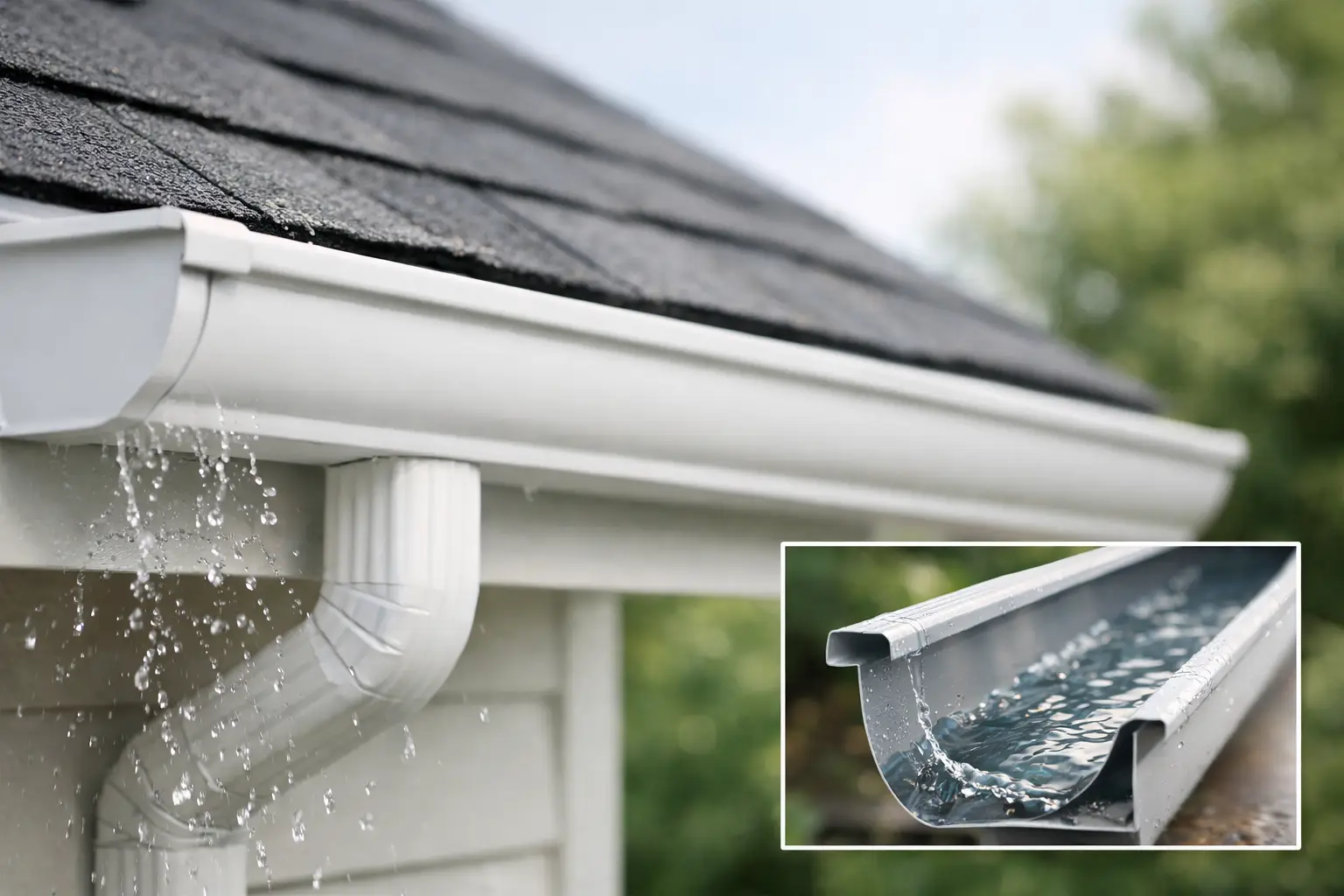
A gutter leak usually does not start as a big, obvious problem. It starts with a drip at a joint, a small gap near a corner, or water slipping behind the gutter during one hard Florida storm. If you have asked, how do seamless gutters prevent leaks, the short answer is this: they remove many of the weak points where traditional gutter systems tend to fail.
For homeowners in Orlando and nearby areas, that matters. Heavy rain can expose every flaw in a gutter system fast. When water is not controlled, it can damage fascia, stain siding, rot wood, wash out landscaping, and collect near the foundation. A better gutter design does not just look cleaner. It gives water fewer opportunities to escape.
How do seamless gutters prevent leaks at the source?
Traditional sectional gutters are made from shorter pieces joined together along the roofline. Every connection between those pieces is a possible leak point. Sealant can help for a while, but over time, sun, heat, rain, and debris wear those joints down.
A seamless gutter is formed from one continuous piece of material for each run of the home. That means there are far fewer seams overall. In most cases, the only joints are at corners, downspout outlets, and end caps. Fewer joints means fewer places for water to work its way out.
That is the main reason seamless systems leak less. They do not rely on repeated connections across long stretches of gutter. Instead of asking sealant to hold together multiple sections year after year, the system starts with a cleaner, more direct design.
Why joints are the most common problem area
When sectional gutters leak, the issue often shows up where two pieces meet. Those connection points face constant stress. Water passes through them every time it rains. Debris can catch there. Expansion and contraction from heat can loosen the seal. If the gutter starts to sag even slightly, standing water can collect at the joint and make the problem worse.
In Central Florida, that cycle can move quickly. Sudden downpours put a lot of water into the system at once, and damp debris can sit in the gutter between storms. Even a small opening at a seam can turn into repeated overflow or dripping against the house.
Seamless gutters reduce that risk by removing most of those mid-run joints completely. There is simply less hardware, less sealing material, and less interruption in the channel where water flows.
Custom fit makes a difference
Another reason seamless gutters help prevent leaks is fit. These systems are custom measured and formed on-site to match the home. That matters because a gutter that fits correctly is easier to pitch properly, secure properly, and align with downspouts correctly.
When gutters are pieced together from standard sections, there is more room for slight misalignment. One section may sit a little higher, another may twist slightly, and a connection may be forced to make the pieces meet. Those small inconsistencies can affect how water moves.
A custom-formed run creates a more consistent path. Water can move toward the downspout with fewer interruptions, which lowers the chance of pooling, overflow, and leakage at weak spots.
Better water flow means less pressure on the system
Leaks are not always caused by holes or failed sealant. Sometimes the system is overwhelmed. If water cannot move through the gutter and downspouts efficiently, it backs up. Once that happens, it may spill over the front edge, run behind the gutter, or push through vulnerable joints.
Seamless gutters help because the interior path is smoother. Without frequent seams inside the run, there are fewer edges for leaves, shingle grit, and debris to catch on. That does not mean they never clog. Any gutter can clog if it is neglected. But a continuous run gives water a clearer route to the outlet.
That smoother flow is especially useful during the kind of intense rain Orlando properties see throughout the year. A gutter system does not need perfect weather to prove its value. It needs to perform when the rain is hard and fast.
Seamless does not mean leak-proof forever
This is the part many homeowners do not hear often enough. Seamless gutters reduce leak risks, but they do not eliminate maintenance or make problems impossible.
Corners can still separate. End caps can still loosen. Downspout outlets can still leak if they were installed poorly or if the system gets clogged and overloaded. Hangers can pull away from the fascia over time. If the pitch is off, water can still sit in the gutter instead of draining out.
So the better question is not whether seamless gutters can ever leak. It is whether they give you fewer opportunities for leaking compared to sectional systems. In most homes, the answer is yes.
Installation quality matters as much as the product
A well-made gutter will still underperform if the installation is sloppy. Proper slope, secure fastening, clean outlet cuts, and correct downspout placement all affect whether water stays in the system and moves away from the home.
That is why on-site measuring and professional installation matter. The goal is not just to hang a gutter. The goal is to create a drainage path that matches the roofline, handles local rainfall, and directs runoff where it should go.
If corners are rushed or hangers are spaced poorly, even a seamless system can fail early. Good workmanship is what turns the design advantage into real protection.
How Florida weather exposes weak gutter systems
In a place like Orlando, gutters deal with more than occasional rain. They deal with frequent storms, wind-driven rain, humidity, and debris from trees that can build up fast. These conditions put stress on every part of the system.
Sealants tend to age faster when they are exposed to heat and moisture over and over. Debris buildup adds weight. Heavy rainfall increases flow volume. If the gutter already has several seams along each run, those weak points are tested again and again.
That is where seamless gutters make practical sense. They simplify the system. Fewer seams mean fewer points to monitor, fewer spots where debris snags, and fewer places where age and weather can break the seal.
For many property owners, that translates into fewer repairs over time and a lower chance of hidden water damage around the roofline.
When seamless gutters are worth it
If your current gutters have repeated joint leaks, visible separation, rust around seams, or constant overflow during heavy rain, moving to a seamless system is often a smart next step. It is also worth considering if you are replacing older gutters altogether and want a cleaner look with less maintenance trouble.
That said, not every issue means full replacement is necessary. If the problem is isolated to one corner, one outlet, or one damaged section, a targeted repair may be enough. The right solution depends on the age of the system, the number of existing problem areas, and how well the gutters were installed in the first place.
A straightforward inspection usually tells the story. If leaks keep returning at multiple joints, repairs may only buy limited time. If the system is otherwise solid, repair can still be the practical choice.
Maintenance still protects the investment
Even the best gutter system needs regular attention. Leaves, roof grit, and storm debris can slow water flow and create backup. When water sits too long in any gutter, it adds strain to hangers, corners, and outlets.
Routine cleaning helps the system do what it was built to do. In some homes, leaf guard options also make sense, especially where tree cover causes frequent buildup. The right setup depends on the property, the amount of debris, and how often the gutters currently need service.
For homeowners who want fewer leaks, maintenance and design go together. A well-installed seamless system gives you a better starting point. Regular upkeep helps it stay that way.
What homeowners should remember
If you are asking how do seamless gutters prevent leaks, think of it in simple terms. They prevent leaks by cutting down the number of places where leaks usually start. They also improve fit and support better water movement, which reduces stress on the entire system.
That does not mean every home needs the same solution or that any gutter can be ignored once installed. But if your current gutters are failing at the joints, there is a reason. More seams usually mean more maintenance and more chances for water to escape.
For homeowners who want a cleaner system with fewer weak points, seamless gutters are one of the most practical upgrades available. And when they are measured correctly, installed carefully, and kept clean, they give your home a much better chance of staying dry where it counts.
If your gutters are showing signs of leaking, overflowing, or pulling away after storms, it is worth getting a clear assessment before the damage spreads further.