
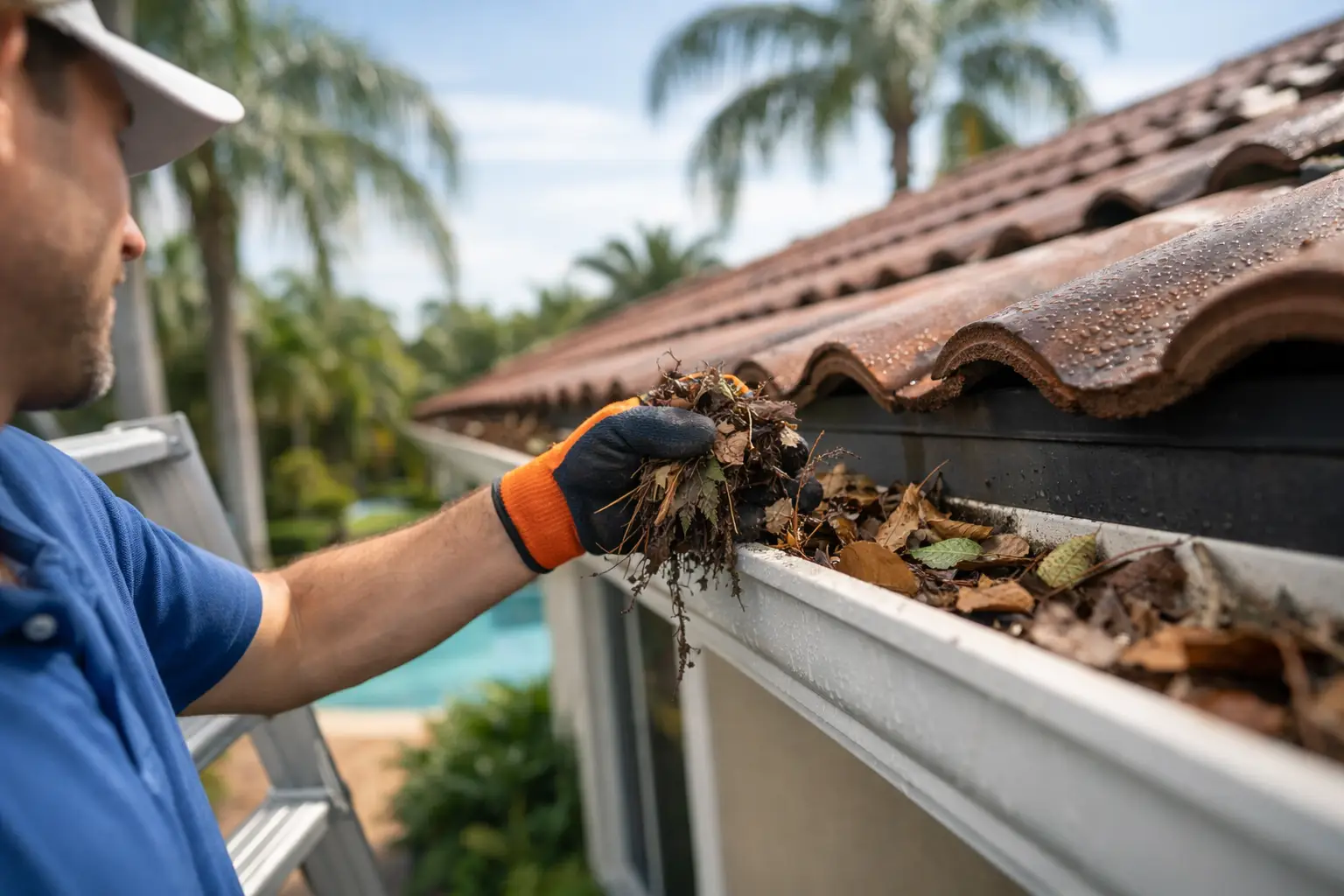
A gutter system in Florida can look fine one week and start overflowing the next. Between heavy summer rain, oak leaves, pine needles, seed pods, and storm debris, it does not take long for buildup to turn into a drainage problem. If you are wondering how often should gutters be cleaned in Florida, the short answer is usually two to four times per year – but the right schedule depends on your trees, roofline, and how your home handles rain.
For many Orlando-area homes, twice a year is the minimum. Homes with overhanging trees, frequent storm debris, or a history of clogging often need more attention. Waiting until water pours over the sides is usually too late, because by then the gutters may already be stressing fascia boards, soaking landscaping, or pushing water too close to the foundation.
How often should gutters be cleaned in Florida homes?
A practical rule for Florida is every three to six months. That keeps most residential gutter systems clear enough to handle seasonal rain without constant overflow. In Central Florida, that often means one cleaning before the heaviest summer rains and another after the worst of the fall leaf drop and storm season.
That said, not every property follows the same pattern. A one-story home with minimal tree cover may stay clear longer. A house under live oaks or pines can clog much faster, especially when pollen, needles, and small roof granules mix into a compact mat inside the gutter. Once that happens, even a moderate rain can cause backup.
Property managers should also think in terms of risk, not just routine. If one clogged section can lead to tenant complaints, soffit staining, or erosion near walkways, more frequent cleaning is often the better call.
Why Florida gutters clog faster
Florida weather is a big part of the answer. In many states, gutter cleaning is mostly about leaf season. In Florida, debris builds up across the year, and rain events are stronger and more sudden. A gutter might seem partially blocked during dry weather and then fail completely during a fast afternoon storm.
Central Florida homes also deal with a mix of debris types. Oak leaves, palm fibers, pine needles, twigs, seed pods, and shingle grit all collect differently. Some materials sit loosely and wash toward the downspouts. Others compact into dense clogs that trap water and create standing weight inside the system.
Storm season adds another layer. Wind can drop fresh debris into clean gutters overnight. That is why a once-a-year schedule usually falls short in Florida, even for homes that do not seem heavily shaded.
Signs your gutters need cleaning sooner
The safest schedule is based on what your home is actually doing during rain. If you see water spilling over the front edge, that is the most obvious sign. But there are earlier warnings that matter too.
Water marks on the gutter face, dark streaks on soffits, puddling near the foundation, and mulch washing out of beds can all point to poor drainage. You may also notice plant growth in the gutters, sagging sections, or water dripping from joints long after the rain stops.
Another common sign is downspouts that do not discharge properly. If water barely exits the bottom during a storm, the blockage may be in the downspout itself rather than the horizontal run. That kind of clog tends to get worse quickly in Florida’s rainy months.
A realistic cleaning schedule for Orlando-area properties
For most homeowners, this schedule makes sense: once in late spring before peak summer rain, and once in fall after leaves and storm debris build up. That is a strong baseline for homes with moderate tree cover and no major drainage problems.
If your property has large trees close to the roofline, three cleanings a year is more realistic. One in spring, one in mid-to-late summer, and one in fall helps prevent repeat overflow. Homes under heavy oak or pine coverage may need four visits per year, especially if the gutters have a history of clogging at valleys or corners.
Rental properties often benefit from scheduled maintenance rather than waiting for complaints. It is easier to prevent overflow than to explain fascia damage or recurring leaks later. A predictable service plan also makes budgeting simpler.
It depends on the trees around your home
Tree coverage is usually the biggest factor in how often should gutters be cleaned in Florida. A home with open sky above the roof can often stay on a twice-yearly plan. A home shaded by oaks, pines, or palms usually cannot.
Oaks drop leaves and acorns that collect in troughs and downspout outlets. Pines create fine needle buildup that mats together and blocks flow. Palms shed fibrous material that can tangle and hold moisture. Even nearby trees can be enough if wind regularly pushes debris across the roof.
Roof design matters too. Valleys concentrate runoff and debris into specific gutter sections, so those spots clog faster than straight runs. If your system has multiple corners or long downspout paths, one obstructed area can affect the entire side of the house.
Are gutter guards enough to reduce cleaning?
Leaf guards can help, but they do not eliminate maintenance. That is one of the most common misconceptions homeowners hear. Guards reduce the amount of large debris entering the gutter, which can lower cleaning frequency, but smaller material still collects on top of the guards or works its way into the system over time.
In Florida, that matters because pollen, roof grit, seeds, and pine needles are all small enough to create issues. Some guard styles perform better than others depending on the roof, pitch, and surrounding trees. The trade-off is simple: guards can reduce labor and improve flow, but they still need inspection and occasional service.
For homeowners who are constantly dealing with debris, guards may be worth considering as part of a larger maintenance plan. They are most effective when paired with properly pitched gutters, working downspouts, and periodic checks after storms.
What happens if you wait too long
Clogged gutters are not just a cosmetic problem. When water cannot move through the system, it spills over the sides or backs up behind the gutter. That can lead to fascia rot, soffit damage, staining, erosion, and water collecting too close to the slab or foundation.
Overflow also puts extra weight on the gutter itself. Wet debris is heavy, and that weight can pull fasteners loose or create sagging sections. Once alignment changes, the system drains even worse. What started as a basic cleaning can turn into a repair call.
Florida’s rain intensity makes delays more expensive. A gutter that is only partly blocked in dry weather may fail completely during one strong storm. That is why preventative maintenance usually costs less than reacting after damage appears.
Professional cleaning vs. waiting for a problem
Some homeowners prefer to schedule cleanings only when they notice an issue. The challenge is that visible overflow means the system is already underperforming. By that point, water may have been misdirected several times before anyone sees it from the ground.
Routine cleaning gives you a better chance to catch other problems early, including loose brackets, separated joints, slope issues, and downspouts that need adjustment. It is not just about removing leaves. It is also about making sure the whole system is moving water away from the house the way it should.
For Orlando-area homeowners who want a straightforward answer, the safest plan is this: start with two cleanings per year, then increase to three or four if your property has heavy tree cover, frequent storm debris, or any sign of overflow. If you are not sure what your home needs, a local inspection can usually make that clear quickly. Precision K-Gutters works with homeowners who want clean installs, dependable maintenance, and direct recommendations based on the property, not guesswork.
A good gutter schedule is not about doing more than necessary. It is about keeping rainwater under control before it turns into repairs.