
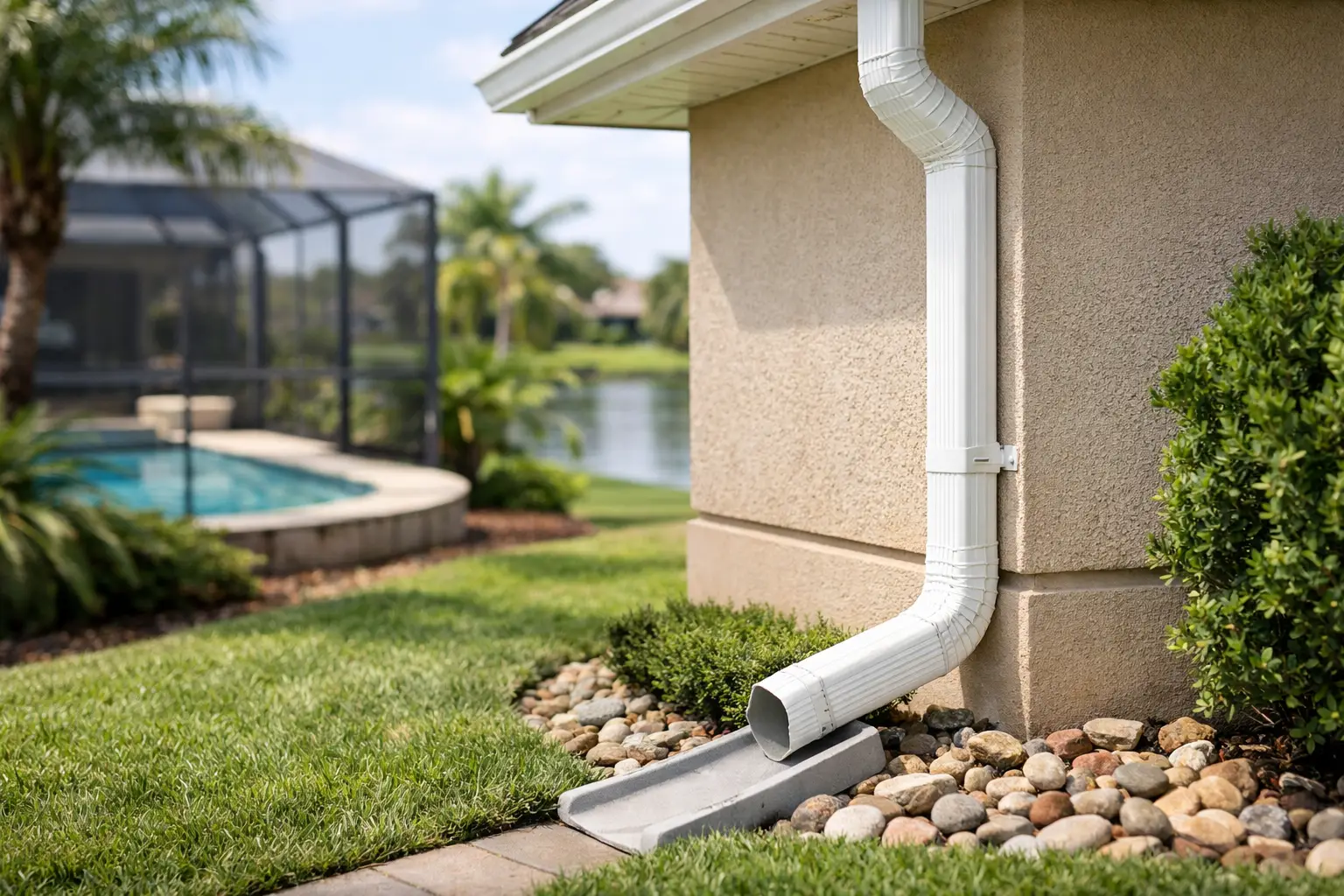
A downspout can be securely attached, free of clogs, and still send water to the wrong place. That is why downspout relocation benefits go beyond appearance. For Orlando homeowners, moving a downspout outlet can reduce standing water, protect landscaping, and help keep heavy rain away from the foundation, walkways, and exterior walls.
Central Florida storms can drop a large amount of water in a short time. If that water exits beside a corner of the house, lands at the bottom of a roof valley, or drains onto a paved area that slopes back toward the home, even a well-built gutter system can create a recurring drainage problem. A professional adjustment changes where the water leaves the system so it has a safer path away from the property.
How Downspout Relocation Benefits Your Property
Gutters collect roof runoff, but downspouts determine where that runoff ends up. Their placement matters as much as their condition. A downspout that discharges too close to the home can saturate the soil along the foundation. Over time, that moisture may contribute to settling concerns, damp areas around the perimeter, mildew growth, and water intrusion where it does not belong.
Relocating a downspout can direct water toward a more open area of the yard or a suitable drainage route. In many cases, the adjustment is paired with a correctly sized extension, an elbow change, or a new outlet location along the gutter run. The goal is straightforward: get water away from the structure without creating a new issue elsewhere on the lot.
Proper placement can also help preserve the areas around your home that take the most punishment during rain. Repeated runoff can wash away mulch, dig channels through planting beds, stain concrete, and leave muddy spots near entryways. When water is discharged in a better location, landscaping and hard surfaces are less likely to absorb the impact of every storm.
Less water near the foundation
A healthy drainage plan moves water away from the home, not into the soil directly beside it. This is especially useful when the ground is already holding moisture after several days of summer rain. Relocating a poorly placed downspout helps reduce the amount of runoff collecting at one foundation corner.
The right location depends on the grade of the yard. Water should not be directed toward a neighbor’s property, a fence line with poor drainage, or a low spot that already stays wet. A qualified gutter professional looks at the roofline, the outlet position, and the surrounding drainage pattern before recommending a change.
Fewer wet walkways and slippery areas
Downspouts near a front entry, patio, driveway, or pool deck can create more than a nuisance. Water that crosses a walking surface may leave algae, slick spots, and stains. During a strong afternoon storm, it can also make the area difficult to use right when your family or tenants need to get inside.
Moving the outlet or changing its direction can keep runoff off high-traffic surfaces. This may be a small adjustment, but it can make the exterior safer and easier to maintain.
Better protection for siding, soffit, and fascia
When a downspout is not positioned correctly, water can splash back against siding or overshoot a short extension and strike the base of the wall. That repeated exposure can leave dirt marks, encourage mildew, and keep trim materials wet longer than necessary.
Relocation is also a good time to check the connection between the downspout and gutter. Loose straps, damaged elbows, or seams that leak during heavy rain can undermine the purpose of the adjustment. Addressing these details together provides a cleaner, more dependable result.
Signs Your Downspout May Be in the Wrong Place
The problem is not always obvious from the ground. You may first notice the effects after a storm: a puddle beside the house, mulch scattered across the lawn, a strip of washed-out soil, or water flowing across the driveway. These are practical signs that runoff is not being managed well.
Watch for water collecting near a corner of the home, especially where several roof sections drain into one gutter run. Roof valleys can send a concentrated volume of water into a single area. If the downspout outlet is nearby and the grade is flat, that corner may receive more water than the yard can handle.
Other warning signs include persistent dampness around exterior walls, muddy patches below a downspout, erosion around landscaping, and extensions that are routinely kicked loose or damaged by lawn equipment. For rental properties, recurring tenant reports of wet patios, entryways, or pooling water are worth investigating before they become larger maintenance calls.
Relocation Is Not Always the Only Fix
Moving a downspout is often effective, but it is not a catch-all solution. If a gutter is overflowing because of leaves, roof grit, or a blockage, cleaning and maintenance should come first. Water cannot reach the downspout properly when the gutter channel is full of debris.
Likewise, a sagging gutter, improperly pitched section, or undersized downspout may need repair or replacement. In Florida’s intense rain, a gutter system has to collect water efficiently before it can drain it safely. A new outlet location will not solve a capacity issue by itself.
Some homes have limited options because of lot size, fence placement, sidewalks, pool enclosures, or nearby utility equipment. In those situations, a professional may recommend extending the discharge farther from the home, adding another downspout to share the water load, or adjusting the gutter layout. The best solution should fit the property rather than force runoff into an inconvenient or unsafe area.
Consider the look of the home, too
Downspouts are functional, but they are visible. A relocation should be planned so the finished system still looks clean against the exterior. Properly placed straps, aligned elbows, and a color-matched downspout help the system blend with the home while doing its job.
For homeowners considering new seamless K-gutters, this is an ideal time to review every outlet location. A custom-measured installation allows the gutter layout and downspout placement to work together from the start, instead of treating drainage issues as an afterthought.
Why Professional Adjustment Makes a Difference
A downspout change may look simple, but poor placement can shift water from one problem area to another. The work may involve removing a section, closing an old outlet, cutting a new opening, installing elbows, securing the new run, and checking how water will travel once it reaches the ground.
Professional service also helps avoid common mistakes, such as discharging water directly against a wall, leaving an extension too short, or using a route that interferes with gates, mowing, and daily foot traffic. Clean workmanship matters because a downspout should stay secure through wind, rain, and regular property upkeep.
Precision K-Gutters evaluates the full drainage path, not just the pipe on the wall. That practical approach helps homeowners and property managers make targeted adjustments without paying for work that does not address the actual cause of pooling or erosion.
A Small Adjustment With Long-Term Value
The best time to assess downspouts is before the next stretch of heavy rain exposes the problem again. Walk the property after a storm and pay attention to where water exits, where it travels, and where it stops. A clear drainage path can protect the parts of your home and yard that are hardest and most expensive to repair later.
If water keeps gathering in the same place, do not assume it is simply part of living with Florida weather. A well-placed downspout can make that water easier to manage, keep your exterior cleaner, and give each storm a safer place to go.