
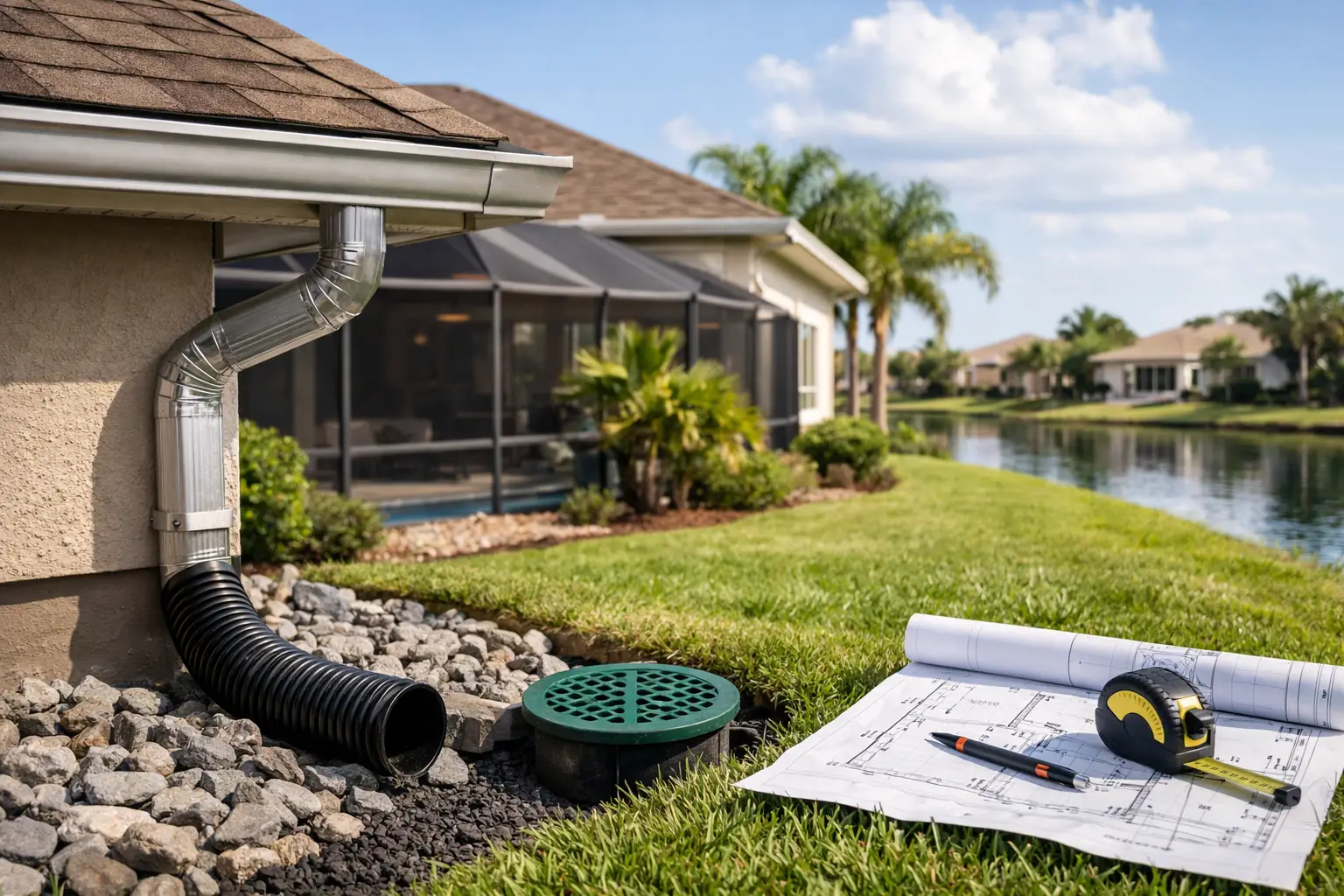
A hard Orlando downpour can expose a drainage problem in minutes. Water spilling over the gutter edge, shooting out of a short downspout, or pooling beside the slab can put your roofline, siding, landscaping, and foundation at risk. This guide to gutter drainage planning explains how to look at the complete path of rainwater before a small issue turns into a costly repair.
Gutters are not just roof accessories. They are part of a drainage system that needs to collect water, carry it without leaking or overflowing, and discharge it far enough from the home. When one part of that path is undersized, clogged, loose, or poorly routed, water finds another way down.
Start With Where the Water Is Going
The first question is not how many gutters your home needs. It is where the water should go once it leaves the roof. Walk around the property after a normal rain, then again after a heavier storm if it is safe to do so. Look for puddles near exterior walls, mulch that repeatedly washes away, muddy areas below downspouts, and water stains on siding or soffit.
In Central Florida, many homes have flat lots and frequent intense rainfall. That makes discharge location especially important. A downspout that drains only a foot or two from the house may keep water out of the gutter, but it can still saturate the soil close to the foundation.
The goal is to direct water away from the structure without creating a new problem for a walkway, driveway, neighboring property, air-conditioning equipment, or low area in the yard. The right solution depends on the lot grade, landscaping, roof layout, and local drainage conditions.
Check the Grade Around the Foundation
The ground should generally slope away from the home so surface water does not sit against the foundation. Gutters cannot fully correct a grading problem, but they can keep roof runoff from making it worse.
If the yard slopes toward the house, address that issue as part of the plan. Extending a downspout into a low spot that already holds water is not a fix. In some cases, the best answer is a combination of improved grading, a properly placed downspout extension, and a drainage route that carries water to a suitable outlet.
Match Gutter Capacity to the Roof
A gutter system has to handle the volume of water coming off the roof during a heavy storm, not just a light afternoon shower. The larger and steeper the roof area feeding a gutter run, the more water that section must collect. Valleys are also high-volume areas because they concentrate water from two roof planes into one location.
Seamless K-style gutters are a practical choice for many Orlando homes because they provide a clean finished appearance and have fewer joints where leaks can develop. However, even a well-installed gutter can overflow if the run is undersized, poorly pitched, or served by too few downspouts.
Planning should account for roof sections that receive the heaviest flow. A long rear roofline may need more than one downspout. A front entry valley may need special attention to prevent water from rushing past the gutter during a storm. This is where on-site measurements matter more than a one-size-fits-all recommendation.
Place Downspouts Where They Can Work
Downspouts should be placed to move water efficiently while fitting the appearance and layout of the home. Corners are common locations, but they are not automatically the best option. A downspout at a corner may discharge beside a patio, near a front walk, or into a narrow planting bed where water has nowhere to go.
Consider the full route before selecting the location. Can the downspout discharge into an area that naturally drains away? Can an extension be routed without becoming a trip hazard or interfering with mowing? Will the outlet send water toward a neighbor’s property? These details prevent a clean installation from becoming a frustrating drainage issue later.
A downspout also needs to be large enough for the gutter section it serves. Reducing the outlet size or using sharp, unnecessary bends can slow water during peak flow. Straightforward routing is usually the most dependable approach.
Plan for Clean Flow, Not Just Heavy Rain
Leaves, pine needles, roof grit, seed pods, and small branches change how a gutter system performs. A system that seems adequate when clean can overflow quickly once debris blocks an outlet or collects in a valley. Drainage planning should include realistic maintenance needs from the beginning.
If your property has mature trees near the roofline, schedule gutter cleaning before debris buildup becomes a clog. In Orlando, regular storms can also move debris into gutters between cleanings. Pay close attention to areas below trees, near roof valleys, and above downspout outlets.
Leaf guards can reduce the amount of debris that enters the gutter, but they are not identical in performance and are not the right answer for every roof. The guard design, roof pitch, nearby tree types, and condition of the existing gutters all matter. A guard should support water flow without creating overflow at the roof edge during heavy rain.
Inspect the System for Signs of Poor Drainage
You do not need to wait for visible interior damage to find a gutter problem. Several exterior warning signs point to water moving where it should not:
- Water marks or dark staining beneath gutter seams and downspout connections
- Eroded soil, displaced mulch, or exposed roots below a downspout
- Gutters pulling away from the fascia or sections that appear to sag
- Mildew, peeling paint, or wood rot around soffits and exterior trim
- Water pooling by the foundation, entryway, garage, or patio after rain
A small leak at a seam may look minor, but repeated runoff in the same spot can damage fascia boards and landscaping over time. Likewise, a sagging gutter loses its proper pitch, allowing standing water and debris to collect. Timely repairs usually cost less than replacing damaged wood or correcting a larger drainage failure.
Choose Extensions and Drainage Options Carefully
Downspout extensions are often the simplest way to move water farther from the house. They can be effective when the yard has a clear slope and enough open space. The trade-off is appearance and convenience. An extension placed across a walkway or in a mowing path can be a nuisance, even if it improves drainage.
For tighter spaces, a more planned drainage route may be needed. Some homes benefit from routing water along the side yard, while others need a buried line that carries runoff to an appropriate discharge area. Buried drainage can keep the yard looking cleaner, but it must be installed with proper slope and an outlet that will not back up. It also needs occasional inspection, especially where soil, roots, or debris could affect flow.
Avoid directing water toward the street without considering the grade, local conditions, and where it will travel next. The objective is controlled drainage, not simply moving the water out of sight.
When to Repair and When to Replace
A focused repair makes sense when the system is generally sound and the issue is limited to loose hangers, a leaking connection, a damaged downspout, or a section with poor drainage. Cleaning and adjusting the pitch can also restore performance when debris or minor settling is the cause.
Replacement becomes more practical when gutters have recurring leaks, extensive corrosion, multiple sagging sections, or poorly planned downspout placement throughout the property. A custom-measured seamless system can reduce unnecessary joints and give the home a more consistent fit along the roofline.
For rental properties, planning matters even more because drainage problems can affect tenant access, exterior maintenance costs, and long-term property condition. A clear maintenance schedule and properly routed downspouts make it easier to prevent repeat service calls after storms.
Make a Plan Before the Next Storm
Good gutter drainage planning is less about adding parts and more about following the water from roof to ground. Check the roof areas that produce the most runoff, confirm gutters have the right slope and capacity, keep outlets clear, and make sure every downspout discharges to a place that can handle the water.
If you are seeing overflow, standing water, or loose gutter sections, a professional inspection can identify whether the problem is cleaning, repair, downspout adjustment, or a larger system upgrade. Precision K-Gutters provides straightforward recommendations designed around how your home and yard handle Florida rain.