
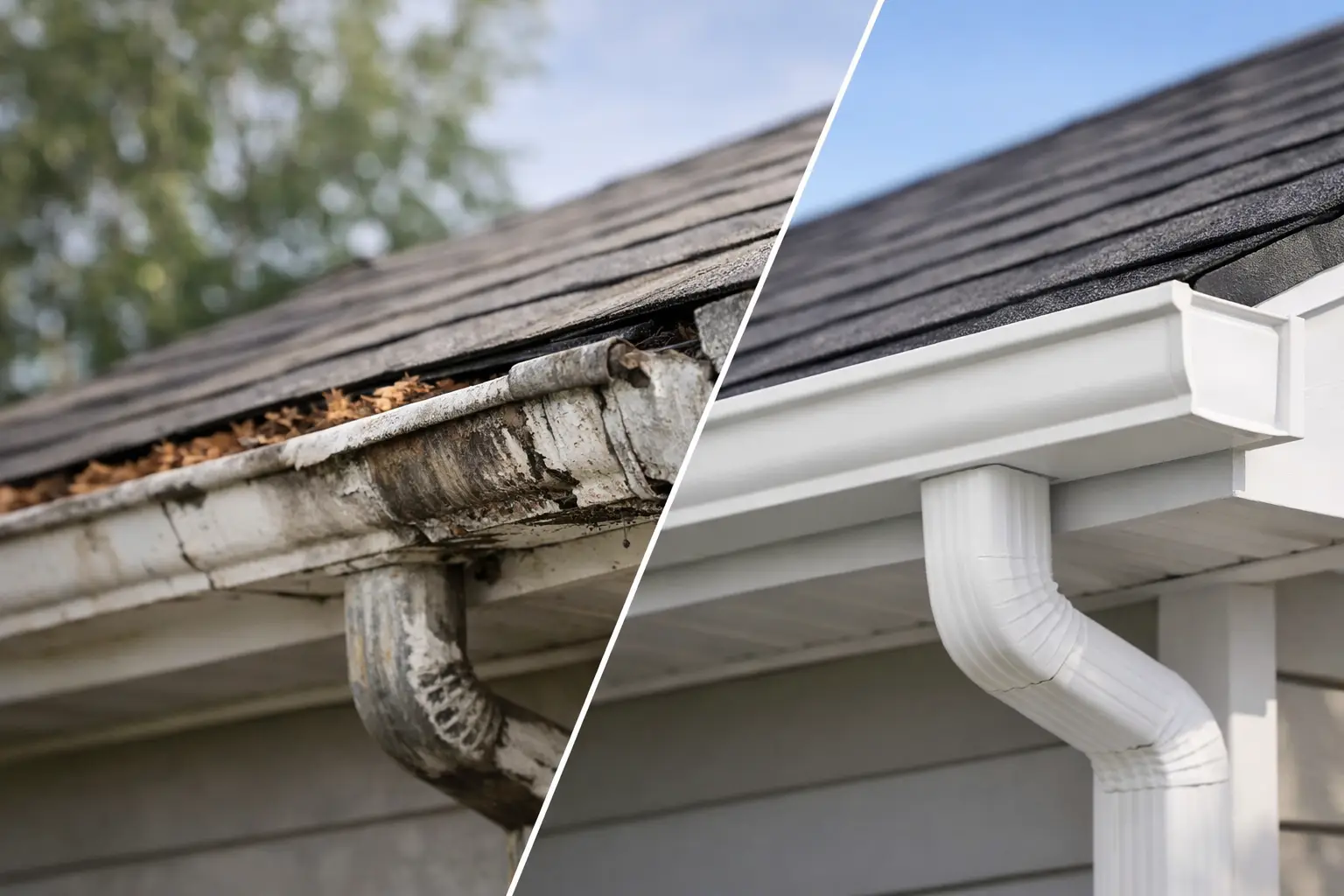
A gutter problem often becomes visible during the first heavy afternoon storm: water pouring over the edge, dark streaks down the siding, and puddles gathering where they should not. Gutter replacement before and after results can be dramatic, but the real improvement is not just a cleaner roofline. It is controlled water flow that helps protect the fascia, landscaping, walls, and foundation around your home.
For Orlando homeowners and property managers, gutters have to perform during intense rain, not just look straight on a dry day. A properly sized, securely installed system moves roof runoff to the right location before water has a chance to create a larger repair issue.
What Failing Gutters Look Like Before Replacement
Old gutters do not always fail all at once. In many cases, the warning signs build over time. A section may begin to pull away from the fascia, a joint may drip after a storm, or a downspout may send water directly beside the home. Even a small issue can become more noticeable when Central Florida rain arrives quickly and heavily.
Before replacement, homeowners commonly notice sagging runs, standing water inside the gutter, peeling paint near the roof edge, rust spots, separated seams, and water spilling over in areas that appear clear. These problems can come from age, storm damage, poor original installation, undersized gutters, loose fasteners, or years of debris buildup.
Clogs are another common source of overflow, but cleaning alone does not fix every problem. If the gutter pitch is wrong, the sections are bent, or the system has too many leaking joints, the gutter may still perform poorly after debris is removed. That is why a close inspection matters before deciding between a repair and full replacement.
Water Damage Is Not Always Obvious
Overflow does not need to flood a home to cause trouble. Repeated water exposure can soften fascia boards, stain exterior surfaces, wash out mulch, and leave soil saturated near the foundation. On rental properties, tenants may be the first to report splashing near entryways, wet patios, or water dripping in an unusual location.
The roofline is also easy to overlook from the ground. By the time a homeowner sees visible wood rot or a gutter pulling away, moisture may have been affecting that area for some time. Addressing the drainage issue early is usually simpler than waiting for related exterior repairs.
Gutter Replacement Before and After: What Actually Changes
After a quality gutter replacement, the first visible change is usually a straight, clean roofline. Custom-fit seamless K-gutters create a more finished appearance because they are measured for the home rather than assembled from multiple pre-cut sections. Fewer seams also mean fewer places where water can eventually leak.
The more valuable change happens when it rains. Water should enter the gutter, travel consistently toward the downspouts, and discharge away from the home in a controlled direction. There should be no persistent dripping at seams, no waterfall effect over the front entry, and no water collecting against exterior walls.
A good replacement also improves attachment and support. New hangers are positioned to hold the gutter securely against the fascia and maintain the correct slope. The slope is subtle, but it is essential. Too flat, and water can sit in the gutter. Too steep, and the system may look uneven or allow water to move past the downspout opening too quickly during heavy flow.
Downspouts Make the System Work
New gutters cannot solve drainage problems if the downspouts are undersized, poorly placed, or aimed at the foundation. Downspout location should match the roof layout and where water can safely discharge. In some situations, a downspout adjustment or extension is enough to correct a problem area. In others, replacement is the better answer because the existing system is worn out or designed poorly for the home.
This is where a site-specific recommendation matters. A one-story home with a simple roof may need a very different setup than a two-story home with long valleys that send a high volume of water into one section. The best system is based on the roof, the property grade, and how water currently behaves during storms.
When Repair May Be Enough
Replacement is not automatically the right choice for every gutter issue. If the system is generally sound and the damage is limited, a targeted repair can be practical. Reattaching a loose section, resealing a small leak, correcting a short run, or adjusting a downspout may restore proper performance without replacing the full system.
Repair makes the most sense when the gutters are not heavily corroded, the fascia remains in good condition, and most of the system still drains correctly. It is also a reasonable option after a branch strike or isolated storm damage.
Replacement becomes the more cost-effective choice when leaks keep returning, several sections sag, seams are separating in multiple areas, or the gutters have reached the end of their useful life. Repeated patching can add up while leaving the home exposed to the same overflow and drainage problems. A straightforward inspection should explain what can be repaired, what should be replaced, and why.
Why Seamless K-Gutters Are a Strong Upgrade
Seamless K-gutters are formed to the measurements of the home, creating long continuous runs with joints mainly at corners and downspout outlets. Compared with sectional gutters, this reduces the number of seam locations where leaks can develop over time.
The K-style profile is also a popular choice for residential properties because it carries a strong, clean appearance that complements many rooflines. It is not just about curb appeal, though. The system needs to be securely mounted, pitched correctly, and paired with properly sized downspouts to handle the volume of water coming off the roof.
Color selection can help new gutters blend with trim, soffit, or the exterior finish. While appearance matters, performance should lead the decision. A gutter system that looks good but discharges water beside the foundation has not solved the core problem.
What to Expect From a Professional Replacement
A professional installation should start with an assessment of the existing gutters, fascia condition, roof drainage patterns, and downspout placement. The installer should identify obvious failure points and explain whether debris, damage, pitch, capacity, or poor discharge is contributing to the issue.
On installation day, the old system is removed carefully and the work area is kept orderly. New seamless gutters are measured and formed for the property, then secured with appropriate hangers and set to drain toward the downspouts. The crew should also check that outlets and downspouts are connected securely and that water is directed away from the structure.
Homeowners should expect clear communication about any unexpected conditions, such as damaged fascia discovered after old gutters are removed. No one wants a surprise repair, but uncovering and addressing a problem before installing new gutters helps prevent the new system from being attached to weakened wood.
Protecting Your New Gutters After Installation
New gutters still need periodic attention. Leaves, roof grit, seed pods, and storm debris can restrict water flow even in a newer system. Cleaning frequency depends on the trees around the property, the roof design, and how much debris collects in the area.
Leaf guards can reduce the amount of debris entering the gutter and make maintenance easier, but they are not a reason to ignore the system forever. Guards work best when they are matched to the gutter and installed correctly. Occasional inspections are still useful, especially after major storms.
Walk around the home during or soon after a hard rain a few times each year. Look for overflow, dripping behind the gutter, erosion below downspouts, or water that remains near the home. These quick checks can catch small drainage issues before they turn into fascia damage, landscape washout, or a costly exterior repair.
A properly installed gutter system should quietly do its job every time it rains. If your current gutters are overflowing, leaking, or pulling away from the roofline, a professional assessment can give you a clear path forward and help keep stormwater where it belongs.