
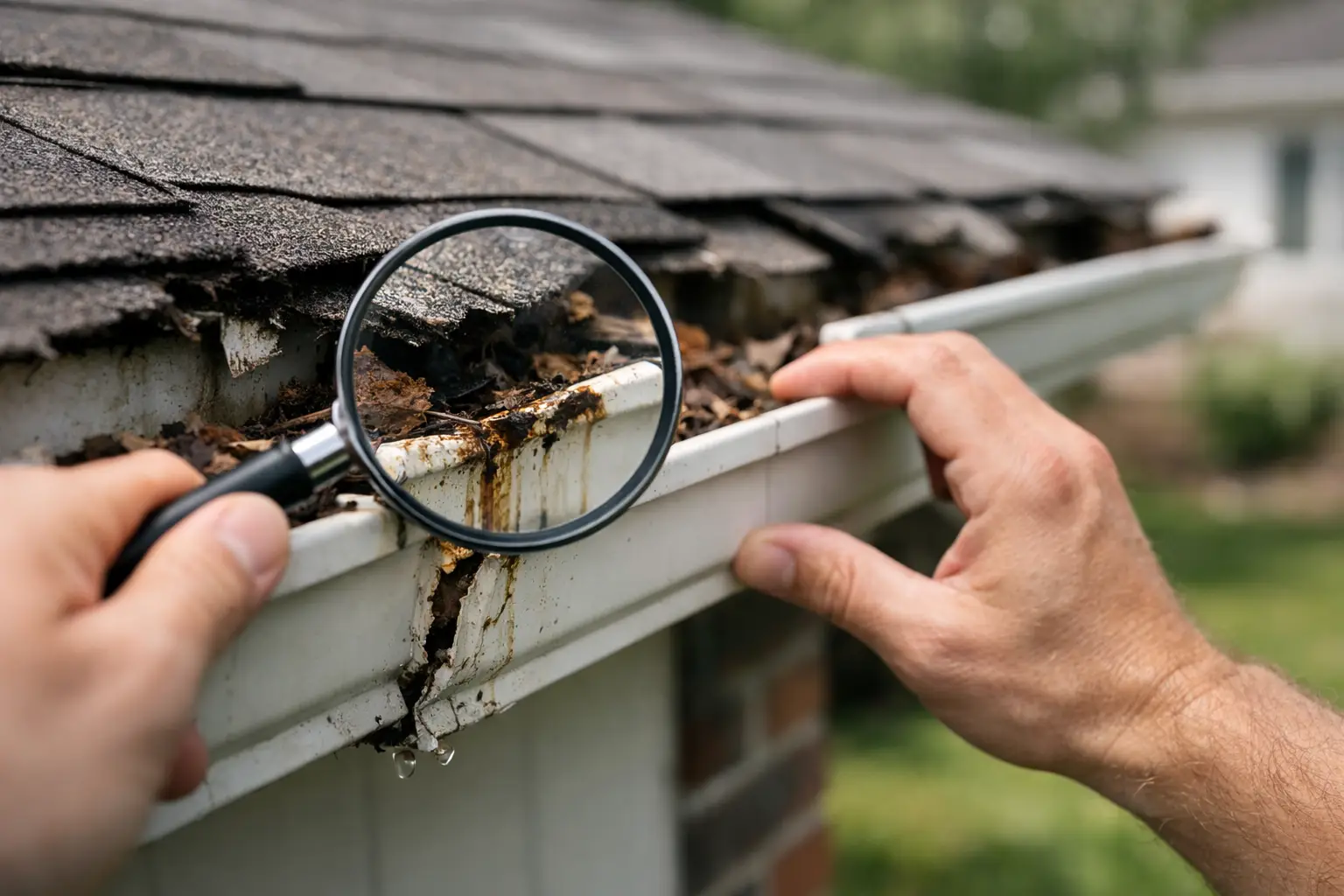
A gutter problem usually does not announce itself with one big failure. More often, it starts with a small drip at a seam, a section pulling away from the fascia, or water spilling over one corner during an afternoon storm. If you want to know how to spot gutter damage before it turns into wood rot, siding stains, or foundation trouble, the best time to look is before the next heavy rain puts the system under stress.
In Central Florida, that matters. Frequent downpours, wind-driven rain, leaf buildup, and long periods of heat can all wear down a gutter system faster than many homeowners expect. A quick visual check now can save you from a much bigger repair later.
How to spot gutter damage from the ground
You do not need to climb a ladder to notice the first warning signs. In many cases, the clearest evidence is visible from the yard or driveway.
Start by looking at the gutter line itself. Gutters should follow the roofline cleanly and appear straight, with only a slight pitch toward the downspouts. If a section looks uneven, bowed, or detached from the house, that usually points to sagging hardware, excess debris weight, or worn fasteners. Even a small dip can interrupt water flow and cause standing water inside the channel.
Next, check the exterior surfaces below the gutters. Peeling paint, dark streaks, mildew, and soil erosion often show up before homeowners realize the gutter system is failing. If water is not being carried away properly, it tends to leave a trail. You may see mud splashing near the foundation, watermarks on soffit or fascia boards, or washed-out mulch around planting beds.
One of the easiest clues is what happens during rain. If water pours over the front edge instead of moving into the downspout, there is usually a blockage, a pitch problem, or a gutter that is simply undersized for the runoff it is handling. If water spills from behind the gutter, that can mean the system is pulling away from the fascia or the drip edge is not directing water into the trough correctly.
Common signs your gutters need attention
Some damage is obvious, and some builds slowly. The key is knowing which signs call for quick action.
Cracks and holes are early trouble spots. Small openings may not look serious in dry weather, but they can leak steadily during storms and soak the wood behind the gutter. Separated seams are another common issue, especially on older sectional systems. Once a seam starts to fail, the leak often grows with each storm cycle.
Rust and corrosion also deserve attention. If you see orange spotting, flaking metal, or rough areas along the gutter body, the protective finish may be breaking down. That does not always mean full replacement is needed right away, but it does mean the system is aging and vulnerable to leaks.
Loose fasteners are another red flag. Screws on the ground, spikes backing out, or hangers that appear bent can all lead to sagging sections. When gutters are not secured tightly, they shift under the weight of water and debris. That movement puts more stress on joints, corners, and downspout connections.
You should also pay attention to standing water. If a gutter holds water long after rain stops, the slope may be off or the channel may be clogged. Standing water speeds up deterioration and attracts mosquitoes, which is not something most Orlando homeowners want lingering around the house.
What gutter damage looks like during a storm
If it is safe to watch from inside or under a covered area, rain gives you the clearest picture of performance. A functioning gutter system should collect roof runoff, move it smoothly toward the downspouts, and discharge water away from the home.
Overflow is the most obvious warning sign. Water should not sheet over the edge like a waterfall. When it does, the cause may be simple debris buildup, but it can also point to improper pitch, inadequate drainage, or downspouts that are not keeping up.
Watch the corners and seams closely. These are common leak points because they handle changing water direction and often carry more stress. A steady drip from a corner joint is not normal.
Listen, too. Loud dripping near entryways, splashing against siding, or repeated water impact near the foundation usually means runoff is escaping where it should not. Sometimes the sound tells you about a problem before you can see it clearly.
How clogs can mimic gutter damage
Not every gutter problem means the system itself is failing. Sometimes the gutter is structurally sound, but packed debris makes it behave like a damaged one.
Leaves, pine needles, seed pods, roof grit, and shingle debris can block the flow path and force water over the edge. In those cases, the fix may be cleaning and testing the system rather than replacing sections. The challenge is that clogs and physical damage often happen together. Heavy debris adds weight, which can pull gutters loose or cause them to sag.
That is why it helps to look at the full picture. If you clean out a gutter and it still holds water, leaks at seams, or drains slowly, the issue is likely more than a clog. If the gutter returns to normal flow after cleaning, the structure may still be in decent shape, though regular maintenance is clearly needed.
Trouble spots homeowners often miss
Some of the most expensive water problems start in places people rarely inspect. Fascia boards behind the gutters are a good example. If water has been leaking behind the system, the wood can soften or rot without being obvious from a distance. By the time paint starts peeling or trim begins to warp, the damage may have been developing for a while.
Downspouts are another overlooked area. A gutter can look fine across the front of the house, but if the downspout is loose, crushed, clogged, or discharging too close to the foundation, you still have a drainage problem. Look for separated elbows, leaking joints, and pooling water at the base.
You should also check the areas around roof valleys. These sections carry concentrated runoff during storms, so they tend to expose weaknesses faster. If one section keeps overflowing while the rest of the house seems fine, a valley may be sending more water into the gutter than that section can handle, or there may be a hidden blockage nearby.
When repair is enough and when replacement makes more sense
This is where it depends on age, condition, and the type of gutter system you have. A minor leak at one joint, a loose hanger, or a downspout adjustment is often a straightforward repair. If the gutters are otherwise solid and draining well, targeted service can restore performance without much disruption.
Replacement becomes more practical when problems are spread across multiple sections. If you have recurring leaks, visible rust, repeated sagging, and several patched areas, repairs can start to stack up without solving the root issue. Older sectional gutters are especially prone to this because each seam creates another potential leak point.
That is one reason many homeowners move to seamless K-gutter systems. With fewer joints, they offer a cleaner look and reduce the number of places water can escape. They are not maintenance-free, and they still need proper sizing, slope, and cleaning, but they generally provide more reliable long-term water management than patched-together older systems.
A practical inspection routine that works
For most homes, checking the gutters a few times a year is enough to catch problems early. In the Orlando area, it makes sense to inspect before the rainy season, after major storms, and whenever you notice unusual runoff around the house.
Walk the perimeter and look for sagging, staining, loose sections, and discharge problems at the downspouts. During or right after rain, note where water overflows, drips, or pools. If you manage rental property, it also helps to ask tenants whether they have noticed dripping near entry doors, splashing near windows, or water collecting around patios.
If you are not comfortable getting on a ladder, that is the right call. Gutters can be inspected and diagnosed safely by a professional, and that is often the fastest way to tell whether you need cleaning, repair, or a full replacement plan. Precision K-Gutters works with homeowners and property managers across Orlando who want clear answers, clean workmanship, and fixes that actually address the drainage issue.
Gutters are easy to ignore when they are doing their job. But once you know how to spot gutter damage, small signs become much easier to catch, and that gives you a better chance to protect the roofline, siding, and foundation before the next hard rain tests everything again.