
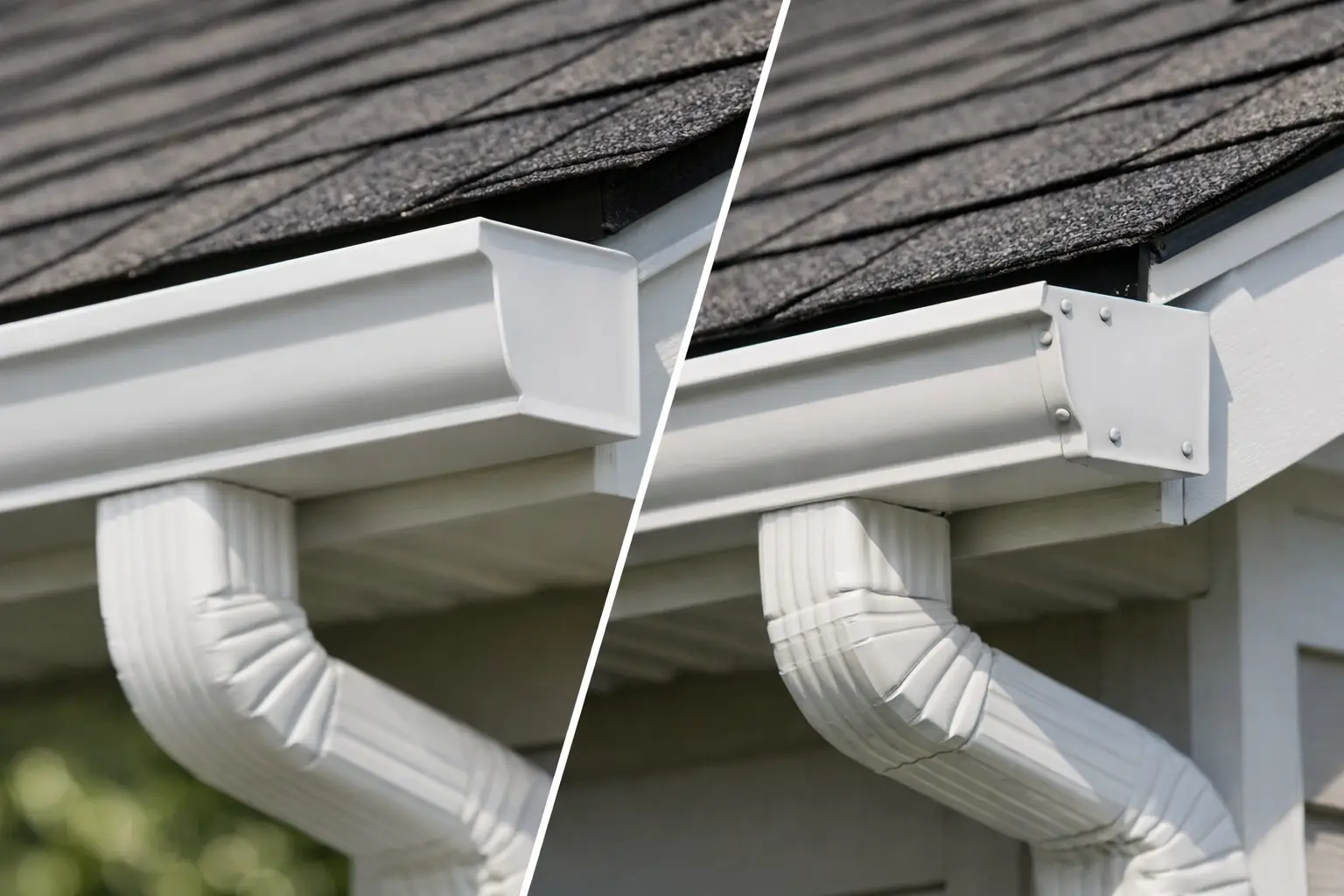
If you are weighing seamless gutters versus aluminum gutters, the first thing to know is that these are not always opposite choices. Aluminum is a material. Seamless refers to how the gutter is made and installed. In many cases, a seamless gutter system is made from aluminum, which is why this comparison can get confusing for homeowners trying to make a smart decision.
For homes in Orlando, that difference matters. You are not just choosing what looks good from the curb. You are choosing a system that has to handle heavy rain, wind-driven storms, roof runoff, and the steady wear that comes with Florida weather. A gutter system that works well on paper may not hold up the same way on a home that sees frequent downpours and fast-moving water.
Seamless gutters versus aluminum gutters: what is the real difference?
Traditional sectional gutters come in pieces. Those pieces are joined together during installation, usually at corners and along runs. Aluminum gutters are commonly sold this way, especially in standard lengths. They are widely used because aluminum is lightweight, rust-resistant, and affordable.
A seamless gutter system is formed on-site to fit the home. Instead of connecting multiple short sections across a roofline, the installer creates one continuous run for each side of the house when possible. That reduces the number of joints, which are the most common places for leaks, separation, and debris buildup.
So when homeowners ask about seamless gutters versus aluminum gutters, the more accurate question is usually this: should you install sectional aluminum gutters or seamless aluminum gutters?
That distinction matters because the biggest performance difference is not just material. It is the number of seams, the fit of the installation, and how well the system manages water over time.
Why seamless systems make sense for Florida homes
In Central Florida, gutters do not get tested gently. During a hard summer storm, a system has to move a lot of water quickly and direct it away from the house without spilling over near entryways, flower beds, soffits, or the foundation line.
A seamless system helps because there are fewer weak points along the run. Less joining means fewer places for water to escape, fewer places for leaves and roof grit to catch, and fewer sections that can pull apart over time. That cleaner design also tends to look better on the home because the lines are more uniform.
For many homeowners, that combination of function and appearance is the main reason to go with a custom-fit system. It is a practical upgrade, not just a cosmetic one.
Where aluminum still earns its reputation
Aluminum remains one of the most common gutter materials for a reason. It does not rust like steel, it is lighter to handle during installation, and it generally offers a solid balance between price and performance. It can also be finished in a range of colors, which helps it blend with trim and fascia.
That said, not all aluminum gutter setups perform the same way. A sectional aluminum system may still be more vulnerable to leaks at the joints. It can also require more maintenance as sealants age and connectors loosen. If the installation is basic or poorly pitched, even a decent aluminum product can end up overflowing or holding standing water.
So aluminum is not the problem. The design and installation approach often make the bigger difference.
Cost: lower upfront versus lower hassle later
Sectional aluminum gutters usually cost less upfront. The materials are standardized, and installation can be faster for simple jobs. If you are working with a very tight budget or replacing a small damaged area, that lower entry cost can be appealing.
Seamless systems typically cost more at the start because they are custom-made on-site and installed with more precision. But that added cost often lines up with fewer service issues later. Less leaking, fewer joint failures, and a better fit can reduce repair needs over time.
That does not mean a seamless system is always the cheapest option in the long run for every property. A small home with straightforward rooflines may do fine with a well-installed sectional system. But on many homes, especially in rain-heavy areas, paying more once can be easier than paying for repeated fixes.
Maintenance and leak risk
If your main goal is reducing maintenance, seamless systems usually have the edge. Joints are where clogs tend to start and where seal failures tend to show up first. When there are fewer of them, there are fewer places that need attention.
That advantage becomes more noticeable when trees are involved. Leaves, seed pods, and shingle grit can catch at seams and slow water flow. Once that happens, water can back up, spill over, and add stress to hangers and fascia boards.
A sectional aluminum system can still work well if it is cleaned regularly and kept in good condition. But it generally asks for more attention. For homeowners and property managers who want fewer recurring issues, that trade-off is worth considering carefully.
Appearance and curb appeal
Most people do notice gutters when they are sagging, stained, or dripping. They usually do not notice them when they fit the house cleanly and do their job.
That is one reason seamless systems are popular. The long, uninterrupted runs create a cleaner finished look. On homes with visible front elevations, that can make the exterior appear more polished without drawing attention to the gutters themselves.
Sectional aluminum gutters can still look good, especially when installed properly. But the connection points are more visible, and as the system ages, those areas often show wear first.
Installation quality matters more than most homeowners think
You can buy decent materials and still end up with a poor result if the pitch is off, the downspouts are undersized, or the water is discharged in the wrong place. That is why gutter performance comes down to more than choosing a product category.
Proper sizing matters. So does hanger spacing. So does matching the system to the roof area and how fast water comes off during heavy rain. In Orlando, those details are not minor. A system that is only “good enough” can become a problem quickly when the weather turns.
That is where a custom approach tends to pay off. A company that measures on-site and installs for the property instead of the shelf tends to deliver better water control.
When sectional aluminum may still be the right choice
There are cases where sectional aluminum gutters make sense. If a homeowner needs a basic replacement on a detached structure, is repairing a limited area, or is preparing a property for sale without planning a long hold, the lower upfront cost may be the priority.
They can also be workable on simpler homes where maintenance is done consistently and the drainage setup is already strong. The key is not to expect low-cost installation to deliver low-maintenance results automatically.
If the concern is immediate function at the lowest initial price, sectional aluminum can be a reasonable option. It just helps to go into that decision with realistic expectations.
When seamless aluminum gutters are the better fit
For many residential properties, especially primary homes and rental properties where reliability matters, seamless aluminum gutters offer the better balance. You get the rust resistance and lighter weight of aluminum with the performance benefits of a custom-made system.
That combination is especially useful for homes that have had repeated leaking at joints, overflow during storms, or drainage issues around the foundation. A properly installed seamless K-style system can improve both appearance and water management without overcomplicating routine upkeep.
For homeowners in Central Florida, that usually makes more sense than treating gutters as a low-priority add-on. When the rain comes hard, your system either controls it or it does not.
The better question to ask before you decide
Instead of asking only about seamless gutters versus aluminum gutters, ask how the system will perform on your specific home. Consider roof size, slope, tree coverage, drainage pattern, and how often you want to deal with cleaning and repairs.
A custom-fit aluminum system often gives homeowners the best of both categories. It keeps the practical advantages of aluminum while cutting down on the leak points and maintenance issues that come with multiple joints. That is why companies like Precision K-Gutters focus on measured, on-site solutions rather than one-size-fits-all installs.
The right gutter choice is usually the one that keeps water moving where it should, stays secure through storm season, and gives you fewer reasons to think about it after the job is done.