
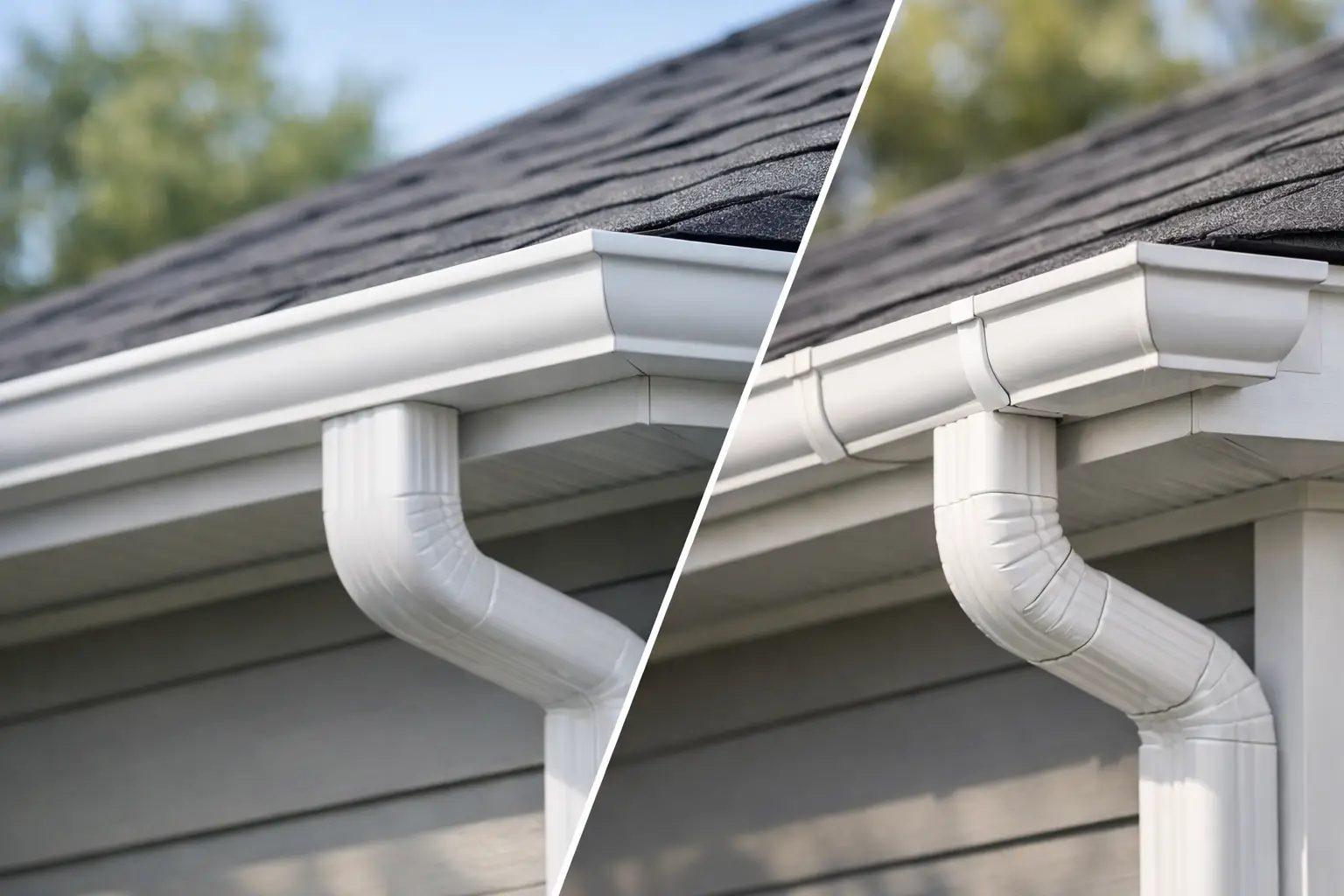
If your gutters are leaking at the joints, pulling away from the fascia, or spilling water over the sides during a hard Florida rain, the type of gutter on your home matters more than most people realize. When homeowners compare seamless gutters vs sectional gutters, the real question is usually simpler: which option gives you fewer problems, better drainage, and less upkeep over time?
For most homes in Orlando, that decision comes down to how each system handles heavy rain, debris, heat, and day-to-day wear. Both types move water away from the roofline. The difference is in how they are built, how often they need attention, and how likely they are to develop leaks as the years go on.
Seamless gutters vs sectional gutters: what is the difference?
Sectional gutters are made from pre-cut pieces joined together during installation. Those sections are connected with seams, connectors, and sealant to create a full gutter run. This is the style many homeowners recognize from older homes and some store-bought gutter systems.
Seamless gutters are formed on-site to fit the exact dimensions of the home. Instead of piecing together multiple short sections along each run, the installer creates one continuous piece for longer stretches, with joints usually limited to corners and downspout connections.
That basic construction difference changes a lot. Fewer joints usually means fewer leak points. A custom fit also tends to look cleaner and perform better, especially on homes where water needs to move quickly during frequent storms.
Why sectional gutters cost less upfront
If budget is the first concern, sectional gutters often look appealing. The materials are usually less expensive at the start, and because the pieces are pre-made, they can be easier to source for smaller repairs or basic installations.
For a homeowner trying to solve an immediate drainage problem at the lowest possible price, sectional gutters can make sense. They are also easier to replace in short segments if one area gets damaged.
But lower upfront cost does not always mean lower ownership cost. Every seam is a point that can loosen, clog, separate, or start leaking. In a climate like Central Florida, where gutters are expected to handle strong downpours and regular debris, those weak points tend to show up sooner.
Where seamless gutters usually pull ahead
The biggest advantage of seamless gutters is simple: fewer places for water to escape. When a gutter run is made in one piece, there are fewer sealed joints that can fail over time.
That matters when rain is coming down fast. In Orlando, gutters are not dealing with occasional light showers. They are dealing with heavy summer storms, wind-driven rain, and roof runoff that can overwhelm a weak system in a hurry.
A custom-measured gutter also tends to sit and pitch more accurately. That helps water move toward the downspouts instead of hanging in low spots. Less standing water usually means less strain on the hangers, less staining, and less chance of rust or material breakdown.
There is also the appearance factor. Seamless gutters generally look sharper because they are made to fit the house rather than assembled from visible sections. For many homeowners, that is not just cosmetic. A neater gutter line often signals a better installation overall.
Leaks, clogs, and maintenance
When people ask about seamless gutters vs sectional gutters, maintenance is usually where the answer becomes clear.
Sectional gutters have more seams, and seams tend to catch debris. Leaves, granules, twigs, and roof runoff can collect at those connection points. Once debris starts building up, water slows down, and overflow becomes more likely. That can lead to fascia damage, soffit issues, landscape washout, and water pooling near the foundation.
Seamless gutters are not maintenance-free. They still need cleaning, inspection, and proper downspout flow. But with fewer joints along the run, there are fewer places for debris to snag and fewer areas where sealant failure creates a leak.
For homeowners who want less ongoing hassle, that difference matters. It is one thing to clean out leaves. It is another to keep chasing drips and separation points after every storm season.
Repairs are different on each system
Sectional gutters are often easier to patch in isolated spots. If one piece gets dented or damaged, that section can sometimes be removed and replaced without disturbing the full run. That can be useful on older systems where the homeowner wants to extend the life of the gutters without replacing everything.
Seamless gutters work differently. Because each long section is custom formed, a major damaged area may require replacing a larger run instead of swapping out a short piece. That can make certain repairs less simple.
Still, the trade-off is that seamless systems usually need fewer leak-related repairs to begin with. In practice, many homeowners would rather deal with fewer problems overall than have a system that is easier to patch but needs more patching.
Which option lasts longer?
Lifespan depends on material, installation quality, maintenance, and local weather. But all else being equal, seamless gutters often hold up better over time because they have fewer failure points.
Sectional gutters rely heavily on joints staying sealed and aligned. As the system expands and contracts, holds debris, or pulls under the weight of standing water, those joints can weaken. Once that starts happening, small issues can spread. A leak at one seam can lead to wood rot behind the gutter or water stains on exterior surfaces.
A well-installed seamless system usually gives better long-term performance, especially when paired with proper hanger spacing, correctly sized downspouts, and routine cleaning. That is a big reason many homeowners upgrade after dealing with repeated sectional gutter problems.
What makes the Florida climate a factor
In Central Florida, gutter performance is not just about annual rainfall totals. It is about intensity. A system may look fine in dry weather and still fail during a 30-minute storm.
Heat, moisture, and storm cycles put pressure on seals and fasteners. Debris from trees can build up quickly. If your home already has drainage trouble, water can collect near the slab or foundation fast when gutters overflow.
That is why the seamless option is often the better fit locally. Fewer joints, cleaner water flow, and a custom fit help reduce the small failures that turn into bigger repair bills. For Orlando homeowners, the goal is not just getting water off the roof. It is getting water away from the home reliably.
When sectional gutters still make sense
There are cases where sectional gutters are still a reasonable choice. A small detached structure, a short-term budget fix, or a limited repair on an older property might not call for a full seamless replacement.
They can also work for homeowners who understand the maintenance trade-off and are comfortable staying on top of inspections and seal repairs. If cost is the deciding factor and the layout is simple, sectional gutters may do the job for now.
The key is being realistic about what you are buying. You are usually saving money up front, but you may be taking on more upkeep later.
How to choose the right system for your home
The best choice depends on your budget, how long you plan to keep the property, and how much maintenance you want to deal with. If you are looking for the lowest initial price, sectional gutters may check that box. If you want a cleaner look, fewer leak points, and better long-term performance, seamless gutters are usually the stronger option.
For many homeowners and property managers, the decision becomes clearer after looking at the full cost of ownership. A system that needs more sealing, more repair visits, and more cleanup after storms can cost more in the long run, even if it was cheaper to install.
That is especially true if you have already seen signs of gutter failure like overflow, erosion near the home, mildew, fascia damage, or recurring clogs.
A practical recommendation for Orlando homeowners
If your current gutters are aging, leaking at the seams, or struggling during heavy rain, upgrading to custom-fit seamless gutters is often the more practical investment. It reduces common failure points and gives you a system built for the exact dimensions of your home.
That does not mean every house needs a full replacement today. Sometimes a repair, cleaning, or downspout adjustment is enough to correct the problem. But if you are comparing new systems, it usually makes sense to choose the one that asks less of you over time.
At Precision K-Gutters, that is the standard we work from – clean installs, direct recommendations, and gutter solutions that make day-to-day property maintenance easier. The right gutter system should do its job quietly, even when the weather does not.
If you are weighing your options, focus less on the cheapest starting number and more on how the system will perform after the next few storm seasons. That is usually where the better decision shows itself.