
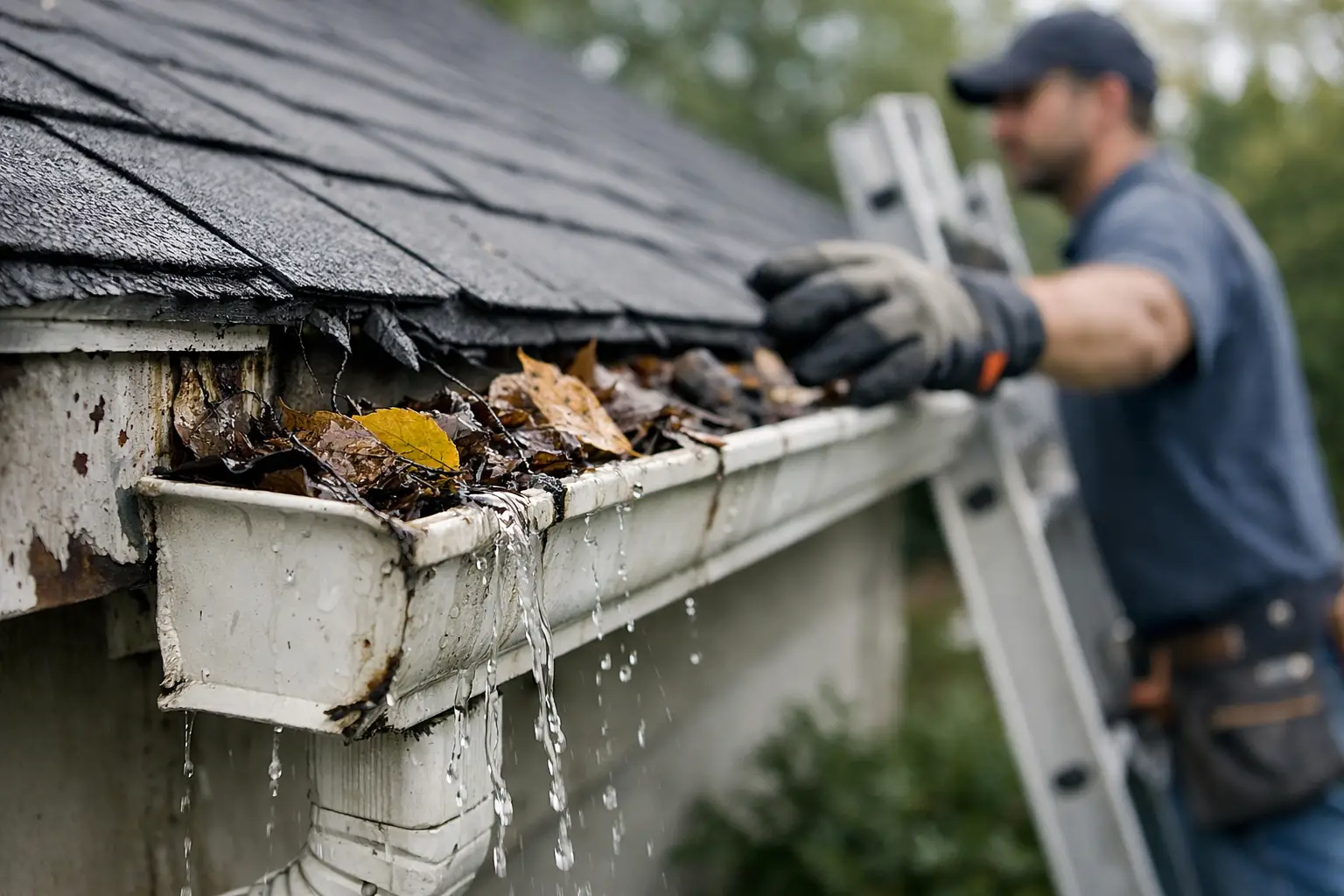
A Florida downpour can reveal a gutter problem in minutes. The top gutter warning signs often show up while rain is still falling: water spilling over the edge, streams running behind the gutter, or puddles collecting where they should not. Acting early can help protect fascia boards, landscaping, exterior walls, and the area around your foundation.
Orlando homes deal with frequent heavy rain, windblown debris, pine needles, and leaves that can overwhelm a system that once seemed fine. A quick visual check after a storm is one of the simplest ways to catch trouble before a small repair becomes a larger exterior project.
10 Top Gutter Warning Signs Homeowners Should Watch For
1. Water is overflowing over the gutter edge
Overflow is the most obvious warning sign and one that should not be ignored. If water pours over the front or back of the gutter during normal rainfall, the channel may be clogged with leaves, roof grit, or nesting material. It can also mean the gutter is pitched incorrectly, undersized for the roof area, or missing enough downspout capacity.
A single intense Florida storm can push a clean system to its limit. But repeated overflow in ordinary rain points to a drainage issue worth correcting. Water that repeatedly spills over the back edge can soak the fascia and soffit, where damage may remain hidden until wood rot or staining appears.
2. You see water stains under the gutters
Brown marks, peeling paint, or dark streaks along the fascia, siding, or soffit are often signs that water is escaping where it should not. The source may be a leaking seam, a loose end cap, a clogged section, or rainwater running behind the gutter instead of into it.
Stains do not always mean the damage is new. They do mean the area deserves a closer look. Catching a leak while it is limited to a small section is usually far more manageable than replacing deteriorated trim or repairing moisture damage around a roof edge.
3. Gutters are sagging, pulling away, or sitting unevenly
A gutter should follow the roofline with a clean, consistent appearance. When a section bows in the middle, tilts forward, or pulls away from the fascia, it may be holding standing water and debris. Loose hangers, weakened fasteners, storm damage, and overloaded gutters can all contribute.
Sagging is more than a cosmetic issue. Standing water adds weight, and that weight can make the separation worse over time. A contractor can determine whether the section needs to be re-secured, re-pitched, repaired, or replaced with a properly fitted seamless gutter section.
4. Plants, moss, or weeds are growing inside the gutter
If your gutters look like a planter, they are not draining consistently. Seeds carried by wind and birds can take root in wet debris, especially when leaves and roof sediment have been left in place. The visible growth is only part of the problem. The material below it can block water from reaching the downspout.
Cleaning the channel restores flow, but it is also smart to consider why buildup is happening. Homes under mature trees may need more frequent cleaning, while leaf guard options can reduce how much debris enters the system. Guards help with routine maintenance, but they still need occasional inspection after storms.
5. Downspouts are slow, clogged, or disconnected
The gutter can be clear and still fail if the downspout cannot move water away. Listen for water backing up near the outlet during rain, or look for a downspout that releases only a weak trickle while the gutter overflows. Clogs often develop at elbows, underground connections, and the lower outlet where debris settles.
A disconnected downspout deserves prompt attention as well. Even a small gap can dump concentrated water directly beside the home. Proper downspout adjustments help direct water away from the foundation, walkways, patios, and planting beds.
6. Water collects near the foundation after rain
A puddle near the foundation is one of the most serious gutter warning signs because it means roof runoff is not being managed effectively. The cause could be an overflowing gutter, a leaking corner, a short downspout, or a discharge point aimed toward the house.
Not every wet spot means there is foundation damage. Florida’s flat terrain, soil conditions, and intense rain can make drainage complicated. Still, repeated pooling in the same area can contribute to soil erosion, moisture intrusion, and settlement concerns over time. It is best to address the water path rather than wait for interior symptoms.
7. Erosion is washing out mulch or soil
Check the landscaping directly below gutters and downspouts. Washed-out mulch, exposed roots, trenches in the soil, or bare spots can show that runoff is hitting the ground with too much force or in the wrong location.
This problem may be solved with a downspout extension or adjustment, but the correct fix depends on the layout of the home and the slope of the yard. The goal is controlled drainage that moves water away without sending it toward a neighbor’s property, a walkway, or a low area that already holds water.
8. Gutter seams, corners, or end caps are leaking
Drips at a seam may look minor on a dry day, but they can release a surprising amount of water during a long storm. Traditional sectional gutters have multiple connection points, and every connection is a potential place for sealant to wear down over time.
Small leaks can sometimes be repaired if the surrounding gutter is in good condition. If leaks are recurring in several places, a custom-measured seamless K-gutter system may be a better long-term solution. Seamless gutters have fewer joints along the run, which creates a cleaner appearance and reduces common leak points.
9. There are visible cracks, holes, rust, or split sections
Cracks and pinholes let water escape before it reaches the downspout. In painted aluminum gutters, you may notice small openings near fasteners or corners. On older systems, corrosion, dented sections, or failed sealant can make repairs less dependable.
Whether repair or replacement makes sense depends on the extent of the damage. One isolated hole may be repairable. Multiple damaged areas, poor pitch, and recurring leaks often indicate that investing in a new system will provide better protection and fewer service calls.
10. You notice mold, mildew, or moisture inside the home
Interior moisture can have many causes, so gutters should not automatically be blamed. However, moldy odors, water marks on ceilings near exterior walls, or damp areas around windows can be connected to ongoing exterior drainage issues. Overflowing gutters and water running behind the fascia can allow moisture to reach places it was never meant to go.
This is a situation where a timely inspection matters. The right professional will look at the full water-management path, including the roof edge, gutter alignment, downspouts, and discharge location, instead of treating one stain as the entire problem.
When to Clean, Repair, or Replace Your Gutters
Cleaning is usually the right starting point when the system is structurally sound but filled with leaves, roof debris, or a downspout clog. In Central Florida, many homes benefit from cleaning before and after the heaviest rainy periods, with additional service if there are large trees nearby.
Repairs are appropriate for loose hangers, leaking end caps, small holes, disconnected downspouts, and limited pitch issues. Replacement becomes more practical when gutters are repeatedly leaking, sagging across several runs, corroded, poorly sized, or no longer directing water effectively.
A professional assessment should be direct: identify the source of the problem, explain the available options, and recommend only the work the system actually needs. Precision K-Gutters provides custom-fit gutter work designed around the home, with clear communication and clean job sites from start to finish.
The best time to inspect your gutters is before the next hard rain gives a small problem more chances to spread. If you have seen overflow, leaks, sagging, or standing water near the home, addressing it now can keep your drainage system working when Orlando weather is at its worst.