
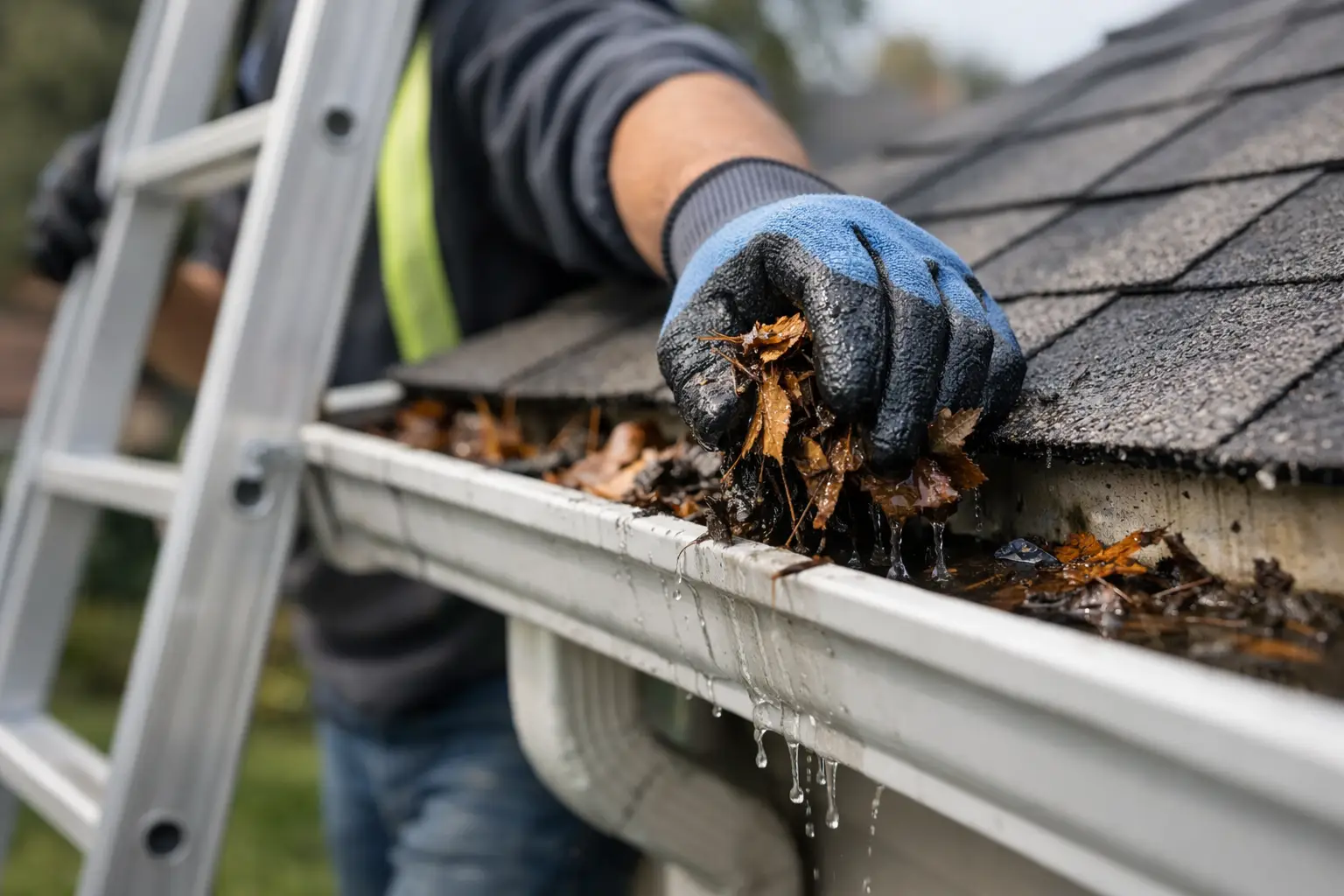
A gutter system usually gets your attention only after water starts spilling over the edge. By that point, gutter cleaning is no longer a simple maintenance task. It is a response to a problem that may already be affecting fascia boards, soffits, siding, landscaping, and the area around your foundation.
In Central Florida, that risk shows up fast. A few weeks of leaf drop, roof grit, and storm debris can turn a working gutter line into a clogged channel that cannot move water where it needs to go. Heavy rain does the rest. What should have been controlled drainage becomes overflow running down walls, pooling near the home, and soaking parts of the exterior that were never meant to handle that much water.
Why gutter cleaning matters more than most homeowners think
A clogged gutter does more than look messy. It changes the way rainwater behaves around your house. Instead of moving through the trough and downspouts, water backs up and spills over the front edge or behind the gutter. That can lead to staining, wood rot, loosened fasteners, and erosion below.
If the clog is bad enough, the added weight of wet debris can also pull sections out of alignment. That is where a simple cleaning issue starts turning into a repair issue. Sagging runs, separated joints, and loose downspouts often begin with neglected buildup.
For homeowners and property managers, the practical point is simple. Regular maintenance is usually less expensive and less disruptive than dealing with damaged trim, drainage problems, or premature gutter replacement.
What builds up in gutters in Orlando-area homes
Not every clog is caused by big leaves. In this part of Florida, gutters often collect a mix of smaller debris that packs tightly and slows drainage before the system looks completely full.
Oak leaves, pine needles, seed pods, roof granules, palm debris, and shingle grit all contribute. Add frequent rain, and that material starts to mat together. Once that happens, water may still move a little during light showers, which can make the system seem fine. Then a stronger storm hits and the limits show up immediately.
This is one reason some homeowners wait too long to schedule service. The gutter may not appear blocked from the ground, but a partial clog can still create overflow during heavier rainfall. In a region where afternoon storms can dump a lot of water quickly, partial blockages matter.
Signs you need gutter cleaning
Some warning signs are obvious. Water pouring over the sides during rain is the big one. Plants or weeds growing from the gutter are another. So are visible piles of debris near corners or downspout openings.
Other signs are easier to miss. You may notice dark streaks on siding, muddy splash marks near the base of the home, peeling paint near the roofline, or small areas where water lingers too close to the foundation. If a gutter is pulling away from the fascia, trapped debris and standing water may be part of the reason.
Downspout performance also tells you a lot. If rainwater barely exits at the bottom, or if one corner of the house always seems to overflow first, a blockage may be sitting in the downspout or where the downspout meets the gutter run.
How often should gutters be cleaned?
There is no one schedule that fits every property. It depends on tree cover, roof design, storm exposure, and whether the system already has a history of clogging.
For many homes, cleaning at least twice a year is a good baseline. In heavily wooded areas or on properties with persistent debris issues, more frequent service may make sense. Homes that sit under oak, pine, or palm coverage often need closer attention, especially during periods of active leaf and storm debris buildup.
Central Florida weather changes the equation too. A house may be fine for months, then a round of storms fills the gutters faster than expected. That is why many owners schedule cleaning before the wetter part of the year and then reassess after storm season. The right timing is not just about the calendar. It is about reducing overflow risk before heavy rain puts the system under stress.
Gutter cleaning and repairs often go together
Cleaning clears the system, but it also reveals condition issues that are easy to miss when debris is in the way. Once the gutter line is opened up, it becomes easier to spot leaks, loose hangers, improper slope, separated seams, and downspouts that are not directing water far enough from the home.
That matters because a clean gutter that is pitched wrong still will not drain well. The same goes for a downspout that empties too close to the foundation or a section that has started to pull loose. Cleaning solves the blockage, but it may not solve the underlying drainage problem.
This is where professional service can save time. Instead of treating every overflow issue as a debris issue, an experienced crew can tell whether the system simply needs maintenance or whether adjustments and repairs should be handled at the same time.
Should you clean gutters yourself?
For some homeowners, DIY gutter cleaning is manageable on a one-story home with safe access and light debris. If the ladder is stable, the weather is dry, and the system is easy to reach, a basic cleaning may be realistic.
But there are trade-offs. Multi-story homes, steep rooflines, screened enclosures, uneven ground, and packed downspouts all make the job harder and riskier. So does heavy, wet debris that has been sitting for months. The work is not just about removing leaves. It often includes flushing lines, checking flow, and spotting problem areas that need correction.
There is also the safety factor. Ladder work causes a lot of preventable injuries, and gutter edges can be sharp. For many property owners, especially those managing larger homes or multiple units, professional service is the more practical choice. It reduces risk, saves time, and helps make sure the whole system is actually draining the way it should.
What professional gutter cleaning should include
A proper service should go beyond scooping out visible debris. The goal is to restore water flow through the full system.
That usually means clearing the gutter channels, checking and flushing downspouts, and identifying any areas where water is not moving correctly. If sections are sagging, leaking, or separating, those issues should be pointed out clearly. Good service is straightforward. You should know what was cleaned, what was found, and whether anything needs attention now versus later.
Clean job sites matter too. Debris should be removed, not left scattered around beds, walkways, or driveways. For homeowners who value clear communication and efficient work, that part of the experience is just as important as the cleaning itself.
Do leaf guards eliminate the need for gutter cleaning?
Leaf guards can reduce the amount of debris entering the gutter, but they do not make maintenance disappear. That is one of the most common misunderstandings in this category.
Some guard systems perform well for certain homes and tree conditions. Others still allow fine debris, grit, and small particles to build up over time. In some cases, guards improve performance significantly. In others, they help but still need occasional inspection and service.
It depends on the property. The surrounding trees, roof pitch, and type of debris all affect results. A homeowner with constant fine leaf matter may still need periodic maintenance even with guards installed. The benefit is often reduced cleaning frequency, not zero upkeep.
Why local conditions matter with gutter cleaning
In Orlando and surrounding communities, gutters have to handle fast, heavy rainfall. That makes small drainage problems more noticeable. A system that seems acceptable during a light shower may fail quickly during a stronger storm.
That is why local experience matters. Gutter cleaning should not be treated as a generic chore. The real question is whether your gutter system can move water away from the house reliably during the kind of rain this area actually gets. If it cannot, debris removal alone may not be enough. The slope, downspout placement, and condition of the system all play a role.
For homeowners who want a direct answer, that is usually the value of working with a company that handles cleaning, repairs, and drainage adjustments together, like Precision K-Gutters. You are not just getting leaves removed. You are getting a clearer picture of how your system is performing.
When gutters are cleaned on time, rainwater goes where it is supposed to go. That protects the parts of your home you rarely think about until there is a problem. Staying ahead of it is simpler than dealing with damage after the next hard storm.