
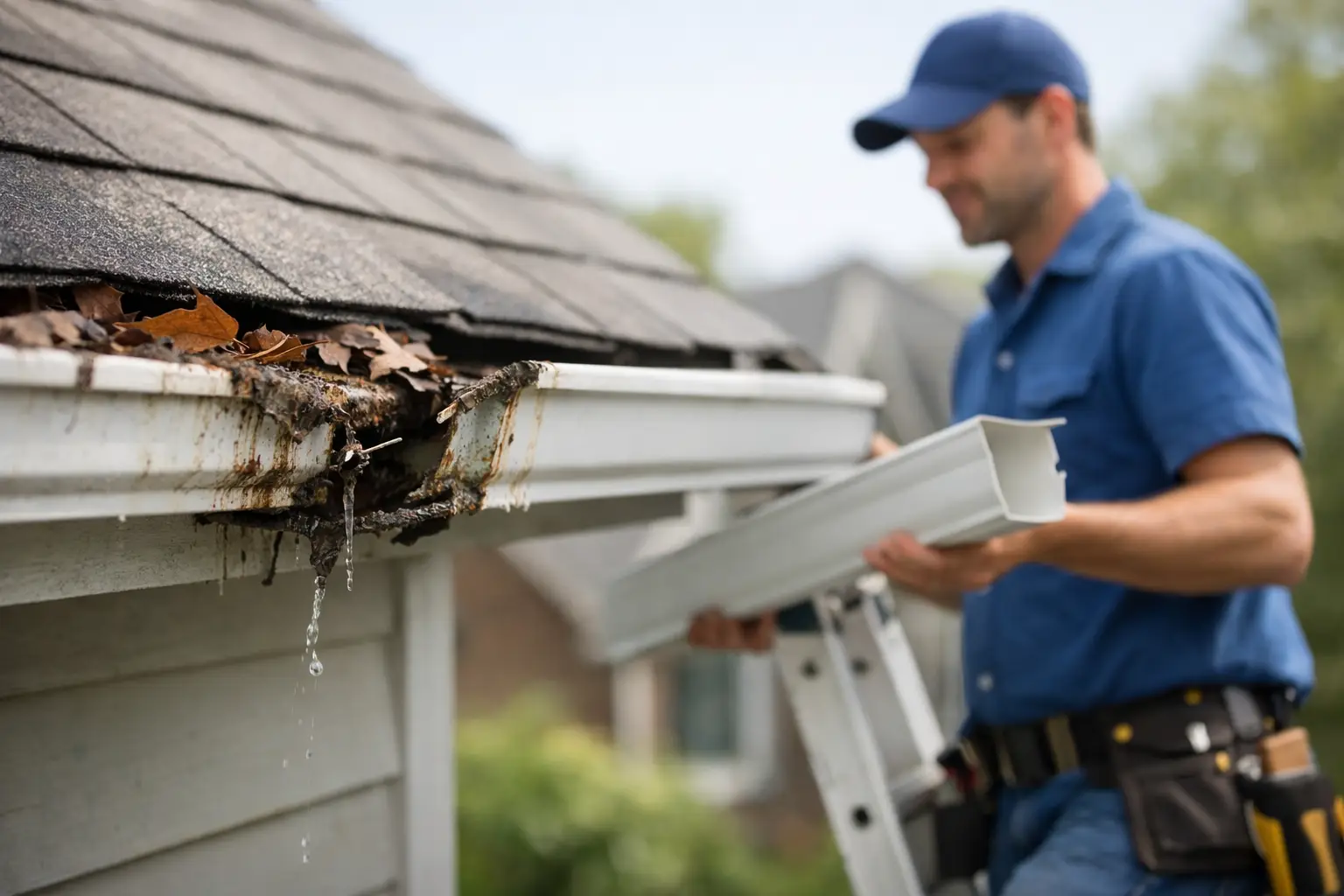
A gutter system usually does not fail all at once. It starts with a small leak at a seam, a section that pulls away from the fascia, or water spilling over one corner during a hard Florida rain. If you are asking when should gutters be replaced, the real answer is usually tied to what your gutters are doing during a storm, not just how old they are.
For homeowners in Orlando, that matters. Heavy downpours, wind-driven rain, and constant debris buildup can push a struggling gutter system past the point where another repair makes sense. The goal is not just to have gutters attached to the house. The goal is to move water away from the roofline, siding, soffits, landscaping, and foundation before damage starts.
When should gutters be replaced instead of repaired?
Repairs make sense when the problem is isolated. A loose hanger, one leaking joint, a clogged downspout, or a short damaged section can often be corrected without replacing the full system. If the gutters are still pitched correctly, draining well, and structurally sound, a targeted repair is usually the practical choice.
Replacement becomes the better option when the issues are repeated, widespread, or tied to the overall condition of the system. If you have multiple leaks, sagging runs, rust, separating seams, and water pooling around the home even after cleaning, that points to a system that is no longer doing its job consistently. At that stage, patching one area often just buys a little time before the next issue shows up.
For many homes, the tipping point is cost versus reliability. If you are paying for repair after repair and still dealing with overflow every rainy season, replacement can be the more efficient investment.
The clearest signs your gutters are near the end
Visible damage is usually the first clue. Cracks, splits, holes, rust spots, and sections pulling away from the house all tell you the system is weakening. Even small openings can turn into bigger water control problems during a strong storm.
Sagging is another major warning sign. Gutters should sit firmly along the roof edge and carry water toward the downspouts. When they dip in the middle, twist out of line, or detach from the fascia, water starts collecting in the wrong places. That extra standing water adds weight, which often makes the sagging worse.
Peeling paint, stained siding, or rotting wood near the roofline can also point to gutter failure. In many cases, the gutter itself is not the only issue anymore. Water may already be escaping behind the system or overflowing repeatedly, which can lead to fascia damage, soffit issues, and mildew around the exterior.
Then there is what happens at ground level. If you see erosion below roof edges, mulch washing out, or water sitting near the slab after rain, your gutters may be undersized, poorly pitched, clogged too often, or simply too worn out to drain correctly.
Age matters, but condition matters more
Homeowners often want a simple lifespan number, but gutters do not all age the same way. Material, installation quality, maintenance history, and weather exposure all affect how long they last.
Traditional sectional systems tend to develop problems sooner because they have more joints and more places for leaks to form. Seamless gutters generally hold up better because there are fewer connection points along the run. That cleaner design often means fewer leaks and less maintenance over time.
Still, age alone should not force a replacement. A well-installed seamless system that has been cleaned and maintained may have years left. On the other hand, a younger system installed with poor pitch or weak fastening can fail early. That is why an inspection should focus on performance as much as appearance.
Why Florida weather shortens the margin for error
Central Florida is hard on gutter systems. Sudden downpours test capacity fast, and even a small drainage issue becomes obvious when rain comes down hard. Add in wind, leaf buildup, and the long wet season, and minor defects can turn into property damage faster than many homeowners expect.
In this climate, gutters do not need to be completely destroyed to justify replacement. If they overflow during routine storms, pull loose in windy weather, or cannot keep up without constant attention, they are already falling short. A gutter system should handle local conditions without becoming a recurring problem.
This is also where custom-fit seamless K-gutters can make a noticeable difference. They are designed to fit the home more precisely, which helps improve appearance and reduce leak points. For homes dealing with repeated drainage issues, a properly sized seamless system can solve more than a patch ever will.
When repairs are still worth doing
Not every problem calls for a new installation. If your gutters are mostly solid and the trouble is limited to one area, a repair can restore performance and extend the life of the system.
A few common examples include a downspout that needs adjustment, a section clogged with debris, one corner that leaks, or fasteners that have loosened over time. These issues are often manageable if caught early. Cleaning and minor corrections can prevent larger damage and delay replacement.
The key is whether the repair solves the root problem. If a section keeps separating because the fascia behind it is compromised, or if overflow continues because the gutter is too small or poorly pitched, the issue is bigger than a quick fix.
Signs replacement is the smarter long-term move
The strongest case for replacement is when the system is failing in several ways at once. Maybe the gutters overflow in heavy rain, the seams leak between storms, and portions are starting to sag. Maybe they have already been patched multiple times and still leave water near the foundation. That pattern usually means the full system has aged out of dependable service.
Another reason to replace is if the layout itself is wrong. Some homes have too few downspouts, long runs that do not drain efficiently, or gutter sizes that are not handling roof runoff well. In those cases, even structurally decent gutters may underperform because the design is working against the house.
Replacement can also make sense during other exterior work. If you are replacing the roof, repairing fascia, repainting trim, or correcting drainage around the home, it may be more practical to install new gutters at the same time. Coordinating the work can reduce labor overlap and help protect the new exterior surfaces from old gutter problems.
What homeowners should look at after every heavy storm
You do not need to climb a ladder to spot many gutter issues. After a strong rain, walk around the house and look at how the system performs. Check whether water is spilling over the front edge, running behind the gutter, or pouring too close to the foundation.
Look for standing water inside the gutters after the rain stops. Notice whether one section appears lower than the rest or if a downspout is draining too slowly. Watch for damp soil trenches, washed-out planting beds, or splash marks on siding. These are practical signs that your gutters may not be controlling water the way they should.
If you manage a rental or multiple residential properties, this kind of simple post-storm check can save money. Catching a failing system early is usually less expensive than waiting until fascia rot, wood damage, or foundation drainage issues appear.
How to decide when should gutters be replaced on your home
The best decision comes down to three questions. First, are the gutters structurally sound? Second, are they moving water away from the home effectively? Third, have repairs become frequent enough that you no longer trust the system during a normal storm?
If the answer to any of those is no, replacement deserves serious consideration. A gutter system should not be something you worry about every time rain is in the forecast. It should work quietly in the background and protect the house without constant patching.
For Orlando-area homeowners, that reliability matters even more because storms are part of the routine, not the exception. If your current system is showing its age, struggling with drainage, or causing repeat exterior issues, a professional assessment can tell you whether a repair will truly hold up or whether a new seamless system is the better move.
Good gutters do not call attention to themselves. They simply keep water moving where it should, and that kind of protection is worth getting right before the next hard rain arrives.