
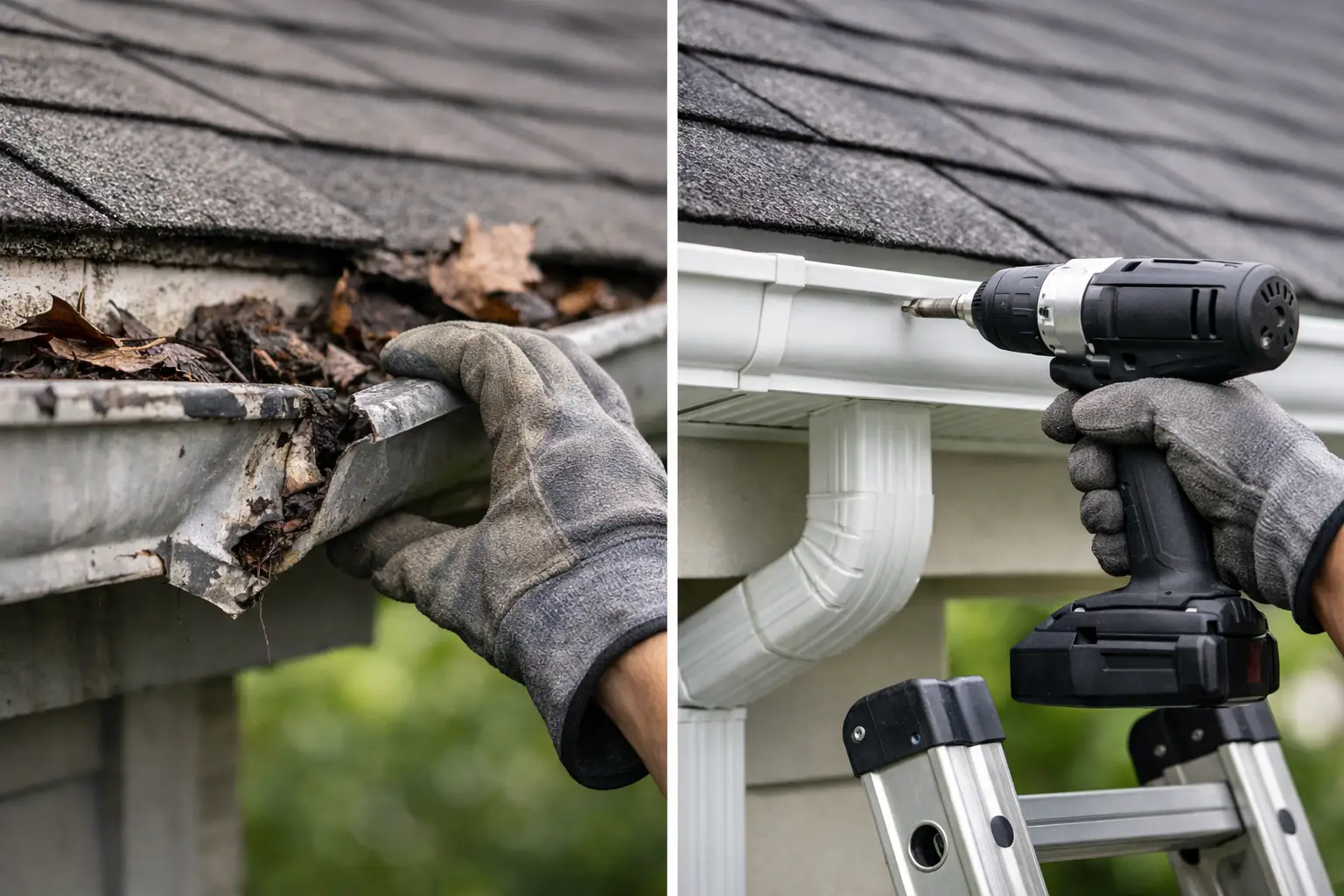
A gutter system usually does not fail all at once. It starts with a drip at a seam, a section that pulls away from the fascia, or water dumping near the foundation during a hard Florida rain. If you are weighing gutter repair or replacement, the right call often comes down to how widespread the problem is, how old the system is, and whether a fix will actually solve the drainage issue.
For homeowners and property managers in Orlando, this is not a small maintenance detail. Gutters help control roof runoff before it can stain siding, rot wood, erode landscaping, or collect around the base of the home. In a region with frequent storms and heavy downpours, waiting too long can turn a manageable gutter issue into a larger exterior repair.
When gutter repair or replacement becomes necessary
Many gutter problems begin as service issues, not full system failures. A clogged run can overflow even if the gutter itself is still in decent shape. A downspout can discharge too close to the house without the main sections being damaged. Fasteners can loosen over time, especially after repeated storms.
That is why a good inspection matters. The goal is not to jump straight to replacement. The goal is to find out whether the existing system can still do its job with a targeted fix.
Repair usually makes sense when the problem is limited to a few areas. This includes minor leaks, loose hangers, a small section that has started to sag, or a downspout that needs adjustment. If most of the gutter line is structurally sound, a repair can restore function without the cost of a full new system.
Replacement becomes the better option when problems are repeated, widespread, or tied to the age and design of the system. If you are patching multiple leaks, dealing with sections that separate, or seeing chronic overflow even after cleaning, the issue may be bigger than one repair can solve.
Signs a repair may be enough
A focused repair is often the right move when the gutter system is still in generally good condition. One leaking seam does not always justify new gutters. Neither does a short section bent by a ladder or a loose downspout elbow after a storm.
If the pitch is correct, the metal is solid, and water is mostly moving as it should, repairing the trouble spot is usually the practical choice. In these cases, the work may involve resealing joints, re-securing brackets, replacing a damaged section, or correcting how the downspout drains away from the home.
This approach is especially useful for newer systems. If the gutters were installed properly and only one part has been affected by weather or impact, a repair can extend the life of the whole system.
There is one important trade-off, though. A repair solves the current problem, but it does not reset the age of the rest of the gutter line. If the system is already showing wear in several places, one repair can quickly turn into another.
Signs replacement is the smarter long-term option
The clearest sign that replacement is worth considering is when repairs stop being isolated. If there are leaks at several seams, sections pulling apart, rust or corrosion, recurring sagging, or repeated overflow during normal rain, the system may no longer be dependable.
In many older gutter setups, seams are a weak point. Over time, they can separate, collect debris, and create more places for water to escape. A seamless K-gutter system reduces those connection points across the main runs, which can mean fewer leaks and a cleaner appearance.
Replacement also makes sense when the current gutter size or layout is not handling water well. This is common on homes where the original system was undersized, where downspouts are not placed effectively, or where additions and roof changes altered the runoff pattern. In those cases, repairing damaged areas may not fix the main issue because the design itself is working against the house.
Property owners sometimes hesitate because replacement sounds like the expensive option. Sometimes it is. But there are cases where continuing to patch an old system costs more over time, especially if water is affecting fascia boards, soffits, mulch beds, or the foundation area.
What Orlando weather does to gutters
Central Florida weather is hard on exterior systems. Heavy rain tests drainage fast. Wind can loosen sections or push debris into trouble spots. Heat and humidity wear on sealants, and sudden storms expose weak areas you may not notice in dry weather.
That is why gutter decisions in this market should be based on performance, not just appearance. A gutter can look acceptable from the ground and still overflow badly during a summer storm. It can also hold standing water if the pitch is off by just enough to slow drainage.
Trees add another layer. Homes with regular leaf and debris buildup may deal with clogs more often, which puts extra strain on the system. If cleaning is constantly needed and overflow remains a problem, it may be worth looking beyond repair alone and considering changes that improve long-term flow, such as updated downspouts or leaf guard options.
How professionals decide between repair and replacement
A reliable recommendation should be based on condition, layout, and runoff behavior. That means looking at more than visible damage. The inspection should check attachment points, slope, seam condition, downspout performance, and where water ends up around the home.
For example, a small leak near one corner may be simple to fix. But if that same corner is also pulling away from the fascia and draining into an area where water ponds near the foundation, the recommendation may shift. What looks like one minor issue can actually be a sign of a larger drainage problem.
This is also where local experience matters. Homes in the Orlando area do not all shed water the same way. Roof design, landscaping, tree cover, and soil conditions all affect what the gutter system needs to handle. A one-size-fits-all answer rarely works.
Repair costs less upfront, but value matters
Most homeowners first want to know which option costs less. In the short term, repair usually does. If the damage is limited and the system still has useful life left, a repair is often the most cost-effective step.
The better question is whether the money solves the problem for long enough to justify the work. If a repair gives you several more years of solid performance, that is money well spent. If it only delays replacement while water issues continue, the lower upfront cost may not be the better value.
Replacement tends to make more financial sense when the system is aging out, when multiple repairs are stacking up, or when a better-fitted setup will prevent property damage. New seamless gutters also improve curb appeal, which matters for homeowners planning to sell and for property managers trying to keep maintenance predictable.
Don’t ignore the damage around the gutters
Sometimes the gutter is not the only thing that needs attention. If you see peeling paint, soft fascia wood, mildew streaks, washed-out planting beds, or soil erosion below the roofline, those are signs the drainage issue has already moved beyond the gutter itself.
That does not automatically mean full replacement, but it does raise the stakes. The longer water is misdirected, the more likely it is to affect nearby materials. A prompt repair can stop that progression. A replacement can do the same when the existing system no longer has the structure or capacity to protect the home properly.
Making the right call for your home
If your gutters have one or two isolated problems, repair is often the sensible choice. If they are aging, leaking in multiple places, pulling away from the house, or failing during routine storms, replacement may save time, money, and frustration.
The best decision is usually the one that matches the actual condition of the system, not the cheapest temporary fix and not the biggest job by default. A company like Precision K-Gutters should be able to tell you clearly what can be repaired, what cannot, and what will give you dependable performance in the next heavy rain.
When gutters work, you barely notice them. That is exactly the point. The right solution is the one that gets water where it needs to go and lets you stop thinking about it every time the forecast turns dark.