
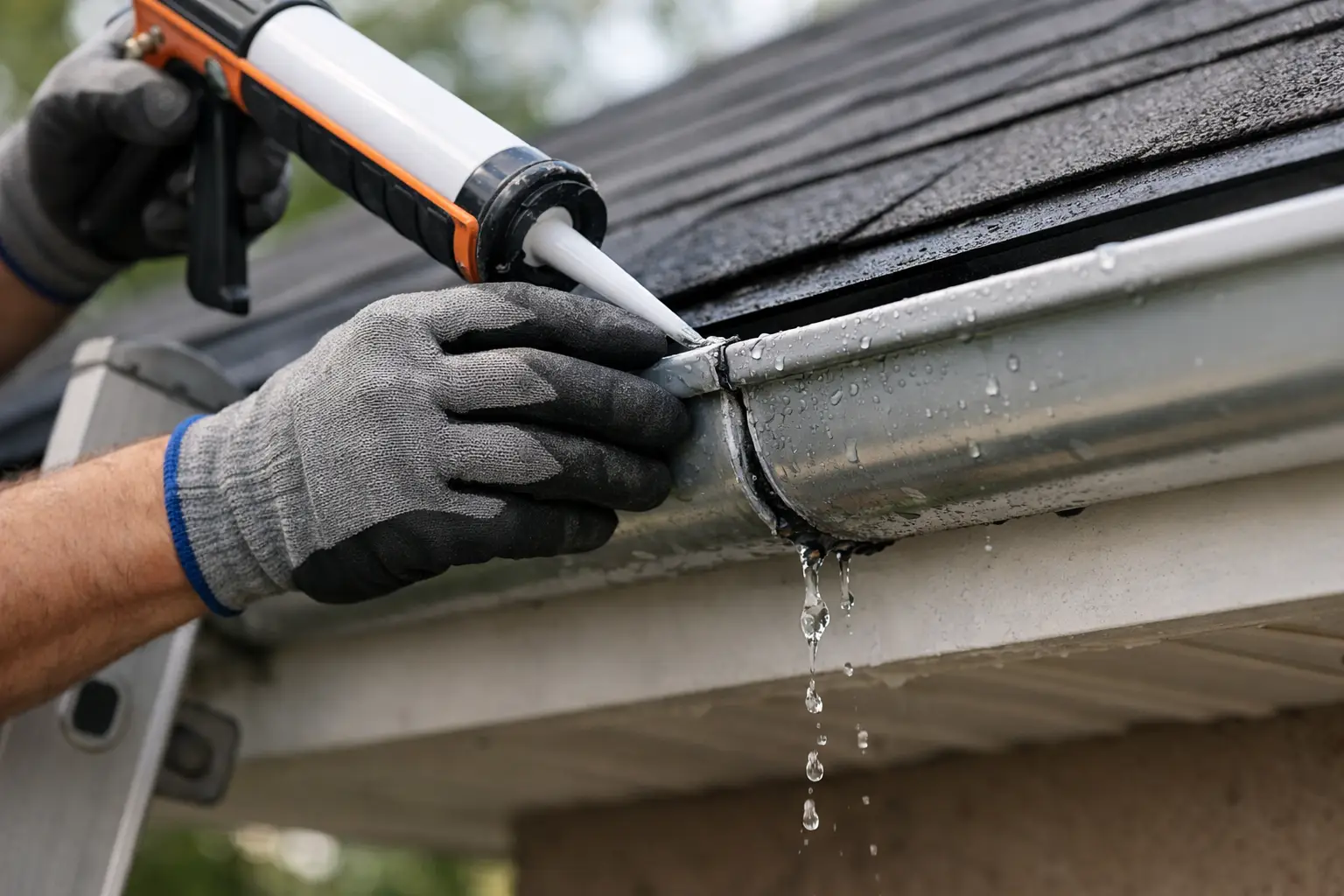
A gutter leak usually shows up at the worst time – right when a hard Florida rain is sending water over the edge, down the fascia, and too close to the foundation. If you’re searching for how to fix leaking gutters, the first step is figuring out where the leak is coming from and whether the problem is a simple repair or a sign the system is starting to fail.
Some gutter leaks are straightforward. A separated joint, a loose hanger, or a small hole from corrosion can often be repaired if the gutter is still structurally sound. But if the system is pulling away from the house, rusting in multiple spots, or leaking at several seams, patching one area may only buy you a little time.
What causes gutters to leak?
Most leaking gutters fail for a few predictable reasons. In Central Florida, heavy rain, wind-driven debris, and long periods of moisture put extra stress on the system. Even a well-installed gutter can start leaking if it is not cleaned and maintained.
One common cause is clogging. When leaves, grit, and roof runoff build up inside the trough, water backs up and sits longer than it should. That standing water finds weak points at seams, corners, and end caps. It can also add weight that pulls the gutter slightly out of alignment.
Seam failure is another major issue. Older sectional gutters have multiple connection points, and every one of those joints is a potential leak spot. Sealant dries out over time, especially under strong sun and repeated storms. Once that bond breaks, water starts slipping through.
You may also be dealing with fastener problems. If spikes, screws, or hidden hangers loosen, the gutter can sag just enough to hold water instead of draining it. That creates a cycle – pooled water leads to more stress, and more stress leads to bigger leaks.
Then there is simple wear. Small holes from rust, cracks in sealant, damage from ladders, and bent sections from storm debris can all turn into active leaks during a downpour.
How to inspect a leaking gutter safely
Before you repair anything, confirm the exact source of the leak. Water often travels along the gutter edge or fascia board, which means the drip you see may not be where the failure started.
Start from the ground after a rain if possible. Look for water marks on the exterior wall, soil erosion below one section, peeling paint near the fascia, or mildew near corners. These clues can help narrow down the problem area before you get on a ladder.
If you do inspect up close, use a stable ladder on level ground and avoid working during rain or on wet surfaces. Check seams, end caps, corners, hanger locations, and any spot where the gutter appears low or separated from the fascia. Also look inside the gutter for debris buildup and standing water.
A hose test can help. Run water through one section at a time and watch carefully. If water escapes at a seam or drips from the bottom, you have found the leak. If water pools instead of moving toward the downspout, the slope may be part of the issue.
How to fix leaking gutters step by step
If the gutter is in otherwise decent condition, a targeted repair can stop the leak and restore normal flow. The key is not sealing over dirt, loose metal, or trapped moisture. A quick patch on a bad surface usually fails fast.
Clean the area first
Remove leaves, grit, and any sludge from the gutter channel. Then clean the leak area thoroughly. If you are dealing with old sealant, scrape away the loose or cracked material so the new sealant can bond properly. Let the area dry before applying any repair product.
This step matters more than most homeowners think. Even a good sealant will not hold if it is applied over damp debris or flaking residue.
Reseal leaking seams and end caps
If the leak is coming from a joint or end cap, apply a gutter-rated sealant to the inside of the connection after cleaning and drying it. Press the sealant firmly into the seam and smooth it so water will flow over it rather than catch on the edge.
For minor seam leaks, this is often enough. For larger separations, the joint may need to be mechanically secured again before it is resealed. If the pieces have shifted out of place, the repair needs to correct the alignment too.
Patch small holes
Tiny holes from rust or punctures can sometimes be patched using a gutter repair patch and sealant. The damaged metal should be cleaned back to a solid surface first. If the surrounding area is thin, brittle, or rusted through, patching may not last long.
That is where it depends on the age of the gutter. One isolated hole in an otherwise solid section is different from a system with multiple soft spots. In the second case, replacement is usually the better investment.
Tighten or replace loose hangers
When a gutter leaks because it sags, resealing alone will not solve it. The section needs proper support. Tighten loose hardware or replace damaged hangers so the gutter sits securely against the fascia and maintains a consistent pitch toward the downspout.
If the fascia wood is rotted, the fasteners may not hold well until the wood itself is repaired. That is a sign the water problem has been going on longer than it looked from the ground.
Correct slope issues
A gutter should not hold standing water after a rain or hose test. If it does, it may need to be rehung to restore the right pitch. This is one of the more important repairs because poor drainage leads to repeated leaks, extra debris buildup, and added weight on the system.
Small slope corrections can be manageable, but long runs or multiple low spots usually call for professional adjustment. If the gutter was installed with the wrong pitch to begin with, a patch will never fully fix the problem.
When a leaking gutter should be replaced instead
Not every leak should be repaired. Sometimes the leak is the symptom, not the real issue.
If your gutters are leaking in several places, separating at multiple seams, rusting through, or pulling away from the house, repairs can turn into ongoing maintenance without solving the core problem. That is especially true with older sectional systems. Every seam is a future leak point, and every patch adds another place to monitor.
This is why many homeowners move to seamless K-gutters. With fewer joints, there are simply fewer places for water to escape. A custom-fit seamless system also tends to look cleaner and manage runoff more effectively during heavy storms.
For Orlando-area homes that see frequent downpours, a well-pitched seamless gutter system can reduce recurring leak issues and improve drainage around the entire property. Precision K-Gutters often sees cases where homeowners spent time and money patching old gutter sections, only to realize the system needed a more reliable long-term fix.
How to prevent gutter leaks from coming back
The best repair is the one you do not have to repeat every season. Once the leak is fixed, maintenance makes a big difference.
Keep gutters cleaned out so water can move freely to the downspouts. Make sure downspouts discharge away from the home so runoff does not collect near the foundation. After major storms, look for loose sections, fresh debris buildup, or any new drips around corners and seams.
It also helps to deal with small issues early. A loose hanger or drying seam sealant is much easier to fix than fascia rot or foundation washout caused by months of overflow. If your property has recurring debris problems, leaf protection may be worth considering, especially in areas where cleaning is difficult or often delayed.
Knowing when to call a professional
There is nothing wrong with handling a minor gutter repair if the issue is isolated and you can work safely. But if the leak involves second-story access, widespread sagging, damaged fascia, or repeated failure after previous repairs, a professional inspection usually saves time and frustration.
A good gutter repair is not just about stopping one drip. It is about making sure the entire system drains correctly, stays attached properly, and protects the home the way it should. That matters even more in a place where a quick afternoon storm can dump a lot of water in a short time.
If your gutters are leaking, think beyond the visible spot. The right fix is the one that keeps water moving away from your home, not just the one that gets through the next rain.