
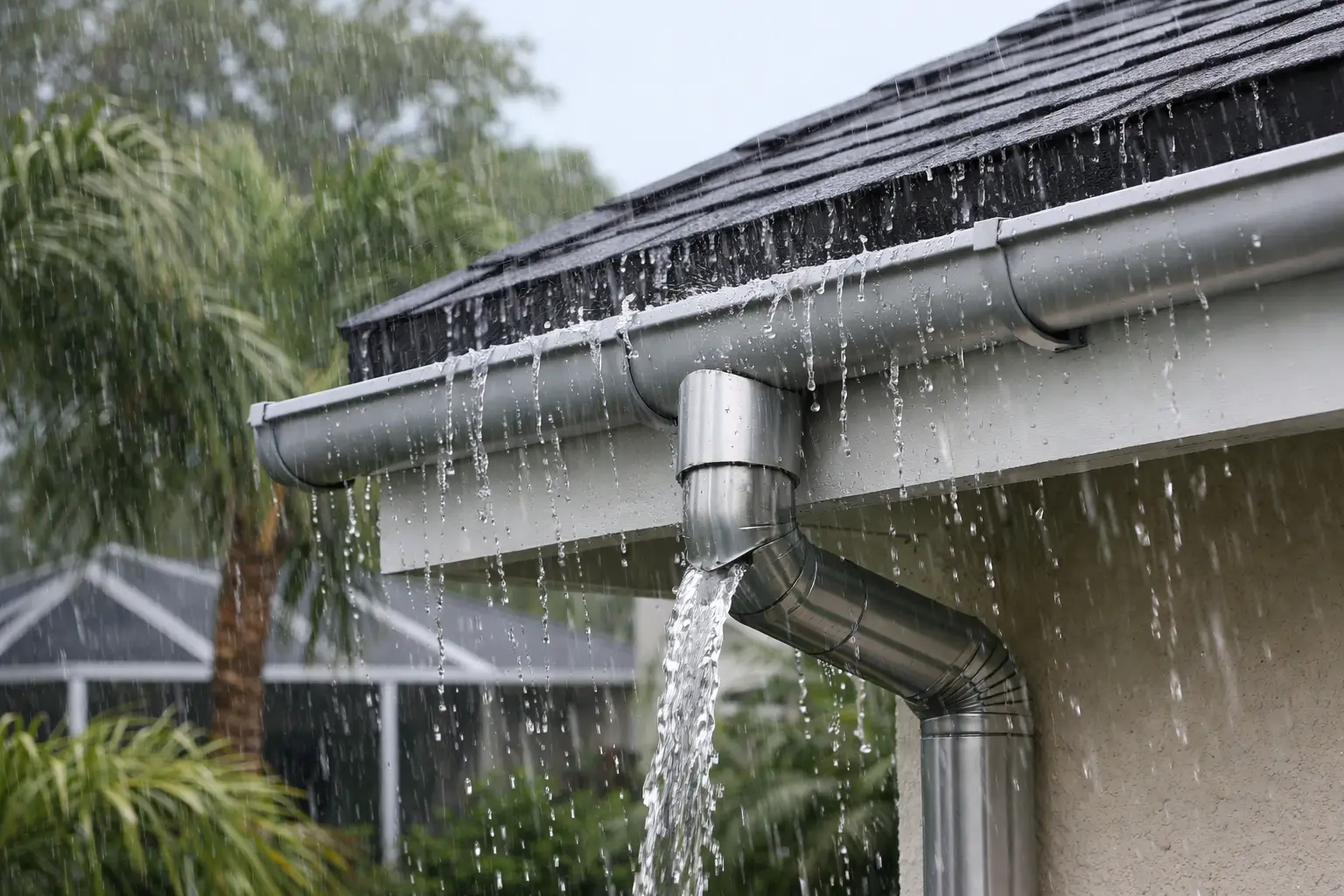
A hard Florida downpour can expose every weakness in a gutter system in about five minutes. If water is pouring over the front edge, pooling near the foundation, or running behind the gutters, the question is not just what looks good on the house. It is which are the best gutters for heavy rain, and whether the whole system is sized and installed to keep up.
For most homes in Orlando and across Central Florida, the right answer is usually not a one-size-fits-all product off a shelf. It is a properly sized, professionally pitched, seamless gutter system with enough downspout capacity to move water away from the roofline fast. Material matters, shape matters, and maintenance matters, but heavy-rain performance starts with the full setup working together.
What makes the best gutters for heavy rain?
When homeowners compare gutter options, they often focus on material first. Aluminum, vinyl, steel, and copper all get attention. In real-world storm conditions, though, overflow problems usually come from capacity, slope, poor drainage design, clogged sections, or too many seams – not just the material itself.
The best gutters for heavy rain need to do three things well. They need to catch a high volume of roof runoff, carry it without leaking or sagging, and send it through downspouts fast enough that water does not back up. If one part of that chain fails, the system fails.
That is why seamless K-style gutters are such a strong fit for many Florida homes. They handle water efficiently, they match the look of most residential rooflines, and they reduce the leak points you get with sectional systems. A clean install with solid fastening and the correct pitch usually performs far better than a cheaper system with too many joints.
Why K-style gutters are often the best fit
K-style gutters are the most common residential choice for good reason. Their shape allows them to hold more water than half-round gutters of the same width, which makes them practical in areas that see frequent heavy rain. They also mount securely against the fascia and tend to suit modern and traditional home exteriors alike.
For homes dealing with strong summer storms, K-style systems offer a smart balance of appearance, capacity, and cost. They are especially effective when fabricated on-site as seamless gutters. Fewer joints means fewer places for leaks to start, fewer weak spots over time, and a cleaner finished look.
Half-round gutters can work well on some homes, especially historic or decorative styles, but they are not usually the first recommendation for pure storm performance. They can move water effectively when sized correctly, yet many homeowners in high-rain areas get better value and better capacity from K-style profiles.
Seamless vs. sectional gutters in heavy rain
If heavy rain is your main concern, seamless gutters usually make more sense than sectional gutters. Sectional systems are assembled from multiple pieces, and every connection creates another potential leak point. During repeated storm cycles, those joints can separate, clog more easily, or start dripping behind the gutter.
Seamless gutters are custom measured and formed to fit the house. That matters because storm performance depends on consistency. A long, continuous run is less likely to leak in the middle, and the finished system tends to look cleaner and hold up better over time.
This is one of the clearest cases where custom work pays off. A properly fitted seamless system is not just about curb appeal. It is about reducing the small failures that become expensive water problems around fascia boards, soffits, siding, and foundations.
Size matters more than many homeowners expect
A lot of gutter trouble comes down to undersizing. If the gutter is too small for the roof area and the rainfall intensity, even a well-installed system can overflow. In Central Florida, where rain can hit hard and fast, sizing should never be an afterthought.
Most residential homes use 5-inch gutters, and in many cases that works fine. But some roofs need 6-inch gutters, especially if they have large roof planes, steep slopes, valley-heavy designs, or sections that dump a lot of water into one area. A wider gutter paired with larger downspouts can make a major difference during peak rainfall.
This is where a professional evaluation helps. The best choice depends on how much roof area drains into each run, how quickly water collects, and whether the current system already shows signs of strain. Overflow at corners, water shooting over the edge near valleys, and chronic standing water are all clues that capacity may be too low.
Downspouts are part of the answer
Homeowners sometimes replace gutters but keep undersized or poorly placed downspouts. That can limit the benefit of the new system. Gutters may catch the water, but if the downspouts cannot move it out fast enough, the trough fills up and spills over.
For heavy rain, downspout count, size, and placement all matter. Longer gutter runs may need additional downspouts. Roof valleys may need extra attention because they concentrate runoff. The outlet location also needs to send water away from the home, not straight into a planting bed against the foundation.
A good gutter system is really a drainage system. The gutters collect. The downspouts relieve pressure. The extensions or discharge points finish the job. Ignoring that last part leaves too much water too close to the structure.
The best gutter materials for heavy rain
Aluminum is usually the best all-around choice for residential gutters in Florida. It is lightweight, rust-resistant, cost-effective, and well suited for seamless fabrication. When installed correctly with the right hanger spacing, aluminum handles heavy rain well without putting unnecessary weight on the fascia.
Steel is stronger, but it can be more prone to rust over time if coatings fail, and it is often more than most homeowners need for a typical residential setup. Vinyl is inexpensive, but in storm-prone conditions it is generally a weaker long-term option. It can warp, crack, or pull apart more easily than professionally installed aluminum systems.
Copper performs well and lasts a long time, but it is a premium option chosen more for appearance and longevity than for basic rain capacity alone. For most homeowners and property managers trying to solve overflow and drainage issues, seamless aluminum K-style gutters are the practical sweet spot.
Leaf guards can help, but they are not magic
In a heavy-rain market, clogged gutters are one of the fastest ways to trigger overflow. Leaves, oak debris, pine needles, and roof grit all reduce capacity. That makes leaf guard systems worth considering, especially on homes with recurring buildup.
That said, no guard eliminates maintenance completely. Some systems handle large debris well but may still collect fine shingle grit or pollen. Others can struggle if they are poorly matched to the roof or installed without attention to water flow. The best result usually comes from choosing a guard that fits the home’s tree cover, roof pitch, and gutter design.
If a home already has drainage issues, guards should be viewed as one part of the fix, not the whole fix. They help preserve capacity, but they do not correct bad pitch, undersized gutters, or inadequate downspouts.
Signs your current gutters are not built for heavy rain
The warning signs are usually easy to spot once you know what to look for. Water running over the gutter edge during storms is the obvious one, but there are others. You may see staining on fascia boards, erosion below roof edges, mildew near the base of the home, or sections that stay full of water after the rain stops.
Sagging runs, separated joints, and water marks behind the gutter also point to trouble. Sometimes the system is simply worn out. Other times it was never sized or pitched correctly in the first place. Either way, repeated overflow is not something to ignore because it often leads to wood rot, soffit damage, and drainage problems around the foundation.
What to choose for an Orlando-area home
For most homes in this area, the strongest recommendation is a seamless aluminum K-style gutter system sized for the roof, paired with properly placed downspouts and maintained to stay clear. On some properties, stepping up from 5-inch to 6-inch gutters is the difference between occasional overflow and reliable performance.
That recommendation is not about selling the biggest system on every house. It is about matching the gutter design to the way the roof actually sheds water. A smaller home with simple rooflines may do very well with a standard setup. A larger home or one with steep slopes and multiple valleys may need more capacity and more drainage points.
Precision K-Gutters works with homeowners who need that kind of practical answer – not guesswork, not overkill, just a system that fits the property and handles local weather the way it should.
When you are deciding on new gutters, the smartest move is to think beyond the gutter profile alone. Heavy-rain performance comes from the full system being designed correctly, installed cleanly, and maintained before small issues turn into expensive repairs. The best gutter is the one that keeps water moving where it belongs, even when the storm is doing its worst.