
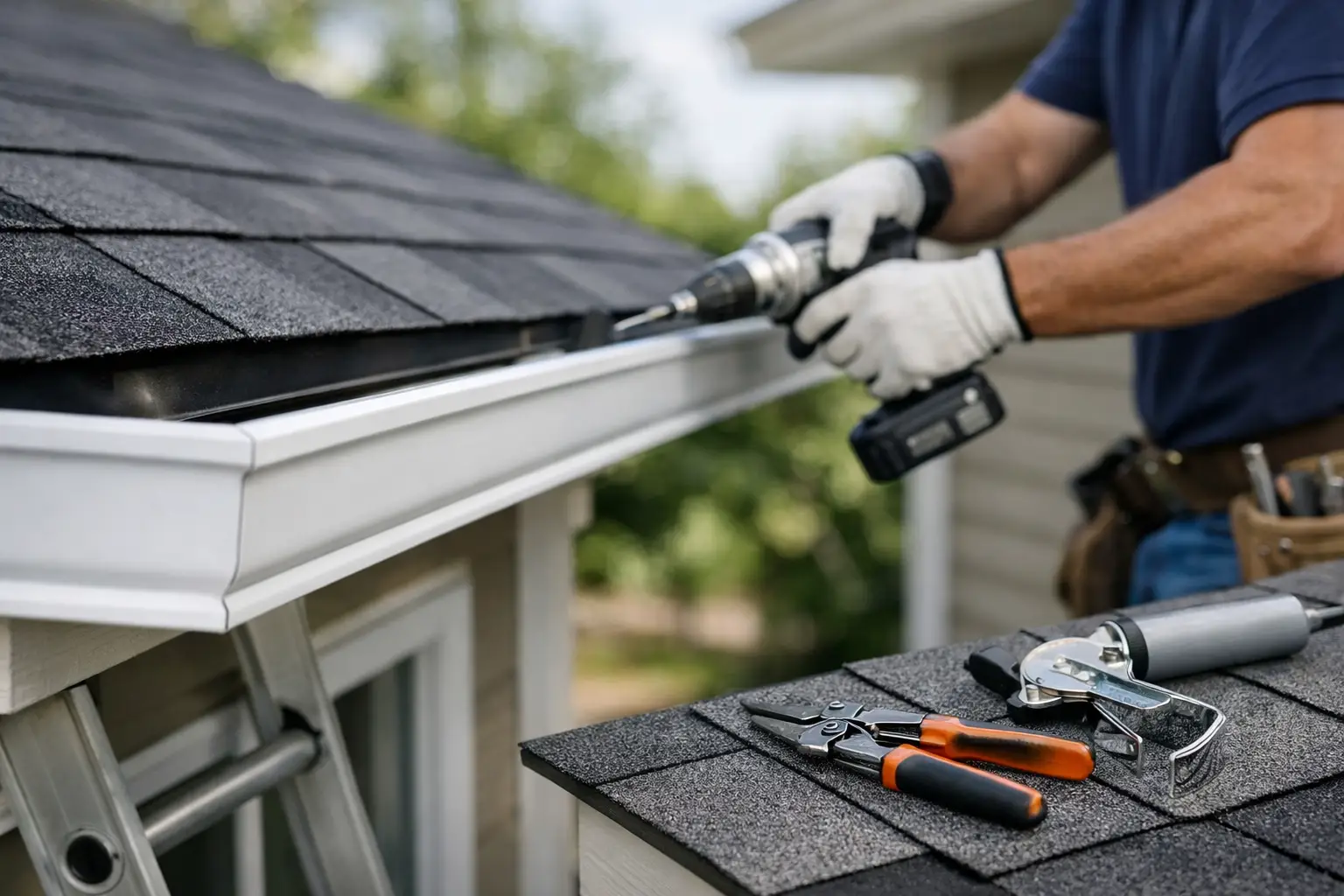
One hard Florida storm is usually enough to show you whether your gutter system is doing its job. If water is spilling over the edge, running behind the gutters, or pooling near the foundation, you do not need a sales pitch. You need a clear residential seamless gutter installation guide that explains what matters, what does not, and what to expect before work starts.
For most homes, gutters are not about appearance first. They are about control. A properly installed system moves roof runoff away from fascia boards, siding, entry points, landscaping, and the base of the home. In Central Florida, where heavy rain can hit fast and hard, that control matters even more.
What this residential seamless gutter installation guide should help you decide
The main question is simple: does your home need a full replacement, or will repairs solve the problem for now? That depends on the age of the system, the number of leaking joints, the condition of the fascia, and whether the pitch and downspout placement were correct to begin with.
If you are seeing repeated leaks at seams, sagging runs, rusting fasteners, or overflow in multiple sections, replacement is often the better long-term move. If the problem is limited to one corner or a loose downspout, repair may still make sense. The goal is not to replace gutters before you need to. The goal is to stop water from causing a more expensive problem somewhere else.
Why homeowners choose custom-cut systems
Traditional sectional gutters are assembled from pieces joined together along the run. Every connection creates another place where water can leak, debris can catch, or separation can happen over time. A custom-cut system reduces those connection points by forming each gutter run to fit the home on site.
That is where the biggest practical benefit shows up. Fewer joints usually means fewer leak points and a cleaner look along the roofline. It also makes maintenance a little simpler because there are fewer places for buildup to start. For homeowners who plan to stay in the home, or property managers trying to reduce repeat service calls, that trade-off is usually worth it.
There is still no gutter system that is maintenance-free. Even with fewer joints, leaves, shingle grit, and roof debris can still collect. But a well-fitted system starts with fewer built-in weak spots.
How the installation process usually works
A good installation starts before any material is cut. The home should be measured carefully, not estimated from a distance. Roof lines, corners, valleys, fascia condition, and drainage paths all need to be checked. This is also the stage where downspout locations should be discussed, because placement affects how well the system actually moves water away from the structure.
Once measurements are confirmed, the gutter runs are formed to match the house. Hangers, brackets, and fasteners should be installed with proper spacing so the system stays secure during heavy rain and wind. Pitch is then set so water flows toward the downspouts without sitting in the gutter.
That pitch matters more than many homeowners realize. Too flat, and water sits in the run. Too steep, and the system can look uneven from the ground. The right balance keeps water moving while still looking clean from the curb.
After the gutters are mounted, downspouts are attached and directed to move water away from the home. Extensions, splash blocks, or other drainage solutions may be needed depending on the layout of the property. Final cleanup should be part of the job. Loose metal scraps, fasteners, and debris should not be left behind in flower beds or around the driveway.
The parts of the job that affect performance most
If you only focus on color and price, you can miss the details that decide whether the system performs well in the next storm. Gutter size matters. So does the number of downspouts, the spacing of hangers, and the condition of the fascia board underneath.
For many residential properties, K-style gutters are the standard because they carry a good volume of water and match the look of most homes. But size still depends on roof area and runoff volume. A larger roof section or a steep slope may need more capacity than a smaller section on the same house.
Downspouts are another area where shortcuts create problems. Too few downspouts can leave water backing up during heavy rain. Poor placement can send runoff into areas where it creates erosion, standing water, or washout near the slab. In Orlando, where sudden downpours are common, those details are not minor.
Residential seamless gutter installation guide for Florida conditions
Florida homes deal with a mix of challenges that make proper installation more than a routine exterior upgrade. Heavy seasonal rain is the obvious one, but not the only one. Heat, humidity, wind, roof debris, and fast-moving storm systems all put stress on the system over time.
That means material quality and attachment method both matter. A gutter that looks fine on day one but loosens after repeated storms is not a good value. The same goes for a system installed over damaged fascia. If the wood behind the gutter is soft or rotted, the new system is only as strong as the surface holding it.
This is also why clean drainage at the ground level matters. Moving water off the roof is only half the job. If that water exits near the foundation, walkway, or low spot in the yard, you have simply moved the problem.
Common mistakes that lead to callbacks
Most gutter failures are not dramatic. They start as small installation issues that become obvious once the rain comes. An incorrect pitch can leave standing water in the run. Loose fastening can lead to sagging sections. Bad corner sealing can cause slow leaks that stain soffits or siding before anyone notices.
Another common issue is ignoring roof runoff patterns. Valleys dump a lot of water quickly. If the gutter and downspout setup does not account for that volume, overflow is likely even if the rest of the system is installed correctly. This is one reason cookie-cutter solutions often fall short.
Leaf guard products can also be overpromised. They help reduce buildup, but performance depends on the roof, nearby trees, and the type of debris your property gets. Some homes benefit from them more than others. They are a useful option, not a cure-all.
What homeowners should ask before scheduling installation
You do not need to become a gutter expert before requesting a quote, but a few practical questions help. Ask whether the system will be custom measured on site. Ask how downspout placement will be decided. Ask whether fascia problems will be identified before installation starts, and whether cleanup is included when the work is done.
It is also fair to ask what happens if the home has drainage issues beyond the gutter itself. A reliable contractor should tell you when gutter replacement will help and when another issue, like grading or runoff concentration, also needs attention. Straight answers save money.
For homeowners comparing quotes, the lowest number is not always the best value. If one estimate leaves out downspout adjustments, disposal, fascia review, or proper fastening methods, it may not be a true apples-to-apples comparison.
Cost, timing, and what affects both
Pricing depends on the linear footage of the home, the number of corners, the number of downspouts, material choice, and whether any repairs are needed before installation. A single-story home with simple roof lines is usually more straightforward than a two-story layout with multiple gables and drainage challenges.
Timing is similar. Some homes can be completed quickly. Others take longer because access is tighter, roof lines are more complex, or damaged wood is found during the job. Weather also plays a role, especially during rainy periods in Central Florida.
A professional crew should be able to explain those variables in plain terms. That matters because most homeowners are not looking for the cheapest metal attached to the house. They are looking for a system that works when the next storm hits.
When a gutter system is measured properly, pitched correctly, and built around how your home actually sheds water, it stops being something you notice only when it fails. It becomes one less problem to think about, which is exactly how exterior protection should work.